Jerusalem Post — Iran News
rightDEVELOPINGWhy did Iran renew attacks on Gulf states, despite the Memorandum of Understanding? - analysis

Full BriefGenerated 7h ago
What Happened
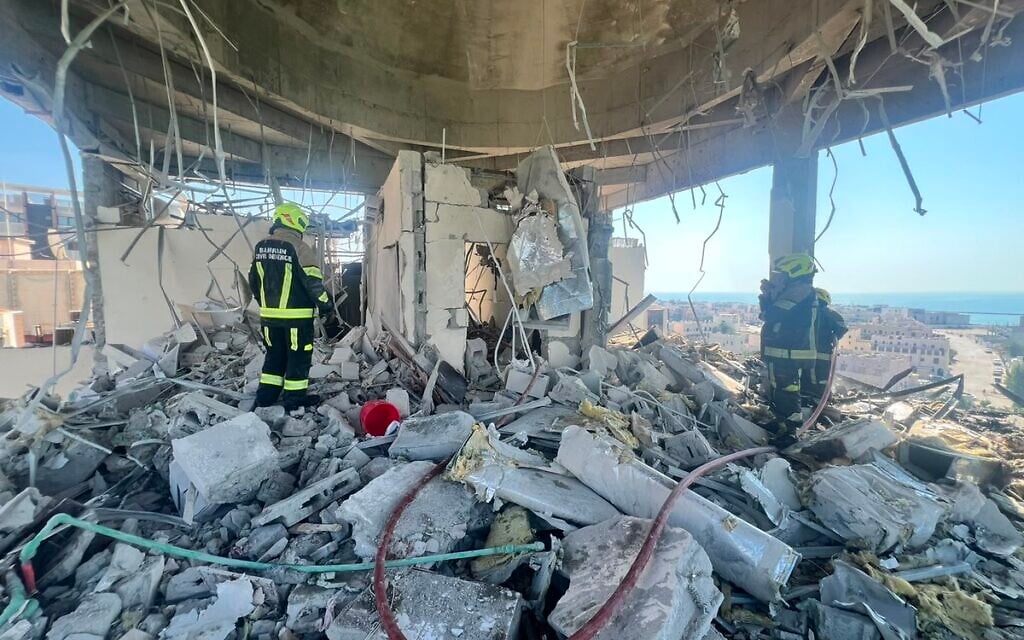
On Sunday, Iranian missiles and drones targeted US military bases in Kuwait and Bahrain, damaging a residential building in Bahrain's Muharraq province. The attack came shortly after US President Donald Trump renewed threats against Iran, warning of military action if the Islamic Republic failed to honor a recently signed Memorandum of Understanding (MoU). The IRGC Navy Command claimed responsibility and vowed that American bases would 'experience hell in the coming days.' The US had launched initial strikes on Iran after an Iranian drone attacked a Panama-flagged tanker in the Strait of Hormuz on Saturday, a waterway whose reopening was a condition for sanctions relief under the MoU. Analysts described the attacks as a signal of Iran’s defiance to hardliners and a protest against the Jerusalem-Beirut agreement, which outlines Hezbollah’s disarmament and threatens Iran’s hold over Lebanon.
Key Actors
- ·Islamic Republic of Iran(State actor)Carried out missile and drone attacks on US bases in Kuwait and Bahrain despite the MoU, signaling continued commitment to the 'Axis of Resistance'.
- ·IRGC Navy Command(Branch of the Islamic Revolutionary Guard Corps)Claimed the attacks and announced plans for further strikes on US bases in the region.
- ·United States(Counterparty under President Trump)Retaliated militarily after a Strait of Hormuz tanker attack and faces renewed IRGC threats; its response will determine the MoU's survival.
- ·Hezbollah(Iran-backed Lebanese armed group)The group’s potential disarmament under the Jerusalem-Beirut agreement threatened Iran’s regional influence, motivating the attacks as a show of dominance.
Why It Matters
The attacks illustrate how diplomatic agreements like the MoU can freeze surface-level tensions without addressing core drivers—Iran’s nuclear program, proxy networks, and missile arsenals—making them inherently fragile. For Gulf capitals, the strikes prove the MoU lacks deterrent power, functioning as a managed ceasefire rather than a genuine security guarantee, potentially widening the gap between Washington and its regional partners. Iran’s use of calibrated provocations below the threshold of direct US retaliation tests the limits of the truce and signals that its asymmetric leverage will continue to shape any future negotiations.
Watch For
The immediate response from Washington, as any kinetic retaliation could collapse the MoU. The IRGC’s follow-through on threats of further attacks against US bases. Progress in Lebanon regarding Hezbollah disarmament under the Jerusalem-Beirut agreement, and any corresponding Iranian escalation. Further incidents in the Strait of Hormuz that could threaten maritime security and the sanctions relief provisions of the MoU.
Generated 7h ago · Based on full articleAuto-Compiled
This page aggregates and summarizes reporting from Jerusalem Post — Iran News. The Conflict Pulse does not author original reporting. Read the original source for full coverage.
CONFLICT OVERVIEW
Iran
Latest verified updates on Iran’s regional confrontation, U.S.–Israeli strikes, missile retaliation, proxy networks, sanctions, and Strait of Hormuz risks.
SOURCE PERSPECTIVES
How outlets across the bias spectrum are covering this conflict.
left
Fresh hostilities in Gulf suggest US-Iran memorandum was too broadly worded
The Guardian Middle EastEscalating US-Iran strikes threaten interim peace agreement
The Guardian Middle EastLATEST FROM IRAN