
DW News
centerREPORTWhat does British PM's resignation mean for European security?
NO IMAGE AVAILABLEDW News
Full BriefGenerated 61d ago
What Happened
On June 24, 2026, British Prime Minister Keir Starmer announced his resignation. Starmer had been a central figure in the 'coalition of the willing', a grouping of 35 states that provides military aid to Ukraine and plans for its long-term defense. European Commission President Ursula von der Leyen wrote that 'European and Ukrainian security is stronger because of you,' while French President Emmanuel Macron expressed gratitude for Starmer's leadership in the coalition. Ukrainian President Volodymyr Zelenskyy also praised Starmer's partnership. Chatham House's Olivia O'Sullivan noted that Starmer's departure could cause a loss of momentum for the E3 format (Germany, France, UK), which coordinates European foreign and security policy on Ukraine and responses to US demands. The expected successor, former Manchester mayor Andy Burnham, is broadly pro-European but his foreign policy priorities remain unclear, potentially affecting the EU-UK Security and Defense Partnership, a 2025 agreement that facilitated cooperation on Ukraine and defense initiatives, though UK access to the EU's €150 billion SAFE program was limited due to unwillingness to pay fees. The European Council postponed an EU-UK summit originally scheduled for July 22, 2026, pending the new government.
Key Actors
- ·Keir Starmer(Outgoing British Prime Minister)Resigned after leading UK participation in the coalition of the willing for Ukraine and the E3 format.
- ·Ursula von der Leyen(European Commission President)Praised Starmer's contribution to European and Ukrainian security, stating it is 'stronger because of you.'
- ·Volodymyr Zelenskyy(President of Ukraine)Expressed gratitude to Starmer for his partnership in supporting Ukraine against Russia.
- ·Andy Burnham(Expected successor as British Prime Minister)Former mayor of Manchester; considered broadly pro-European, but his foreign policy priorities are uncertain, potentially shifting UK focus away from Ukraine.
Why It Matters
Starmer's resignation injects uncertainty into European security coordination on Ukraine at a time when the US role is unpredictable. The UK's role in the coalition of the willing and the E3 format has been pivotal for maintaining aid momentum and strategic unity. A shift in UK leadership could cause delays or policy drift, especially as the EU awaits clarity before scheduling a summit. The next PM's commitment to defense spending and Ukraine aid will be critical for sustaining European collective action against Russian aggression.
Watch For
Monitor the selection of the new British PM, with Andy Burnham currently the leading candidate. Watch for his early foreign policy statements, particularly regarding Ukraine aid and EU-UK defense cooperation. The postponed EU-UK summit, originally set for July 22, 2026, will be rescheduled depending on the transition. Also track any statements or actions from Russia exploiting the political transition, and the reaction of coalition of the willing partners to ensure continued military support.
Generated 61d ago · Based on full articleAuto-Compiled
This page aggregates and summarizes reporting from DW News. The Conflict Pulse does not author original reporting. Read the original source for full coverage.
CONFLICT OVERVIEW
Ukraine–Russia
Latest verified updates on Russia’s war in Ukraine, frontline shifts, drone warfare, Western support, occupied territories, and ceasefire diplomacy.
Active since February 2014
SOURCE PERSPECTIVES
How outlets across the bias spectrum are covering this conflict.
LATEST FROM UKRAINE–RUSSIA
REPORTThe Guardian Europe11d ago
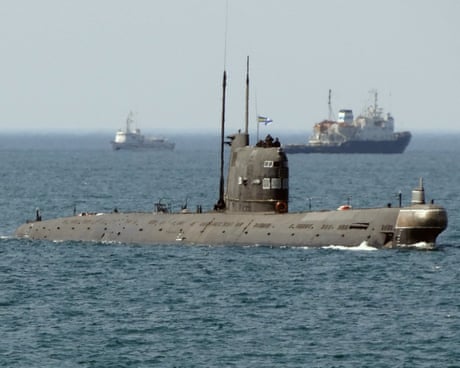
Ukraine war briefing: Crimea bomb kills ‘Ukrainian sub commander who defected’
REPORTThe Guardian Europe11d ago
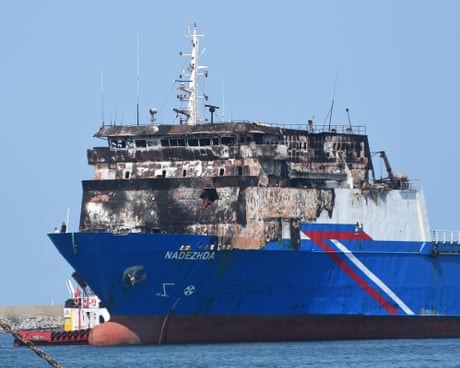
Ukraine ‘offering Russia deal to halt attacks on civilian ships in Black Sea’
REPORTThe Guardian Asia12d ago
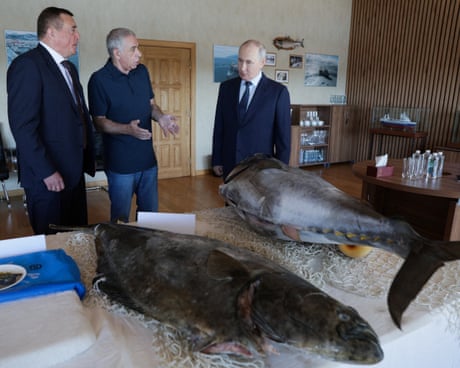
‘Absolutely unacceptable’: Japan condemns visit by Vladimir Putin to disputed Kuril Islands
REPORTDW News12d ago
What would a North Korean surge mean for Ukraine war?
REPORTDW News12d ago
What would a North Korean troop surge mean for Ukraine war?
REPORTBBC Europe12d ago