Al Jazeera
centerREPORTIran attacks five Gulf nations, shuts Hormuz after US bombing: All to know

Full BriefGenerated 13d ago
What Happened
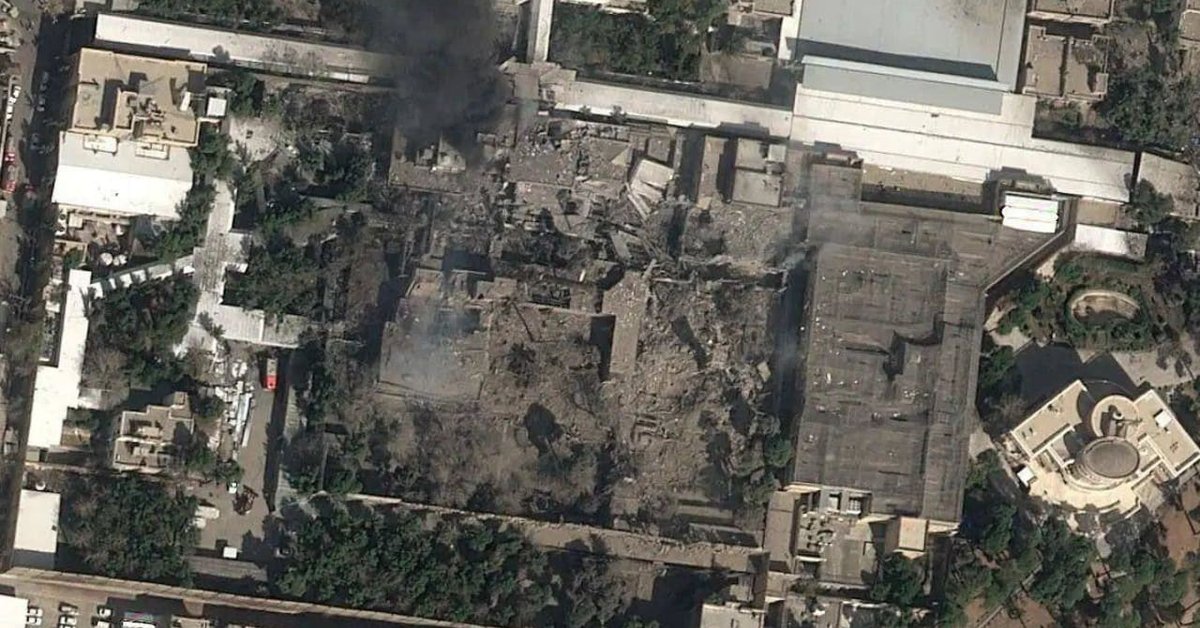
Iran launched missile and drone attacks on US military facilities in Bahrain, Kuwait, Jordan, Qatar, and Oman on Sunday, according to Iranian state media and IRGC statements. The IRGC claimed strikes on logistics centers at Duqm port in Oman, Al Udeid airbase in Qatar, a Patriot system in Kuwait, and Prince Hassan airbase in Jordan, among others. Qatar's Ministry of Defence said it intercepted incoming fire, with three people wounded by shrapnel. Separately, the IRGC announced the closure of the Strait of Hormuz after firing on commercial vessels, with one crew member missing per CENTCOM. The US carried out its third round of strikes on Iran in a week, hitting 140 military targets including missile sites and naval capabilities; over 300 targets were struck across three nights, CENTCOM said. The escalation follows a series of tit-for-tat actions after a fragile MoU collapsed, with US President Trump declaring the ceasefire over on Wednesday.
Key Actors
- ·IRGC(Iran’s Islamic Revolutionary Guard Corps, responsible for external operations)Launched attacks on multiple Gulf states and closed the Strait of Hormuz, framing it as retaliation for US strikes on Iran.
- ·US CENTCOM(US Central Command, overseeing military operations in the region)Conducted airstrikes on Iranian military targets, claiming they were holding Iranian forces accountable for attacks on shipping; reported over 300 targets hit in three nights.
- ·Mohammad Bagher Ghalibaf(Speaker of Iran’s Parliament and peace negotiator)Defended Iran’s actions by referencing the MoU’s Article 5 on Hormuz, warning that ‘the era of one-sided deals is over.’
Why It Matters
The closure of the Strait of Hormuz, a chokepoint for a significant share of global oil and LNG transit, directly threatens energy markets and international trade. Iran’s simultaneous attacks on five GCC states—some hosting major US bases—risks drawing the entire Gulf into a direct conflict, testing the cohesion of the GCC and potentially triggering collective defense responses. The escalation dismantles the already fragile MoU and raises the specter of a wider regional war, with implications for US force posture, diplomatic channels, and the safety of maritime shipping.
Watch For
Immediate responses from the targeted GCC states, particularly Oman and Qatar, which may retaliate or seek diplomatic off-ramps. Monitoring of shipping insurance rates and oil price spikes. CENTCOM may announce further strikes if Iran’s campaign continues. The UN Security Council could convene, given the threat to international waterways. Verification of damage claims by both sides, and any renewed backchannel talks via Oman. The fate of the missing crew member and potential Iranian boarding of vessels.
Generated 13d ago · Based on full articleAuto-Compiled
This page aggregates and summarizes reporting from Al Jazeera. The Conflict Pulse does not author original reporting. Read the original source for full coverage.
CONFLICT OVERVIEW
Iran
Latest verified updates on Iran’s regional confrontation, U.S.–Israeli strikes, missile retaliation, proxy networks, sanctions, and Strait of Hormuz risks.
SOURCE PERSPECTIVES
How outlets across the bias spectrum are covering this conflict.
left
US expands Iran attacks as Trump warns Tehran and Houthis over Red Sea strikes
The Guardian Middle EastHow Chinese tech and Russian tactics are aiding Iran’s bombing of US bases
The Guardian AsiaLATEST FROM IRAN