
Al Jazeera
centerREPORTWhy is Pezeshkian urging an end to Iran’s ‘no war, no peace’ status?
Full BriefGenerated 61d ago
What Happened
Iranian President Masoud Pezeshkian urged an end to what he called a state of 'neither war nor peace' with the United States, declaring that Iran is in a position of strength and the moment is right for a lasting agreement. His remarks came as Iran and Oman negotiate an arrangement to reopen the Strait of Hormuz, which Tehran has effectively blockaded since the US and Israel began a war on Iran on February 28, killing over 3,400 people. Iranian Foreign Minister Abbas Araghchi said discussions on a 'temporary route' through the strait are 'approaching the final stages' but conditioned reopening on compensation for US violations of a June memorandum of understanding. The Islamic Revolutionary Guard Corps (IRGC) spokesperson Hossein Mohebbi stated that the strait would reopen 'whenever the United States accepts Iran’s conditions.' Simultaneously, Iran’s Supreme National Security Council announced six conditions for reopening Hormuz, including ending US threats, permanently halting attacks on Iran and its allies in Lebanon, Palestine, Yemen, and Iraq, lifting sanctions, withdrawing US naval and air forces, paying war compensation, and releasing frozen Iranian assets. The conditions explicitly broaden the scope beyond the earlier MoU. On Saturday, the UK Maritime Trade Operations reported a ship hit by a projectile off Oman in the strait, causing a fire but no casualties; the attacker remains unclear.
Key Actors
- ·Masoud Pezeshkian(President of Iran)Called for an end to the 'no war, no peace' stalemate with the US, asserting Iran's strength and readiness for a lasting agreement.
- ·Abbas Araghchi(Iranian Foreign Minister)Stated that Oman-mediated talks on a temporary shipping route through the Strait of Hormuz are near final stages but tied reopening to US compensation and other conditions.
- ·IRGC(Islamic Revolutionary Guard Corps)Through spokesperson Hossein Mohebbi, conditioned reopening of the Strait of Hormuz on the US accepting Iran's demands.
- ·Supreme National Security Council(Iran’s top security body)Issued six conditions for reopening Hormuz, linking the waterway to a broader set of political, military and economic demands including an end to attacks on Iran and its allies and lifting sanctions.
Why It Matters
The developments suggest a potential Iranian shift from blockade to negotiation, yet the expansive conditions risk prolonging the crisis. The Strait of Hormuz remains a critical chokepoint for global oil transit; Iran’s leverage over it directly impacts energy markets and regional security. By tying its demands to the fate of Hezbollah, Hamas, the Houthis and Iraqi militias, Tehran is linking the immediate shipping standoff to its wider 'Axis of Resistance' posture, complicating any narrow diplomatic resolution.
Watch For
Progress on the Iran-Oman temporary shipping route talks and whether the US signals acceptance or counters Iran’s conditions. Statements from the IRGC and Supreme National Security Council clarifying or adjusting demands. Further maritime incidents in the Strait of Hormuz and attribution. Diplomatic exchanges via intermediaries, and any shifts in US military posture near Iran.
Generated 61d ago · Based on full articleAuto-Compiled

DAILY BRIEFING
Follow Iran
Get a daily briefing with the most critical developments from every active conflict zone. Concise. Verified. Free.
No spam. Unsubscribe anytime. Verified sources only.
This page aggregates and summarizes reporting from Al Jazeera. The Conflict Pulse does not author original reporting. Read the original source for full coverage.
CONFLICT OVERVIEW
Iran
Latest verified updates on Iran’s regional confrontation, U.S.–Israeli strikes, missile retaliation, proxy networks, sanctions, and Strait of Hormuz risks.
MORE REPORTING ON THIS REGION
Recent reporting from this region. These stories may cover different events.
LATEST FROM IRAN

DEVELOPINGAl Jazeera11h ago
Is Trump signalling a return to war with Iran after the midterms?

DEVELOPINGMiddle East Eye11h ago
Iranian human rights official says legal efforts under way over Minab attack
DEVELOPINGThe Guardian Middle East11h ago
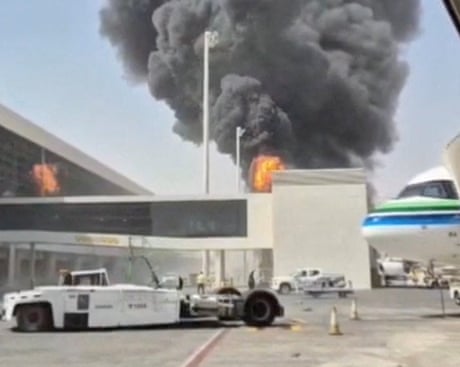
Three Saudis killed in Riyadh airport attack claimed by Houthis
REPORTMiddle East Eye14h ago
Morning update

REPORTAl Jazeera15h ago
Trump says US will not strike Iran before midterm elections
REPORTMiddle East Eye15h ago