
The Guardian Middle East
leftREPORTSkeptical Republicans demand details of US-Iran outline peace deal
Full BriefGenerated 68d ago
What Happened
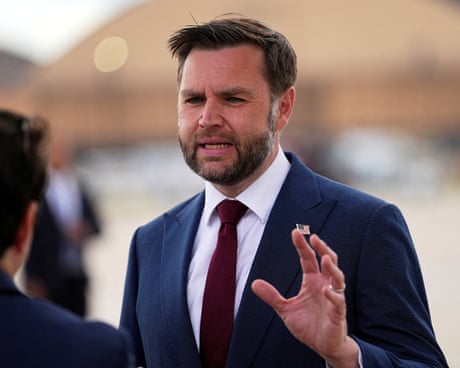
US Vice-President JD Vance acknowledged that many details of the US-Iran memorandum of understanding (MOU) still need to be finalized, prompting Republican senators to demand more information and thorough briefings. The MOU, announced Sunday to end the war in Iran, aims to reopen the Strait of Hormuz by lifting the US naval blockade and includes financial incentives—releasing frozen funds, sanctions relief, and a $300bn reconstruction fund paid by Gulf states—conditional on Tehran meeting benchmarks. Vance described the document as 'about a page' and said specifics would be resolved during technical negotiations, with a ceremonial signing planned for Friday in Geneva. Senate Majority Leader John Thune said he had not been personally briefed and raised concerns about compliance and enforcement, while Senator Lindsey Graham called for Congress to review and vote on any deal, noting discrepancies between Iranian and US descriptions of the agreement.
Key Actors
- ·JD Vance(US Vice-President)Downplayed the completeness of the MOU, stated that technical negotiations are needed, and promised release of the text this week.
- ·John Thune(Senate Majority Leader (Republican))Expressed skepticism, said he had not been briefed, and questioned compliance and enforcement mechanisms.
- ·Lindsey Graham(Republican Senator and longtime Iran hawk)Voiced skepticism, demanded congressional review and a vote, and warned that Iranian descriptions of the deal were 'awful'.
Why It Matters
The MOU represents a major diplomatic step to end hostilities and address Iran's nuclear program, but the lack of transparency and unresolved verification details risk congressional pushback. Senior Republican skepticism, including from the Senate Majority Leader, signals potential obstacles to implementation, especially if Congress demands a vote or blocks funding. The deal's fate hinges on the administration's ability to reassure lawmakers that compliance is enforceable and that financial incentives are strictly conditional.
Watch For
Release of the MOU text this week, as promised by Vance. Congressional committee briefings and any formal calls for hearings or votes, particularly in the Senate Foreign Relations Committee. The ceremonial signing in Geneva on Friday and the initiation of technical negotiations. Statements from Gulf states on funding the reconstruction fund.
Generated 68d ago · Based on full articleAuto-Compiled
This page aggregates and summarizes reporting from The Guardian Middle East. The Conflict Pulse does not author original reporting. Read the original source for full coverage.
CONFLICT OVERVIEW
Iran
Latest verified updates on Iran’s regional confrontation, U.S.–Israeli strikes, missile retaliation, proxy networks, sanctions, and Strait of Hormuz risks.
SOURCE PERSPECTIVES
How outlets across the bias spectrum are covering this conflict.
LATEST FROM IRAN

REPORTMiddle East Eye9d ago
Iran formalises Strait of Hormuz control as US struggles to sustain war it launched with Israel

REPORTAl Jazeera9d ago
US threatens ‘indefinite’ blockade against Iran: How long can it last?

REPORTMiddle East Eye9d ago
Morning update
REPORTMiddle East Eye10d ago
Vance says US will end up 'in a stronger position' than Iran

REPORTJerusalem Post — Iran News10d ago
US Treasury Secretary Bessent says US to apply measures 'never seen before' on Iran

REPORTAl Jazeera10d ago