
naharnet.com
centerREPORTVance hopes US , Iran can turn new leaf with talks
Full BriefGenerated 65d ago
What Happened
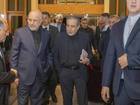
On Sunday, U.S. Vice President JD Vance expressed hope for a 'new leaf' in relations during U.S.-Iran talks at the Bürgenstock resort in Switzerland, where negotiators Jared Kushner and Steve Witkoff joined Iranian representatives with Pakistani and Qatari mediation. The first 80-minute round focused on implementing a June memorandum of understanding and the situation in Lebanon, but Iran's state broadcaster said the nuclear programme was not discussed and that the delegation refused to allow journalists. Israeli Prime Minister Benjamin Netanyahu separately declared troops would remain in a south Lebanon 'security zone' indefinitely, and President Donald Trump threatened to strike Iran if its 'highly paid PROXIES in Lebanon' did not stop 'causing trouble'. Iran's Foreign Ministry spokesman Esmaeil Baqaei stated that no final agreement negotiations could start without an end to the Lebanon war, while President Masoud Pezeshkian insisted Iran would not renounce uranium enrichment but repeated its denial of seeking nuclear weapons. Mohsen Rezaei, a military adviser to Supreme Leader Ayatollah Mojtaba Khamenei, posted on X that 'the enemy has shown itself to be a promise-breaker'. Separately, Iran closed the Strait of Hormuz again in response to recent Israeli attacks on Lebanon, reversing its opening under the earlier deal.
Key Actors
- ·JD Vance(U.S. Vice President)Struck an optimistic tone, asking if both sides could 'turn over a new leaf' and transform relations permanently.
- ·Masoud Pezeshkian(Iranian President)Stated Iran will not give up uranium enrichment but denied pursuing nuclear weapons, offering to formalize that denial in writing.
- ·Esmaeil Baqaei(Iranian Foreign Ministry spokesman)Set preconditions for final negotiations, including an end to the Lebanon war, and flagged the unfreezing of assets and oil sale licenses as agenda items.
- ·Benjamin Netanyahu(Israeli Prime Minister)Vowed to keep troops in south Lebanon as long as necessary and reiterated Israel would not allow Iran to acquire nuclear weapons.
Why It Matters
The talks seek to defuse overlapping crises—the Israel-Hezbollah war, Iran's nuclear programme, sanctions, and Hormuz shipping disruptions—that have destabilised the Middle East and rattled global energy markets. A breakdown risks renewed Israeli strikes, further proxy escalation, and economic shock from a closed Strait of Hormuz; progress could reshape U.S.-Iran relations and reduce the risk of direct confrontation.
Watch For
Whether the parties agree to a second round or suspend negotiations; potential Israeli military operations in south Lebanon and Hezbollah reactions; Iran's opening or continued closure of the Strait of Hormuz; public statements from the Biden administration on Trump's threat; and any IAEA reports on Iran's enrichment activities, which Tehran claims remain peaceful.
Generated 65d ago · Based on full articleAuto-Compiled
This page aggregates and summarizes reporting from naharnet.com. The Conflict Pulse does not author original reporting. Read the original source for full coverage.
CONFLICT OVERVIEW
Iran
Latest verified updates on Iran’s regional confrontation, U.S.–Israeli strikes, missile retaliation, proxy networks, sanctions, and Strait of Hormuz risks.
SOURCE PERSPECTIVES
How outlets across the bias spectrum are covering this conflict.
LATEST FROM IRAN

REPORTMiddle East Eye11d ago
Iran formalises Strait of Hormuz control as US struggles to sustain war it launched with Israel

REPORTAl Jazeera11d ago
US threatens ‘indefinite’ blockade against Iran: How long can it last?

REPORTMiddle East Eye12d ago
Morning update
REPORTMiddle East Eye12d ago
Vance says US will end up 'in a stronger position' than Iran

REPORTJerusalem Post — Iran News12d ago
US Treasury Secretary Bessent says US to apply measures 'never seen before' on Iran

REPORTAl Jazeera12d ago