Jerusalem Post — Iran News
rightDespite Iran's attacks on UAE, war has not resumed, US Gen. Dan Caine says

Full BriefGenerated 1d ago
What Happened
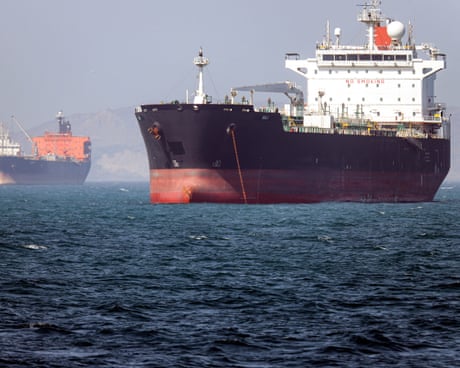
US Defense Secretary Pete Hegseth announced that the United States will provide overwatch protection for all peaceful commercial vessels transiting the Strait of Hormuz, explicitly excluding Iranian-flagged ships. The statement follows recent Iranian attacks in the region, which Gen. Dan Caine characterized as remaining below the threshold that would trigger major combat operations. Hegseth's declaration represents a formal US policy shift toward selective maritime security enforcement in the critical waterway, through which approximately one-fifth of global oil supply passes. The exclusion of Iranian vessels marks a departure from traditional freedom-of-navigation principles that typically apply to all commercial shipping regardless of flag state.
Key Actors
- ·Pete Hegseth(US Defense Secretary)Announced US policy to protect all peaceful vessels except Iranian-flagged ships in the Strait of Hormuz
- ·Gen. Dan Caine(US military commander)Assessed that recent Iranian attacks remain below the threshold for restarting major combat operations
- ·Iran(Islamic Republic of Iran)Conducted recent attacks in the region and will be excluded from US maritime protection in the Strait of Hormuz
Why It Matters
The Strait of Hormuz is the world's most critical oil chokepoint, with roughly 21 million barrels per day transiting through the 21-mile-wide passage between Iran and Oman. By explicitly excluding Iranian vessels from US protection while providing overwatch for all other commercial traffic, Washington is operationalizing economic pressure on Tehran while maintaining the flow of global energy supplies. This policy creates a two-tier maritime security regime that could escalate tensions if Iran responds by interdicting non-Iranian vessels or challenging US naval forces. The statement also establishes a public threshold for US military response, with Gen. Caine's assessment signaling that recent Iranian actions—while provocative—have not yet crossed the line that would trigger large-scale American retaliation.
Watch For
Monitor Iranian naval and Islamic Revolutionary Guard Corps (IRGC) activity in the Strait of Hormuz for potential harassment or interdiction of commercial vessels now under explicit US protection. Watch for any Iranian attempts to test the new US policy by approaching or challenging protected shipping, which could trigger direct US-Iran naval confrontations. Track global oil markets and insurance premiums for vessels transiting the strait, as the exclusion of Iranian ships may prompt retaliatory measures affecting energy prices. Observe whether US allies—particularly European and Asian nations dependent on Gulf oil—publicly endorse or distance themselves from the selective protection policy, and whether Iran escalates through proxy forces in Iraq, Syria, or Yemen rather than direct action in the strait.
Generated 1d ago · Based on full articleAuto-Compiled
This page aggregates and summarizes reporting from Jerusalem Post — Iran News. The Conflict Pulse does not author original reporting. Read the original source for full coverage.
CONFLICT OVERVIEW
Iran
Internal political tensions, regional proxy conflicts, and international standoffs regarding Iran's nuclear program and geopolitical influence.
SOURCE PERSPECTIVES
How outlets across the bias spectrum are covering this conflict.
left
Middle East crisis live: Iran’s top negotiator says US aiming to force Tehran’s ‘surrender’
The Guardian Middle EastTrump tells Iran to accept deal or face new wave of US bombing
The Guardian AsiaLATEST FROM IRAN