
BBC Middle East
centerREPORTUS renews strikes on Iran as Trump threatens to attack underground nuclear site
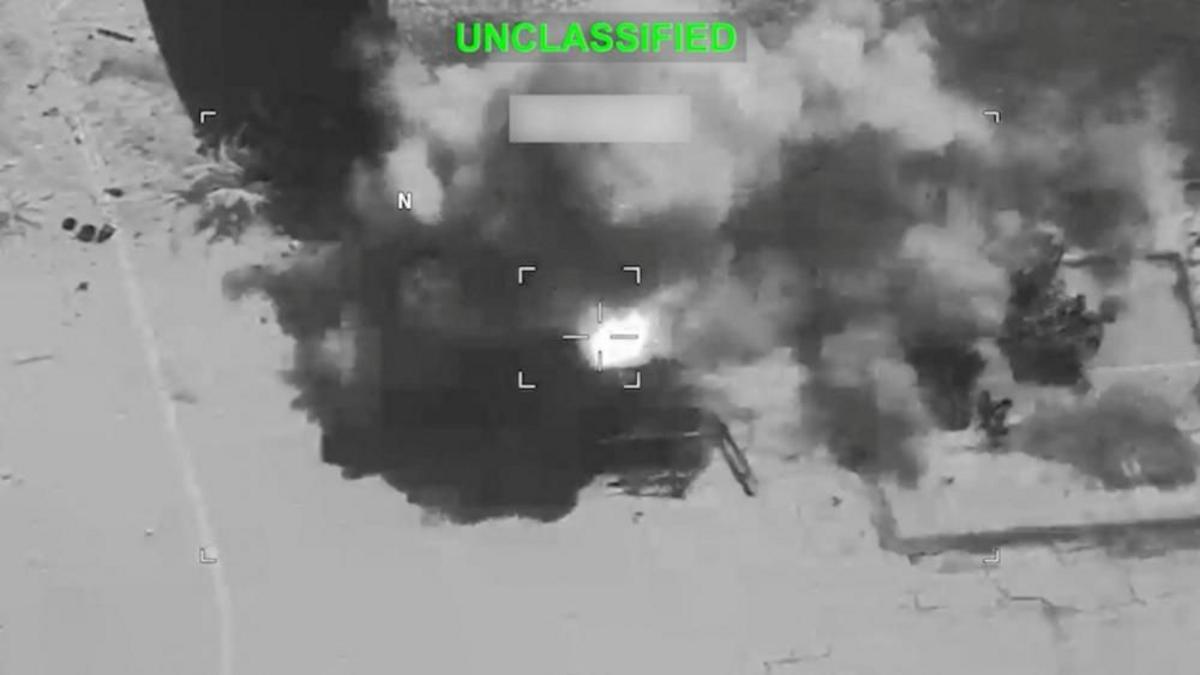
The US president's threat to target a key Iranian nuclear site came ahead of the 11th consecutive night of attacks.
Full BriefGenerated 33d ago
What Happened
The United States launched airstrikes on Iran for an eleventh consecutive night on Tuesday, with US Central Command (Centcom) stating the operations were intended to degrade Iran's ability to threaten commercial shipping in the Strait of Hormuz. Iranian state media reported air defence activations in Tehran and explosions in Tabriz, the southeastern ports of Chabahar and Konarak, and the southern city of Bushehr, site of Iran's lone nuclear power plant. President Donald Trump separately threatened to soon strike Pickaxe Mountain, an underground nuclear facility near Natanz suspected of housing an undeclared enrichment site. Iran's Khatam Al-Anbiya military command warned that an attack on the nuclear site would be considered 'an expansion of war' and threatened strikes on all American and allied interests. The strikes follow a collapsed April ceasefire and renewed hostilities last week over control of the Hormuz waterway. Centcom accused Iran of attacking more than 30 commercial vessels in the past three months. Kuwaiti, Bahraini, and Jordanian air defences engaged incoming Iranian drones and missiles. Meanwhile, Iran-backed Houthi rebels in Yemen announced the closure of the Bab al-Mandab Strait to Saudi vessels, prompting two Saudi-bound tankers from Yanbu to divert toward the Suez Canal, according to maritime risk firm Vanguard. President Trump threatened to 'take care of' the Houthis if the blockade proceeds.
Key Actors
- ·US Central Command (Centcom)(Unified combatant command of the US Department of Defense)Conducted strikes for the 11th consecutive night targeting Iranian military operations centres, maritime capabilities, aircraft hangars, drone storage, and logistics infrastructure to degrade Iran's ability to threaten shipping.
- ·Iran's Khatam Al-Anbiya military command(Iranian military headquarters)Warned that a US attack on the Natanz nuclear site would expand the war and threatened retaliatory strikes on all American and allied interests in the region.
- ·Houthi movement (Ansar Allah)(Iran-backed rebel group in Yemen)Announced the closure of the Bab al-Mandab Strait to Saudi vessels, causing tanker diversions, and was threatened by President Trump in response.
- ·Donald Trump(President of the United States)Threatened a heavy strike on Pickaxe Mountain underground nuclear site near Natanz and to 'take care of' the Houthis over the Saudi port blockade.
Why It Matters
The direct US-Iran military confrontation has expanded beyond tit-for-tat shipping attacks to include explicit nuclear site targeting threats, risking a broader regional war. The simultaneous Houthi blockade of Bab al-Mandab compounds maritime security crises, threatening global energy flows as the Strait of Hormuz remains effectively closed to commercial shipping due to the conflict. The involvement of Kuwait, Bahrain, and Jordan in intercepting Iranian projectiles signals a widening of the conflict's footprint. The financial cost to the US ($37.5 billion) and the diplomatic collapse of the June MoU underscore the failure of recent de-escalation efforts.
Watch For
Monitor for a possible US strike on the Natanz/Pickaxe Mountain facility and Iran's subsequent retaliation against US or allied interests in the region. Watch Houthi enforcement of the Bab al-Mandab blockade and any US military response in Yemen. Track oil tanker movements from Saudi Arabia's Red Sea ports and global fuel price fluctuations. Note any emergency funding requests from the Pentagon to Congress amid the rising war costs.
Generated 33d ago · Based on full articleAuto-Compiled
This page aggregates and summarizes reporting from BBC Middle East. The Conflict Pulse does not author original reporting. Read the original source for full coverage.
CONFLICT OVERVIEW
Iran
Latest verified updates on Iran’s regional confrontation, U.S.–Israeli strikes, missile retaliation, proxy networks, sanctions, and Strait of Hormuz risks.
SOURCE PERSPECTIVES
How outlets across the bias spectrum are covering this conflict.
LATEST FROM IRAN

REPORTMiddle East Eye10d ago
Iran formalises Strait of Hormuz control as US struggles to sustain war it launched with Israel

REPORTAl Jazeera10d ago
US threatens ‘indefinite’ blockade against Iran: How long can it last?

REPORTMiddle East Eye10d ago
Morning update
REPORTMiddle East Eye11d ago
Vance says US will end up 'in a stronger position' than Iran

REPORTJerusalem Post — Iran News11d ago
US Treasury Secretary Bessent says US to apply measures 'never seen before' on Iran

REPORTAl Jazeera11d ago