
DW News
centerREPORTUS-Israel: What are the allegations of espionage all about?
NO IMAGE AVAILABLEDW News
Full BriefGenerated 75d ago
What Happened
In June 2026, multiple US media outlets reported that an anonymous source from the Defense Intelligence Agency (DIA) leaked internal information indicating the Pentagon had elevated Israel to the highest category of counterintelligence threat. The reclassification was reportedly due to significantly expanded Israeli intelligence activities against the US, including alleged monitoring of US Special Envoy Steve Witkoff and several Department of Defense officials involved in US-Iran negotiations. The Biden administration officially denounced the reports, and Israel dismissed the allegations as 'completely false.' The leak surfaces amid a joint US-Israel war with Iran and a strained relationship between President Donald Trump and Prime Minister Benjamin Netanyahu; Trump is seeking to end the conflict quickly while Netanyahu is perceived as obstructing. The controversy echoes historic mutual espionage tensions, including the 1987 Jonathan Pollard case and 2004 Lawrence Franklin conviction. Intelligence expert Erich Schmidt-Eenboom suggested the leak was released in coordination with the US government to diplomatically pressure Israel without directly cutting military aid, especially ahead of the November midterms.
Key Actors
- ·US Pentagon / Defense Intelligence Agency (DIA)(US military and defense intelligence body)Reportedly reclassified Israel as the highest counterintelligence threat due to expanded Israeli intelligence activities; official denials issued.
- ·Steve Witkoff(US Special Envoy)Allegedly targeted by Israeli surveillance alongside other US officials involved in Iran negotiations.
- ·Benjamin Netanyahu(Prime Minister of Israel)Dismissed allegations as 'completely false'; his government was accused of unauthorized intelligence operations, straining relations with the Trump administration.
- ·Erich Schmidt-Eenboom(German intelligence expert)Claimed the leak was likely coordinated with the US government to diplomatically pressure Israel into halting bombings and withdrawing from southern Lebanon, avoiding direct aid cuts due to midterm sensitivities.
Why It Matters
The reclassification, if accurate, signals a deep crisis of confidence between the US and Israel at a time of active military coordination against Iran. It could disrupt intelligence-sharing and joint operations, complicate ceasefire and withdrawal negotiations, and empower domestic critics of unconditional aid to Israel. The leak itself, regardless of veracity, is a diplomatic tool that allows the Trump administration to press Israel publicly while maintaining plausible deniability, especially with midterm elections looming and the pro-Israel lobby's influence in Congress. The episode underscores the persistent tension between public alliance and clandestine competition among strategic partners, with potential ripple effects for US policy across the Middle East.
Watch For
Monitor whether the US formally confirms or denies Israel's elevated threat status through official channels or congressional testimony. Watch for any punitive measures, such as restrictions on intelligence sharing, scaled-back military aid, or sanctions designations under existing OFAC authorities. Track Israeli government responses, particularly any concession on troop withdrawals from southern Lebanon or adjustments to operations in Iran. Observe the role of pro-Israel lobbying groups like AIPAC in shaping Congressional reactions and any legislative efforts to compel transparency on the allegations. Note the midterm election dynamics and whether Trump or other candidates leverage the issue to appeal to specific voter blocs.
Generated 75d ago · Based on full articleAuto-Compiled
This page aggregates and summarizes reporting from DW News. The Conflict Pulse does not author original reporting. Read the original source for full coverage.
CONFLICT OVERVIEW
United States
Latest verified updates on U.S. military operations, foreign policy decisions, alliance pressure, sanctions, maritime security, and global power projection.
Active since May 2020
SOURCE PERSPECTIVES
How outlets across the bias spectrum are covering this conflict.
LATEST FROM UNITED STATES
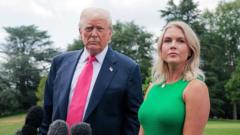
REPORTBBC US & Canada12d ago
Who could replace White House Press Secretary Karoline Leavitt?
REPORTDW News13d ago
US: Karoline Leavitt to step down as Trump's spokesperson
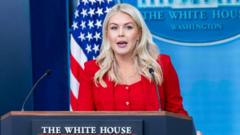
REPORTBBC US & Canada13d ago
Trump says White House press secretary Karoline Leavitt to leave post

REPORTBBC US & Canada13d ago
Watch: Key moments from Karoline Leavitt's White House tenure

REPORTAl Jazeera13d ago
Karoline Leavitt to step down as White House press secretary, Trump says

REPORTAl Jazeera13d ago