
The Guardian Middle East
leftREPORTUS-Iran deal may get oil flowing again, but region’s root problems are unsolved
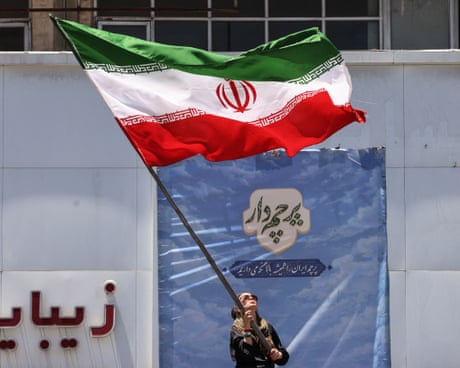
Full BriefGenerated 69d ago
What Happened
The Guardian reports that the US and Iran have reached a fragile interim agreement, scheduled to be signed on Friday by representatives of both parties. The memorandum of understanding provides for a 60-day cessation of hostilities, the lifting of Washington’s naval blockade of Iran, and Iran’s commitment to allow free passage to all shipping in the Strait of Hormuz. As part of the deal, a ceasefire has been imposed in Lebanon. The agreement also commits both sides to address contentious issues — Iran’s enriched uranium stockpile, its nuclear programme, sanctions, and the release of billions of dollars in frozen Iranian assets — with the aim of reaching a final settlement. Regional analysts and residents, quoted by the Guardian from Kuwait, Gaza, Israel, and elsewhere, express deep skepticism, viewing the accord as a temporary fix that fails to tackle core drivers of instability, including Iran’s ballistic missile programme, its support for the ‘Axis of Resistance’, and the unresolved Gaza conflict.
Key Actors
- ·United States(Signatory to interim agreement)Agreed to lift its naval blockade of Iran, impose a Lebanon ceasefire, and engage in 60-day talks on nuclear, sanctions, and frozen assets issues.
- ·Iran(Signatory to interim agreement)Agreed to a 60-day cessation of hostilities, to allow free passage through the Strait of Hormuz, and to enter negotiations on its nuclear programme and sanctions.
- ·Israel(Regional power with major security concerns)Reacted with dismay; criticises the deal for ignoring Iran’s ballistic missiles and funding of the Axis of Resistance, and insists that structural change is needed to fully address threats.
- ·Gulf Cooperation Council states(Sunni Arab monarchies targeted by Iranian strikes)Kuwait, Bahrain, the UAE, and Qatar suffered civilian infrastructure damage from Iranian strikes; now reassessing security strategies, questioning US reliability, and seeking to contain a more confident Iran.
Why It Matters
The interim deal may temporarily restore oil and gas flows through the Strait of Hormuz and de-escalate direct US-Iran naval confrontation, but it does not resolve deep-rooted regional tensions. Iran’s nuclear ambitions, its missile arsenal, and its network of allied non-state actors — the Axis of Resistance — remain unaddressed, as does the Israel-Iran standoff and the aftermath of the Gaza war. The agreement exposes a perceived US strategic retrenchment, prompting Gulf states to reconsider their dependence on Washington and potentially driving a more fragmented regional security landscape. Without tackling these structural issues, analysts warn that the deal is a ‘Band-Aid’ and future conflict is likely.
Watch For
The 60-day negotiation window beginning after Friday’s signing ceremony will be critical; watch for substantive talks on Iran’s enriched uranium stockpile, sanctions relief, and the release of frozen assets. Monitor Iran’s compliance with unimpeded Strait of Hormuz passage and the durability of the Lebanon ceasefire. Israeli and Gulf state reactions, including potential unilateral steps, matter. Additionally, the Gaza ceasefire — cited as a precedent for fragile deals — remains precarious, with reconstruction and disarmament phases stalled; any escalation there could upend the US-Iran agreement.
Generated 69d ago · Based on full articleAuto-Compiled
This page aggregates and summarizes reporting from The Guardian Middle East. The Conflict Pulse does not author original reporting. Read the original source for full coverage.
CONFLICT OVERVIEW
Iran
Latest verified updates on Iran’s regional confrontation, U.S.–Israeli strikes, missile retaliation, proxy networks, sanctions, and Strait of Hormuz risks.
SOURCE PERSPECTIVES
How outlets across the bias spectrum are covering this conflict.
LATEST FROM IRAN

REPORTMiddle East Eye10d ago
Iran formalises Strait of Hormuz control as US struggles to sustain war it launched with Israel

REPORTAl Jazeera10d ago
US threatens ‘indefinite’ blockade against Iran: How long can it last?

REPORTMiddle East Eye10d ago
Morning update
REPORTMiddle East Eye10d ago
Vance says US will end up 'in a stronger position' than Iran

REPORTJerusalem Post — Iran News10d ago
US Treasury Secretary Bessent says US to apply measures 'never seen before' on Iran

REPORTAl Jazeera10d ago