
BBC Middle East
centerREPORTUS and Iran trade fire as tensions rise over Strait of Hormuz
Full BriefGenerated 44d ago
What Happened
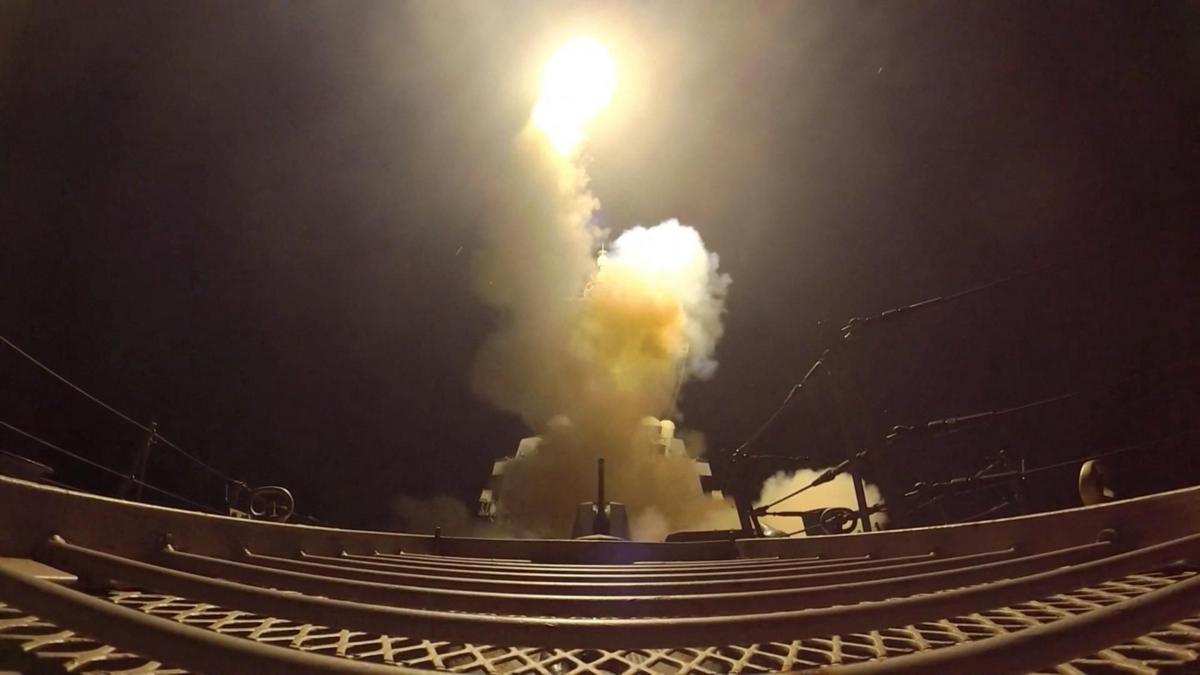
The US launched a new wave of strikes on Iran on Sunday evening, continuing days of reciprocal attacks. US Central Command (Centcom) announced the strikes started at 17:00 ET (22:00 BST), targeting dozens of Iranian military sites including air-defence systems, coastal radar sites, and missile and drone capabilities. Iranian state media reported explosions in Sirik, Qeshm, Bandar Abbas, and Jask, with IRNA citing Khuzestan deputy governor Valiollah Hayati that one person was killed and four injured in southwestern Iran. Within hours, the Islamic Revolutionary Guard Corps (IRGC) claimed it struck US military bases in Kuwait, Jordan, and Bahrain. This followed a Saturday night Centcom statement that US forces had hit 140 Iranian military targets. Iran says it has closed the Strait of Hormuz until further notice, while Centcom insists the waterway remains open and that its forces are prepared to guarantee freedom of navigation. Oil prices rose 4.3% on Monday in Asia. The hostilities cast doubt on the interim US-Iran ceasefire agreement signed in June, with President Donald Trump declaring the deal over and Foreign Minister Abbas Araghchi accusing the US of violations, though both sides indicate talks may continue.
Key Actors
- ·US Central Command (Centcom)(US military command responsible for Middle East operations)Conducted airstrikes on Iranian military targets on 30 June, claims the Strait of Hormuz is open, and states it is prepared to ensure freedom of navigation.
- ·Islamic Revolutionary Guard Corps (IRGC)(Iranian military branch with external operations capability)Claimed responsibility for retaliatory strikes on US bases in Kuwait, Jordan, and Bahrain, and is the primary Iranian military actor in the escalation.
- ·Iranian government (Valiollah Hayati, deputy governor of Khuzestan)(Local official providing casualty information)Reported that US strikes killed one person and injured four in southwestern Iran, and the Iranian state maintains the Strait of Hormuz is closed.
- ·Donald Trump(President of the United States)Declared the interim ceasefire over following Iranian attacks, but said talks would still continue.
Why It Matters
The direct exchange of strikes between the US and Iran marks a significant escalation that threatens to unravel the fragile interim ceasefire signed in June and risks a wider regional conflict. The closure of the Strait of Hormuz, through which about 20% of the world's oil and LNG transits, has immediate global energy market implications, with Brent crude spiking 4.3%. Iranian strikes claimed on US bases in Kuwait, Jordan, and Bahrain, if confirmed, extend the geographic scope of hostilities to US allies, including mediators Qatar and the UAE, which had not been attacked since April and May respectively. The standoff over the strait's status creates a dangerous flashpoint for naval confrontation and could disrupt supply chains far beyond the region.
Watch For
Monitor Centcom operational updates for any confirmation or denial of Iranian strikes on US bases in Kuwait, Jordan, and Bahrain. Watch for further US or Iranian strikes, particularly any targeting of maritime assets in the Strait of Hormuz. Track oil price movements and international shipping advisories. Diplomatic signals will be key: statements from Oman or other mediators on ceasefire revival, and any IAEA emergency meetings or UN Security Council sessions. The status of the strait—whether Iran attempts to enforce the closure or the US conducts a freedom-of-navigation operation—will be a critical trigger for further escalation.
Generated 44d ago · Based on full articleAuto-Compiled
This page aggregates and summarizes reporting from BBC Middle East. The Conflict Pulse does not author original reporting. Read the original source for full coverage.
CONFLICT OVERVIEW
Iran
Latest verified updates on Iran’s regional confrontation, U.S.–Israeli strikes, missile retaliation, proxy networks, sanctions, and Strait of Hormuz risks.
SOURCE PERSPECTIVES
How outlets across the bias spectrum are covering this conflict.
LATEST FROM IRAN

REPORTMiddle East Eye12d ago
Iran formalises Strait of Hormuz control as US struggles to sustain war it launched with Israel

REPORTAl Jazeera12d ago
US threatens ‘indefinite’ blockade against Iran: How long can it last?

REPORTMiddle East Eye12d ago
Morning update
REPORTMiddle East Eye12d ago
Vance says US will end up 'in a stronger position' than Iran

REPORTJerusalem Post — Iran News12d ago
US Treasury Secretary Bessent says US to apply measures 'never seen before' on Iran

REPORTAl Jazeera12d ago