
The Guardian Middle East
leftREPORTUN agency pauses ship evacuations through strait of Hormuz after vessel struck
Full BriefGenerated 59d ago
What Happened
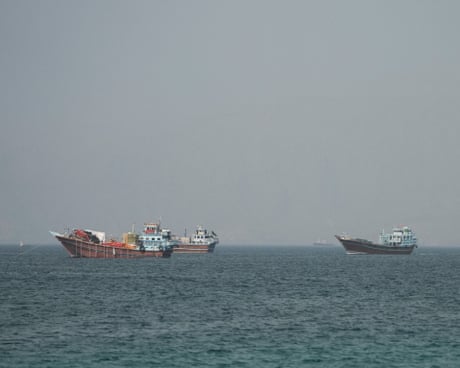
On Thursday, the United Nations International Maritime Organization (IMO) paused its evacuation of ships stranded in the Persian Gulf through the Strait of Hormuz after the British military reported that a vessel was hit by a projectile off the coast of Oman. The attack, which caused damage but no injuries, followed a warning from Iran's newly established Persian Gulf strait authority that transits outside its designated routes would not be guaranteed safe passage. The naval arm of the Islamic Revolutionary Guard Corps (IRGC) separately declared the UN-backed alternative route 'unacceptable and completely dangerous' and threatened 'violators' without specifying consequences. The vessel struck was not part of the IMO evacuation effort, according to IMO Secretary-General Arsenio Dominguez. The incident occurred amid ongoing US-Iran negotiations under a memorandum of understanding signed last week, which includes a 60-day deadline to finalize terms on shipping access and Iran's enriched uranium stockpile. Traffic through the strait has increased in recent days but remains below prewar levels.
Key Actors
- ·IRGC Naval Forces(Naval arm of Iran's Islamic Revolutionary Guard Corps)Issued a statement calling the new UN-backed route unacceptable and dangerous, threatening unspecified action against vessels using it.
- ·Arsenio Dominguez(Secretary-General of the International Maritime Organization)Announced the pause of the evacuation operation until safety guarantees can be confirmed.
- ·Marco Rubio(United States Secretary of State)Reaffirmed US commitment to the alternative route and warned that blocking traffic through the strait would cause a problem.
Why It Matters
The Strait of Hormuz is a vital chokepoint through which about one-fifth of the world's oil and natural gas passes. Iran's threats and the vessel strike demonstrate its continued willingness to challenge freedom of navigation, using it as leverage in broader negotiations with the United States over its nuclear program and sanctions. The incident directly undermines the recently signed US-Iran interim agreement and tests the credibility of security assurances Washington has given to Gulf allies. The pause in the UN-led evacuation also highlights the practical difficulties of restoring safe passage amid unresolved hostilities, with potential knock-on effects for global energy markets and regional stability.
Watch For
Monitor the 60-day deadline for the US and Iran to iron out details of the interim peace deal, particularly provisions on guaranteed shipping lanes and the disposal of Iran's highly enriched uranium. Watch for any further incidents or IRGC enforcement actions targeting vessels using alternative routes, as well as US military or diplomatic responses. Keep an eye on traffic data through the strait and oil price fluctuations as indicators of market confidence. Also, track IAEA reports on Iran's nuclear activities, given that the uranium stockpile is a key negotiation point.
Generated 59d ago · Based on full articleAuto-Compiled
This page aggregates and summarizes reporting from The Guardian Middle East. The Conflict Pulse does not author original reporting. Read the original source for full coverage.
CONFLICT OVERVIEW
Iran
Latest verified updates on Iran’s regional confrontation, U.S.–Israeli strikes, missile retaliation, proxy networks, sanctions, and Strait of Hormuz risks.
SOURCE PERSPECTIVES
How outlets across the bias spectrum are covering this conflict.
LATEST FROM IRAN

REPORTMiddle East Eye10d ago
Iran formalises Strait of Hormuz control as US struggles to sustain war it launched with Israel

REPORTAl Jazeera10d ago
US threatens ‘indefinite’ blockade against Iran: How long can it last?

REPORTMiddle East Eye10d ago
Morning update
REPORTMiddle East Eye10d ago
Vance says US will end up 'in a stronger position' than Iran

REPORTJerusalem Post — Iran News10d ago
US Treasury Secretary Bessent says US to apply measures 'never seen before' on Iran

REPORTAl Jazeera10d ago