
The Guardian Middle East
leftREPORTUK bans support for Iran’s Islamic Revolutionary Guard Corps
Full BriefGenerated 41d ago
What Happened
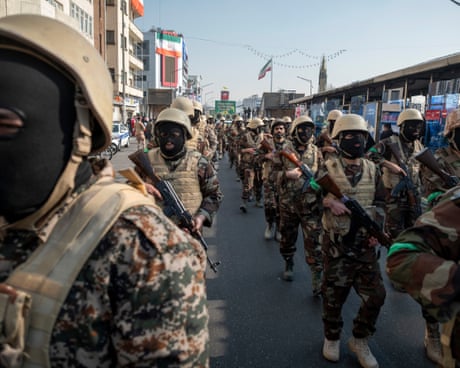
The United Kingdom announced it will list Iran’s Islamic Revolutionary Guard Corps (IRGC) as a terrorist organisation, banning support for the group under counter-terrorism legislation. The Home Office said the decision follows evidence of IRGC-linked threats on UK soil, including a plot to assassinate two Iran International television journalists and cyber-attacks against British targets. Supporting the IRGC in any way will now be a criminal offence. The government simultaneously designated the Islamic Movement of the Companions of the Right (IMCR) and the Russian Federation Volunteer Corps (GRU) as foreign power threat actors. This move reverses a previous Conservative government policy and is expected to sharply escalate diplomatic tensions with Iran.
Key Actors
- ·UK Home Office(Government department responsible for domestic security)Concluded there was sufficient basis to believe the IRGC is engaged in foreign power threat activity and designated it to protect UK interests.
- ·Islamic Revolutionary Guard Corps (IRGC)(Iranian military and security organisation)Accused by the UK of orchestrating assassination plots and cyber-attacks on British soil; designated as a terrorist entity.
- ·Iranian government(Governing authority of Iran)Expected to retaliate diplomatically, with officials previously warning that proscription could lead to the expulsion of the UK ambassador.
Why It Matters
The proscription marks a major escalation in UK–Iran tensions, criminalising support for a central pillar of the Iranian state. It aligns the UK more closely with US ‘maximum pressure’ policy and signals solidarity with Western and Israeli concerns over Iran’s regional activities. The move risks severing direct diplomatic channels, disrupting the Oman-mediated nuclear backchannel, and prompting Iranian countermeasures against British interests, including potential cyber or proxy attacks.
Watch For
Monitor for Iranian retaliatory actions, including expulsion of the UK ambassador from Tehran or reductions in diplomatic ties. Watch for any statements from the Iranian government or IRGC threatening retaliation, as well as potential IRGC-linked cyber-attacks against UK infrastructure. Track whether other European states follow suit and the impact on nuclear negotiations, particularly any statement from the IAEA or the E3.
Generated 41d ago · Based on full articleAuto-Compiled
This page aggregates and summarizes reporting from The Guardian Middle East. The Conflict Pulse does not author original reporting. Read the original source for full coverage.
CONFLICT OVERVIEW
Iran
Latest verified updates on Iran’s regional confrontation, U.S.–Israeli strikes, missile retaliation, proxy networks, sanctions, and Strait of Hormuz risks.
SOURCE PERSPECTIVES
How outlets across the bias spectrum are covering this conflict.
LATEST FROM IRAN

REPORTMiddle East Eye9d ago
Iran formalises Strait of Hormuz control as US struggles to sustain war it launched with Israel

REPORTAl Jazeera9d ago
US threatens ‘indefinite’ blockade against Iran: How long can it last?

REPORTMiddle East Eye9d ago
Morning update
REPORTMiddle East Eye9d ago
Vance says US will end up 'in a stronger position' than Iran

REPORTJerusalem Post — Iran News10d ago
US Treasury Secretary Bessent says US to apply measures 'never seen before' on Iran

REPORTAl Jazeera10d ago