
bbc.co.uk
centerREPORTTrump says new talks with Iran to begin on Monday
Full BriefGenerated 22d ago
What Happened
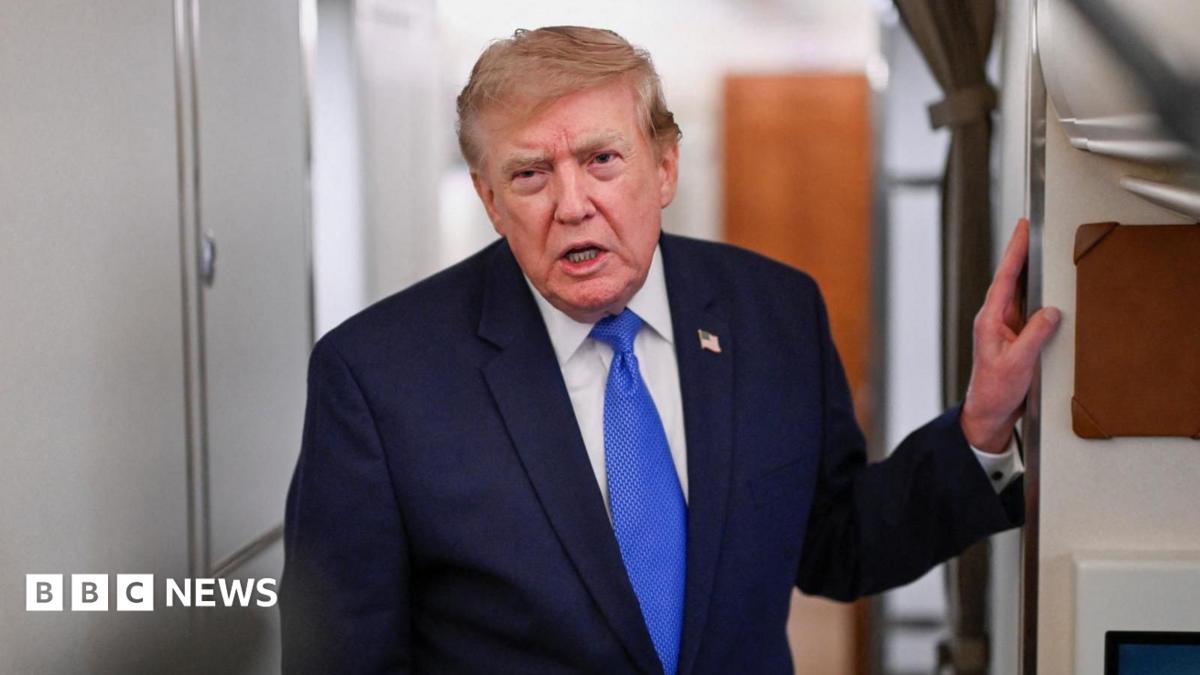
US President Donald Trump claimed on June 23, 2024, that new negotiations with Iran would begin on Monday afternoon, after calling off what he described as 'massive' strikes on the country. Speaking aboard Air Force One, Trump said Iran and US allies in the Middle East had asked him to 'hold off' on the attack because 'the perimeters of a deal' had been agreed, including on the Strait of Hormuz and nuclear issues. Saudi Arabia's Crown Prince Mohammed Bin Salman, the UAE, and Qatar reportedly urged restraint. Iran's semi-official Mehr news agency denied that Tehran had asked the US to refrain from military action, calling Trump's claims 'a new lie.' Iranian Foreign Minister Abbas Araghchi stated that negotiations with Oman on a Strait of Hormuz deal were 'on track for finalisation.' Global oil prices fell on Monday morning in Asian trading, with Brent Crude down 4.5% to $83.98 and US-traded oil down 4.6% to $80.74, after Trump's announcement. Trump declined to specify a deadline or venue for the talks, and Iran had yet to formally respond to his remarks.
Key Actors
- ·Donald Trump(President of the United States)Claimed that US–Iran talks would begin on Monday and that he called off massive strikes after being urged by Iran and regional allies to pursue a deal.
- ·Iran(State actor)Through Mehr news agency, denied asking the US to hold off strikes; Foreign Minister Abbas Araghchi said Oman-mediated talks on a Strait of Hormuz deal were progressing.
- ·Mohammed Bin Salman(Crown Prince of Saudi Arabia)Reportedly urged Trump against conducting strikes over the weekend, alongside the UAE and Qatar, believing a deal was possible.
Why It Matters
The reported talks could de-escalate a months-long conflict that has included tit-for-tat strikes and threatened disruptions to the Strait of Hormuz, a chokepoint for 20% of global crude oil and LNG. A negotiated solution might stabilize energy markets and reduce the risk of a wider military confrontation, but the contradictory claims—with Iran denying it sought a halt to strikes—underscore deep mistrust. The episode also highlights the influence of Gulf allies on US decision-making and the domestic pressure Trump faces ahead of the November midterms as public dissatisfaction with the war grows.
Watch For
Confirm whether talks actually commence on Monday, including venue and participants. Monitor official statements from the Iranian Foreign Ministry or Supreme Leader’s office, and any further denial or clarification from Tehran. Oil price movements and shipping insurance costs in the Strait of Hormuz will reflect market confidence. Also watch for continued US military posturing or renewed threats, and any IAEA reports related to Iran’s nuclear program, which could affect the negotiation’s scope.
Generated 22d ago · Based on full articleAuto-Compiled
This page aggregates and summarizes reporting from bbc.co.uk. The Conflict Pulse does not author original reporting. Read the original source for full coverage.
CONFLICT OVERVIEW
Iran
Latest verified updates on Iran’s regional confrontation, U.S.–Israeli strikes, missile retaliation, proxy networks, sanctions, and Strait of Hormuz risks.
SOURCE PERSPECTIVES
How outlets across the bias spectrum are covering this conflict.
LATEST FROM IRAN

REPORTMiddle East Eye10d ago
Iran formalises Strait of Hormuz control as US struggles to sustain war it launched with Israel

REPORTAl Jazeera10d ago
US threatens ‘indefinite’ blockade against Iran: How long can it last?

REPORTMiddle East Eye10d ago
Morning update
REPORTMiddle East Eye11d ago
Vance says US will end up 'in a stronger position' than Iran

REPORTJerusalem Post — Iran News11d ago
US Treasury Secretary Bessent says US to apply measures 'never seen before' on Iran

REPORTAl Jazeera11d ago