
BBC Middle East
centerREPORTUAE condemns Iran's 'brazen' attack on tankers as US launches fresh strikes
Full BriefGenerated 41d ago
What Happened
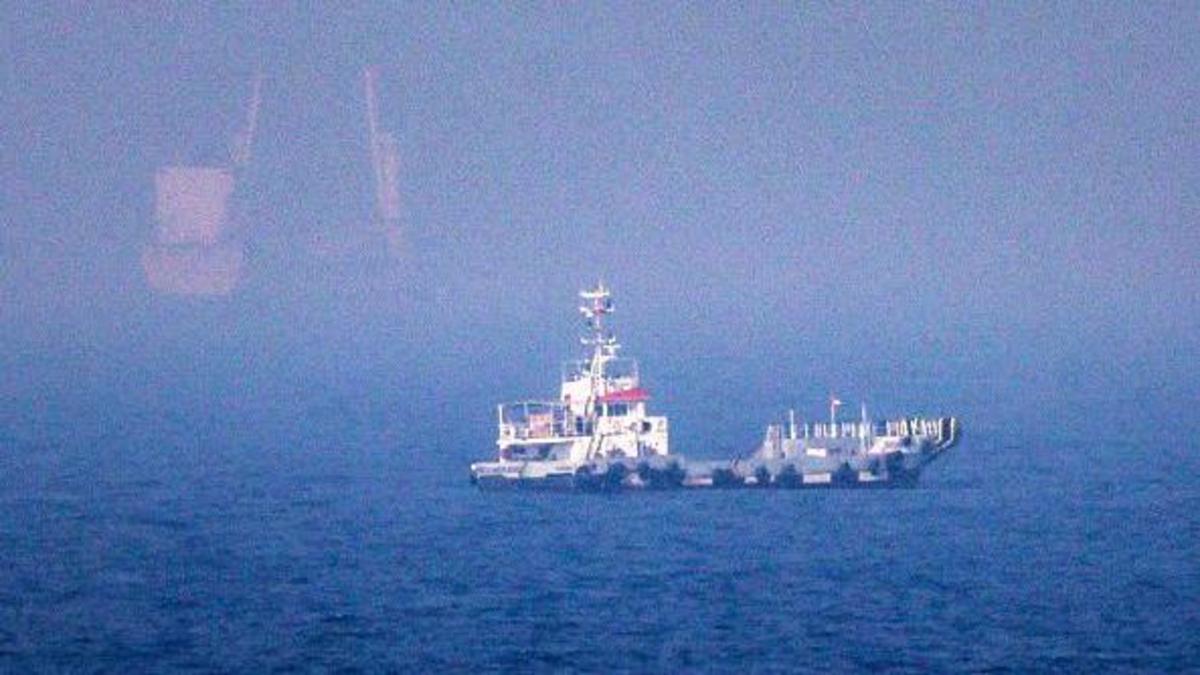
US President Donald Trump announced on Truth Social that the United States was reinstating a naval blockade of Iranian ports effective 20:00 GMT on July 14, and that it would impose a 20% charge on all cargo transiting the Strait of Hormuz, declaring the US 'THE GUARDIAN OF THE HORMUZ STRAIT.' Simultaneously, US Central Command (Centcom) confirmed a third consecutive night of strikes against Iran beginning at 20:45 GMT on July 13 and stated that forces would resume blockading maritime traffic entering and exiting Iranian ports on July 14. Iran's foreign minister Abbas Araghchi responded on X by acknowledging the US president's statement, while asserting Iran's enduring role as guardian of the strait and suggesting that 20% was 'too much,' adding 'We will be fair.' The United Arab Emirates Ministry of Defence claimed that Iranian cruise missiles struck two UAE-flagged tankers in the Strait of Hormuz, killing one Indian crew member and wounding eight others, six Indian and two Ukrainian. Iran's army separately said it had targeted US military assets in Kuwait, according to Iranian state media. The escalation follows a prior US blockade imposed in April, lifted in June under a memorandum of understanding, and a February 28 exchange of strikes that led Iran to effectively close the strait.
Key Actors
- ·Donald Trump(President of the United States)Announced the reinstatement of a naval blockade on Iranian ports and a 20% fee on Strait of Hormuz cargo, asserting US guardianship of the waterway.
- ·Abbas Araghchi(Minister of Foreign Affairs of Iran)Responded by claiming Iran’s enduring guardian role, hinting at negotiation over the fee rate, while warning that foreign interference threatens regional security.
- ·U.S. Central Command (Centcom)(U.S. military combatant command)Resumed strikes on Iran under presidential direction and stated it will enforce a blockade on Iranian port traffic starting July 14.
- ·Ebrahim Zolfaghari(Spokesperson for Iran's Khatam al-Anbiya (Supreme National Security Council-affiliated military headquarters))Warned that US interference in strait management would be treated as an act of war and that regional escalation would engulf all countries.
Why It Matters
The Strait of Hormuz is a chokepoint for roughly 25% of global oil and 20% of liquefied natural gas shipments. A permanent US blockade with a transit fee challenges UNCLOS norms on strait passage, risks direct naval confrontation between US and Iranian forces, and could fracture the international legal consensus on free navigation. Economic fallout via energy price spikes and potential retaliatory attacks on Gulf state infrastructure threaten to broaden the conflict beyond Iranian soil, drawing in the GCC and testing US alliance commitments. The Iranian response—both rhetorical and kinetic—indicates that the strait’s status will become a central theater in US-Iran hostilities, supplanting the prior nuclear-focused standoff.
Watch For
Monitor whether the blockade and fee are enforced at 20:00 GMT on July 14 and the operational details of US interdiction (boarding, inspections, disabling of vessels). Watch for a formal Iranian military or IRGC response—particularly Houthi or Iraqi militia attacks on regional shipping or US bases—and any move by Iran to close the strait to all traffic. The International Maritime Organization’s stated opposition to transit fees may trigger emergency diplomatic sessions; observe for a UN Security Council referral. US Congressional notification letters (already sent on July 7) may lead to hearings or attempts to invoke the War Powers Resolution. Oil and LNG futures markets will react sharply; sustained disruption could force OPEC+ emergency meetings. Finally, look for responses from Oman, as the strait falls within its territorial waters, and from the UAE, Saudi Arabia, and Kuwait, whose security could be directly challenged by further Iranian strikes.
Generated 41d ago · Based on full articleAuto-Compiled
This page aggregates and summarizes reporting from BBC Middle East. The Conflict Pulse does not author original reporting. Read the original source for full coverage.
CONFLICT OVERVIEW
Iran
Latest verified updates on Iran’s regional confrontation, U.S.–Israeli strikes, missile retaliation, proxy networks, sanctions, and Strait of Hormuz risks.
SOURCE PERSPECTIVES
How outlets across the bias spectrum are covering this conflict.
LATEST FROM IRAN

REPORTMiddle East Eye9d ago
Iran formalises Strait of Hormuz control as US struggles to sustain war it launched with Israel

REPORTAl Jazeera10d ago
US threatens ‘indefinite’ blockade against Iran: How long can it last?

REPORTMiddle East Eye10d ago
Morning update
REPORTMiddle East Eye10d ago
Vance says US will end up 'in a stronger position' than Iran

REPORTJerusalem Post — Iran News10d ago
US Treasury Secretary Bessent says US to apply measures 'never seen before' on Iran

REPORTAl Jazeera10d ago