
The Guardian Middle East
leftREPORTThe Guardian view on a US-Saudi nuclear agreement: an offer that further erodes international safeguards | Editorial
Full BriefGenerated 28d ago
What Happened
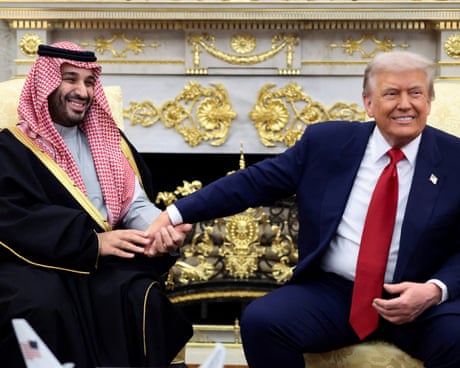
The United States announced on Wednesday that it had signed a nuclear cooperation agreement with Saudi Arabia. The deal could permit Saudi Arabia to enrich uranium in the future and avoid the fullest inspection rights by the International Atomic Energy Agency (IAEA), according to experts and the editorial. This weakens the previous 'gold standard' exemplified by the UAE's commitment to permanently forgo enrichment and accept full IAEA monitoring. Hours after the announcement, US President Donald Trump declared the deal contingent on Saudi Arabia recognizing Israel, a long-standing precondition complicated by Israel's war in Gaza. The agreement was signed amid a US bombing campaign against Iran and growing regional instability.
Key Actors
- ·United States(Signatory to the nuclear cooperation deal, under President Donald Trump)Offered Saudi Arabia nuclear technology with relaxed safeguards, while conditioning the deal on Saudi recognition of Israel.
- ·Saudi Arabia(Signatory to the nuclear cooperation deal, led by Crown Prince Mohammed bin Salman)Secured potential future uranium enrichment rights and reduced IAEA inspections; has previously stated it would seek a nuclear weapon if Iran acquires one.
- ·International Atomic Energy Agency (IAEA)(UN nuclear watchdog)Its inspection rights would be limited under the deal, undermining the agency's verification standards and setting a proliferation precedent.
- ·Iran(Regional rival and trigger for Saudi nuclear ambitions)Its advancing nuclear program and US military strikes against it provide the context for Saudi Arabia's pursuit of nuclear capabilities.
Why It Matters
The deal erodes the non-proliferation norm by allowing enrichment without full inspections, setting a precedent that Russia or China could exploit. It heightens the risk of a Middle Eastern nuclear arms race, as Saudi Arabia has explicitly linked its nuclear ambitions to Iran's program. The announcement itself legitimizes nuclear pursuits by other states, further destabilizing a region already on the brink of wider conflict following US strikes on Iran.
Watch For
Implementation steps of the US-Saudi nuclear agreement, including any congressional review; IAEA's reaction and potential safeguard adjustments; whether Saudi Arabia initiates enrichment activities; Iran's response and its uranium enrichment trajectory; the viability of the Saudi-Israel normalization condition amid ongoing Gaza violence; and other states' moves to seek similar nuclear concessions.
Generated 28d ago · Based on full articleAuto-Compiled
This page aggregates and summarizes reporting from The Guardian Middle East. The Conflict Pulse does not author original reporting. Read the original source for full coverage.
CONFLICT OVERVIEW
Iran
Latest verified updates on Iran’s regional confrontation, U.S.–Israeli strikes, missile retaliation, proxy networks, sanctions, and Strait of Hormuz risks.
SOURCE PERSPECTIVES
How outlets across the bias spectrum are covering this conflict.
LATEST FROM IRAN

REPORTMiddle East Eye11d ago
Iran formalises Strait of Hormuz control as US struggles to sustain war it launched with Israel

REPORTAl Jazeera11d ago
US threatens ‘indefinite’ blockade against Iran: How long can it last?

REPORTMiddle East Eye11d ago
Morning update
REPORTMiddle East Eye11d ago
Vance says US will end up 'in a stronger position' than Iran

REPORTJerusalem Post — Iran News11d ago
US Treasury Secretary Bessent says US to apply measures 'never seen before' on Iran

REPORTAl Jazeera11d ago