
BBC US & Canada
centerREPORTTehran targets US Gulf bases after American forces launch new strikes on Iran
Full BriefGenerated 73d ago
What Happened
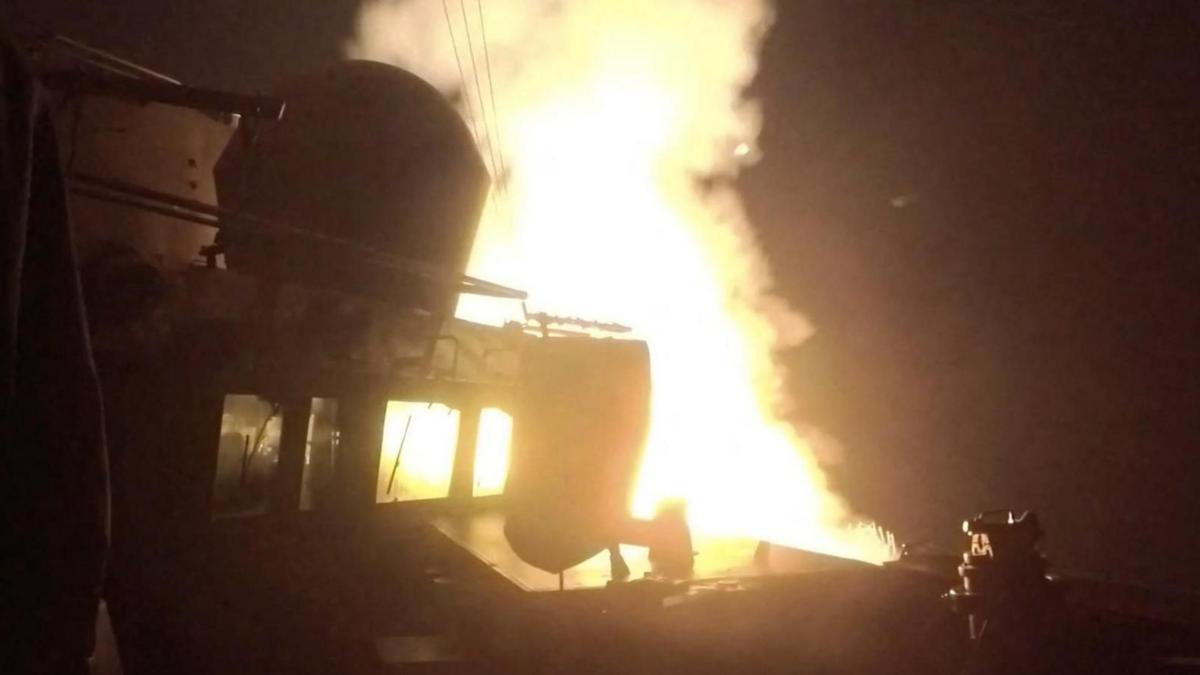
The US Central Command (Centcom) carried out a second consecutive night of 'self-defense strikes' on Iran, following President Donald Trump's warning that Iran would be hit 'hard' for taking too long to negotiate a deal. In retaliation, Iran's Islamic Revolutionary Guard Corps (IRGC) attacked US military bases in Bahrain and Kuwait—the same targets struck a day earlier—and, according to Iranian state media, struck two oil tankers in the Strait of Hormuz. Iran also declared the Strait of Hormuz 'completely closed to all type of vessel,' though Centcom countered that commercial ships continued to transit. Explosions were reported in southern Iranian cities near the strait. The exchanges came after a fragile April ceasefire had already been frayed by intermittent fire and the downing of a US helicopter blamed on Iran.
Key Actors
- ·US Central Command (Centcom)(US military command responsible for the Middle East)Conducted the second night of self-defense strikes on Iran and stated that commercial shipping through the Strait of Hormuz was still moving.
- ·IRGC(Iran's Islamic Revolutionary Guard Corps)Attacked US military bases in Bahrain and Kuwait and claimed to have struck two oil tankers in the Strait of Hormuz.
- ·Donald Trump(US President)Ordered the strikes and threatened further attacks unless a peace deal is reached.
- ·Masoud Pezeshkian(President of Iran)Vowed Iran will stand firm against pressure or threats and accused the US of damaging diplomacy with contradictory messages.
Why It Matters
The intensifying tit-for-tat strikes mark the most severe breakdown of the April ceasefire, risking a full-scale US-Iran military confrontation. Iran's contested closure of the Strait of Hormuz and attacks on oil tankers threaten global energy supplies, spiking oil prices (Brent crude surpassed $95). The crisis tests the resilience of diplomatic backchannels and underscores the IRGC's ability to directly target US assets and strategic waterways.
Watch For
Confirmation of the Strait of Hormuz's operational status and any further attacks on commercial shipping or regional bases. Oil price reactions. The US response to Iran's strikes on Gulf bases and tankers, including any third night of US strikes. Potential UN Security Council consultations. Signs of revived diplomacy or a new ceasefire deadline.
Generated 73d ago · Based on full articleAuto-Compiled
This page aggregates and summarizes reporting from BBC US & Canada. The Conflict Pulse does not author original reporting. Read the original source for full coverage.
CONFLICT OVERVIEW
Iran
Latest verified updates on Iran’s regional confrontation, U.S.–Israeli strikes, missile retaliation, proxy networks, sanctions, and Strait of Hormuz risks.
SOURCE PERSPECTIVES
How outlets across the bias spectrum are covering this conflict.
LATEST FROM IRAN

REPORTMiddle East Eye10d ago
Iran formalises Strait of Hormuz control as US struggles to sustain war it launched with Israel

REPORTAl Jazeera10d ago
US threatens ‘indefinite’ blockade against Iran: How long can it last?

REPORTMiddle East Eye10d ago
Morning update
REPORTMiddle East Eye10d ago
Vance says US will end up 'in a stronger position' than Iran

REPORTJerusalem Post — Iran News10d ago
US Treasury Secretary Bessent says US to apply measures 'never seen before' on Iran

REPORTAl Jazeera10d ago