
The Guardian Middle East
leftREPORTSo is the US war with Iran over? In a word: no | Mohamad Bazzi
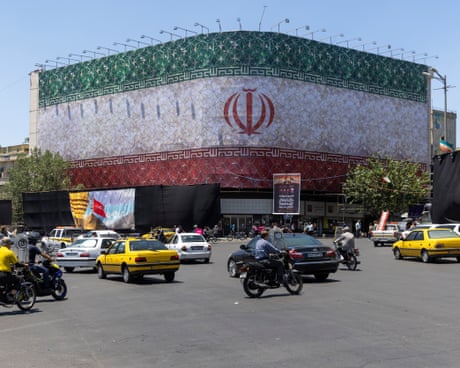
The much-hyped deal, which is set to be formally signed on Friday in Geneva, doesn’t end the war. It’s essentially a 60-day extension of a ceasefireWhen Donald Trump launched his war against Iran in late February, he had ambitious goals: to topple Iran’s theocratic regime, destroy its military capabilities and nuclear program, and instigate a popular uprising by Iranians.
Full BriefGenerated 69d ago
What Happened
The United States and Iran have reached a 60-day ceasefire agreement to reopen the Strait of Hormuz, following weeks of military conflict that began on 28 February. The deal, expected to be signed in Geneva on Friday, suspends tolls Iran had imposed on commercial shipping during the hostilities. This agreement extends a previous 8 April ceasefire that failed to resolve the blockade. The conflict, which included joint US-Israeli airstrikes, resulted in the deaths of over 30 Iranian officials, including Supreme Leader Ayatollah Ali Khamenei, leading to the succession of Mojtaba Khamenei.
Key Actors
- ·Donald Trump(President of the United States)Initiated a military campaign for regime change in Iran and subsequently negotiated a temporary ceasefire to reopen the Strait of Hormuz.
- ·Mojtaba Khamenei(Supreme Leader of Iran)Assumed leadership following the death of his father and is supported by the Islamic Revolutionary Guard Corps in maintaining a defiant stance.
- ·IRGC(Iranian military force)Exerts increased influence over Iran's political and economic systems and is expected to push for continued control over maritime transit fees.
- ·Mehdi Mohammadi(Adviser to the Iranian Speaker of Parliament)Asserted that Iran and Oman retain the right to collect fees for navigation and security services in the Strait of Hormuz.
Why It Matters
The conflict has fundamentally altered the regional status quo, demonstrating Iran's capacity to disrupt global energy and agricultural supply chains via the Strait of Hormuz. Despite the military pressure applied by the United States and Israel, the Iranian leadership has emerged with increased leverage, complicating future diplomatic efforts to restore pre-war freedom of navigation and address nuclear enrichment concerns.
Watch For
Monitor the formal signing of the agreement in Geneva on Friday and the subsequent negotiations scheduled to conclude by 19 June. Key indicators include whether Iran continues to enforce 'navigation and security' fees and if the United States and Iran can reach a long-term resolution regarding the status of the waterway and Iran's nuclear program.
Generated 69d ago · Based on full articleAuto-Compiled
This page aggregates and summarizes reporting from The Guardian Middle East. The Conflict Pulse does not author original reporting. Read the original source for full coverage.
CONFLICT OVERVIEW
Iran
Latest verified updates on Iran’s regional confrontation, U.S.–Israeli strikes, missile retaliation, proxy networks, sanctions, and Strait of Hormuz risks.
SOURCE PERSPECTIVES
How outlets across the bias spectrum are covering this conflict.
LATEST FROM IRAN

REPORTMiddle East Eye10d ago
Iran formalises Strait of Hormuz control as US struggles to sustain war it launched with Israel

REPORTAl Jazeera10d ago
US threatens ‘indefinite’ blockade against Iran: How long can it last?

REPORTMiddle East Eye10d ago
Morning update
REPORTMiddle East Eye11d ago
Vance says US will end up 'in a stronger position' than Iran

REPORTJerusalem Post — Iran News11d ago
US Treasury Secretary Bessent says US to apply measures 'never seen before' on Iran

REPORTAl Jazeera11d ago