
The Guardian Middle East
leftREPORTSecret correspondence claims suggest tensions at top of Iranian government
Full BriefGenerated 64d ago
What Happened
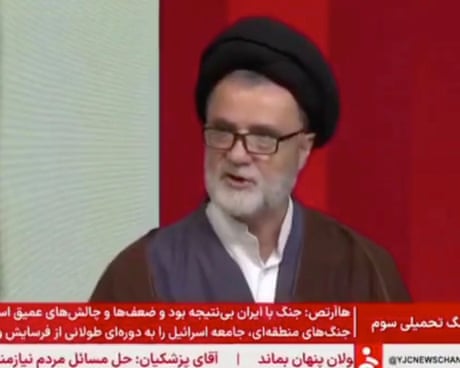
On state broadcaster IRIB, Mahmoud Nabavian, deputy chair of Iran's National Security Council and a former member of Iran's negotiating team, revealed what he claimed were secret letters from Supreme Leader Mojtaba Khamenei. The interview was cut off, the archived footage removed, and a senior IRIB official resigned. Nabavian claimed the letters showed Khamenei believed the negotiating team had overstepped its mandate and set 11 conditions for continuing talks, including US compensation, uranium enrichment rights, sanctions relief, and exclusive Iranian management of the Strait of Hormuz with toll collection. He later posted on Telegram, alleging four preconditions for negotiations to begin: end of occupation in Lebanon, release of frozen funds, lifting of a siege, and temporary sanctions removal, questioning whether they were met before talks in Geneva. The negotiating team's spokesperson dismissed the claims as old and distorted, while the camp of chief negotiator Mohammad Bagher Ghalibaf called for the leaker to be identified. The episode exposed factional tensions, with hardliners from the Paydari (Stability Front) accused of using IRIB to undermine the negotiations.
Key Actors
- ·Mahmoud Nabavian(Deputy chair of Iran's National Security Council, former member of Iran's negotiating team)Publicly revealed alleged secret letters from Supreme Leader Khamenei, claiming the negotiating team overstepped its mandate and listing strict conditions for talks.
- ·Mojtaba Khamenei(Supreme Leader of Iran)Allegedly set 11 conditions for nuclear negotiations, including compensation, enrichment rights, and Hormuz tolls, and expressed that the Islamabad talks deviated from his mandate.
- ·Masoud Pezeshkian(President of Iran)Received a letter from Khamenei stating a differing view on talks but deferring to the president's judgment on certain conditions.
- ·Mohammad Bagher Ghalibaf(Chief negotiator at current talks in Switzerland)His camp called for the leaker to be identified following Nabavian's revelations.
Why It Matters
The revelations expose deep factional rifts at the apex of Iran's government over nuclear diplomacy and regional strategy. If the supreme leader's conditions as described by Nabavian are authentic—particularly the demand for tolls in the Strait of Hormuz and a halt to talks unless preconditions are met—it could derail ongoing negotiations in Switzerland and escalate tensions with the US and its allies. The incident also signals a power struggle between hardline Paydari loyalists and the Pezeshkian administration, potentially weakening Iran's negotiating coherence and raising doubts about the durability of any agreement.
Watch For
Imminent steps: possible formal prosecution or parliamentary dismissal of Nabavian; formal responses from the negotiating team or supreme leader's office; any disruption or hardening of positions at the Geneva talks; and any actual moves to enforce toll collection in the Strait of Hormuz, which could prompt a US military reaction. Also monitor IRIB's internal shake-up and further leaks from Nabavian's Telegram channel.
Generated 64d ago · Based on full articleAuto-Compiled
This page aggregates and summarizes reporting from The Guardian Middle East. The Conflict Pulse does not author original reporting. Read the original source for full coverage.
CONFLICT OVERVIEW
Iran
Latest verified updates on Iran’s regional confrontation, U.S.–Israeli strikes, missile retaliation, proxy networks, sanctions, and Strait of Hormuz risks.
SOURCE PERSPECTIVES
How outlets across the bias spectrum are covering this conflict.
LATEST FROM IRAN

REPORTMiddle East Eye10d ago
Iran formalises Strait of Hormuz control as US struggles to sustain war it launched with Israel

REPORTAl Jazeera10d ago
US threatens ‘indefinite’ blockade against Iran: How long can it last?

REPORTMiddle East Eye10d ago
Morning update
REPORTMiddle East Eye10d ago
Vance says US will end up 'in a stronger position' than Iran

REPORTJerusalem Post — Iran News10d ago
US Treasury Secretary Bessent says US to apply measures 'never seen before' on Iran

REPORTAl Jazeera10d ago