The Guardian Middle East
leftREPORTRubio insists strait of Hormuz will be toll-free as he arrives for Gulf meeting
Full BriefGenerated 63d ago
What Happened
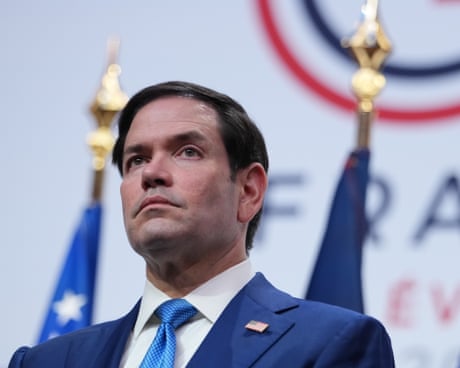
US Secretary of State Marco Rubio is conducting a diplomatic tour of the United Arab Emirates, Kuwait, and Bahrain to address regional concerns regarding a 60-day ceasefire agreement between the US and Iran. The deal, which involves the unfreezing of approximately $6bn in assets held in Qatar and a $6bn loan from Doha, has sparked internal division among Gulf states. While the US administration claims the funds are restricted to humanitarian purchases, Iranian Central Bank Governor Abdolnaser Hemmati stated that Iran is not obligated to spend these assets on US goods. Additionally, Iranian Foreign Ministry spokesperson Esmail Baghaei denied that Iran has granted the International Atomic Energy Agency (IAEA) access to inspect nuclear facilities damaged during recent military exchanges, contradicting claims made by the US government.
Key Actors
- ·Marco Rubio(US Secretary of State)Leading diplomatic efforts to reassure Gulf allies regarding the US-Iran ceasefire and regional security commitments.
- ·Esmail Baghaei(Iranian Foreign Ministry Spokesperson)Asserted that Iran has not agreed to IAEA inspections of damaged nuclear sites and accused the UAE, Kuwait, and Jordan of assisting US military operations.
- ·Masoud Pezeshkian(President of Iran)Engaging in regional diplomacy, including a visit to Pakistan, to discuss post-conflict relations.
- ·Mohammad Bagher Ghalibaf(Iranian Chief Negotiator)Consulting with the Sultan of Oman regarding the long-term management of the Strait of Hormuz.
Why It Matters
The ceasefire agreement creates a complex diplomatic friction point between the US and its Gulf partners, who fear that the release of Iranian assets will fund further regional military activity. The conflicting interpretations of the agreement's terms—specifically regarding the use of funds, the scope of nuclear inspections, and the binding nature of the ceasefire on Israeli operations—threaten to undermine the stability of the broader US-backed security architecture in the Middle East.
Watch For
Monitor the implementation of the 60-day ceasefire, specifically whether the US Treasury sanctions waivers on Iranian oil exports result in the projected $8bn income for Tehran. Additionally, observe the status of the Strait of Hormuz shipping traffic and any further diplomatic developments regarding the IAEA's access to Iranian nuclear facilities, as well as potential shifts in the security alignment between Gulf states and the US.
Generated 63d ago · Based on full articleAuto-Compiled
This page aggregates and summarizes reporting from The Guardian Middle East. The Conflict Pulse does not author original reporting. Read the original source for full coverage.
CONFLICT OVERVIEW
Iran
Latest verified updates on Iran’s regional confrontation, U.S.–Israeli strikes, missile retaliation, proxy networks, sanctions, and Strait of Hormuz risks.
SOURCE PERSPECTIVES
How outlets across the bias spectrum are covering this conflict.
LATEST FROM IRAN

REPORTMiddle East Eye11d ago
Iran formalises Strait of Hormuz control as US struggles to sustain war it launched with Israel

REPORTAl Jazeera11d ago
US threatens ‘indefinite’ blockade against Iran: How long can it last?

REPORTMiddle East Eye12d ago
Morning update
REPORTMiddle East Eye12d ago
Vance says US will end up 'in a stronger position' than Iran

REPORTJerusalem Post — Iran News12d ago
US Treasury Secretary Bessent says US to apply measures 'never seen before' on Iran

REPORTAl Jazeera12d ago