Middle East Eye
centerREPORTRussian executive says US using Strait of Hormuz to 'reshape' energy markets

Full BriefGenerated 20d ago
What Happened
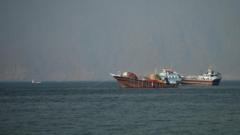
Igor Sechin, CEO of Rosneft, Russia's state-controlled oil giant, stated on Saturday that the United States is attempting to exploit the closure of the Strait of Hormuz to reconfigure global energy market regulations in its favor. Sechin's remarks frame the strait's closure—a critical chokepoint through which roughly 21% of global petroleum liquids transit—as a deliberate U.S. geopolitical maneuver rather than a consequence of regional tensions. The statement did not specify whether Sechin was referring to an actual closure, threatened closure, or hypothetical scenario, nor did it provide evidence linking U.S. policy to any disruption of the strait.
Key Actors
- ·Igor Sechin(CEO of Rosneft, Russia's largest state-controlled oil company)Accused the United States of attempting to use the Strait of Hormuz closure to reshape global energy markets for American advantage.
- ·United States(Global energy market actor and naval power with Fifth Fleet presence in the Persian Gulf)Alleged by Sechin to be manipulating the Strait of Hormuz situation to benefit its own energy market position.
- ·Rosneft(Russian state-controlled oil and gas corporation)Represented by its CEO in framing the strait's status as part of a U.S.-driven energy market strategy.
Why It Matters
The Strait of Hormuz is the world's most critical oil transit chokepoint, with approximately 21 million barrels per day passing through it in recent years—roughly one-fifth of global petroleum liquids consumption. Any sustained closure or disruption would trigger immediate supply shocks, spike global oil prices, and force Europe and Asia to seek alternative suppliers, potentially benefiting U.S. LNG and crude exporters. Sechin's statement reflects Moscow's broader narrative that Western powers weaponize energy infrastructure and sanctions to secure market dominance, a theme Russia has amplified since its invasion of Ukraine and subsequent European pivot away from Russian hydrocarbons. The remarks also signal Russia's intent to position itself as a defender of open energy markets while competing with the U.S. for influence in the Middle East and among non-Western energy consumers, particularly China and India.
Watch For
Monitor whether Iran or the U.S. issue responses to Sechin's claim, particularly any statements from the Iranian Revolutionary Guard Corps Navy or U.S. Central Command regarding freedom of navigation operations in the strait. Track whether Russia escalates this rhetoric in multilateral forums such as OPEC+ meetings or the Shanghai Cooperation Organisation, where it could frame U.S. policy as a threat to energy security for China, India, and other importers. Observe any changes in tanker traffic data through the strait or shifts in insurance premiums for vessels transiting the Hormuz chokepoint, which would indicate market perception of heightened risk. Finally, watch for coordination between Moscow and Tehran on energy policy or joint statements regarding Gulf security, as this could signal deeper Russian-Iranian alignment in response to perceived U.S. pressure.
Generated 20d ago · Based on full articleAuto-Compiled
This page aggregates and summarizes reporting from Middle East Eye. The Conflict Pulse does not author original reporting. Read the original source for full coverage.
CONFLICT OVERVIEW
Iran
Latest verified updates on Iran’s regional confrontation, U.S.–Israeli strikes, missile retaliation, proxy networks, sanctions, and Strait of Hormuz risks.
SOURCE PERSPECTIVES
How outlets across the bias spectrum are covering this conflict.
LATEST FROM IRAN