
The Guardian Middle East
leftREPORTOil passes $100 a barrel again and shares slide as Middle East conflict escalates
Sharp rise in oil price reflects fears Houthi militias could strangle Saudi exports as US-Iran fighting intensifiesHow the Bab al-Mandab blockade threat pushed oil back above $100The oil price broke above $100 a barrel for the first time in two months as a fresh escalation of the Middle East conflict threatens to compound disruption to global oil supplies. The benchmark oil price rose sharply on Thursday, from $95 the day before, amid fears that Yemen’s Houthi militia could strangle Saudi oil ex
Full BriefGenerated 33d ago
What Happened
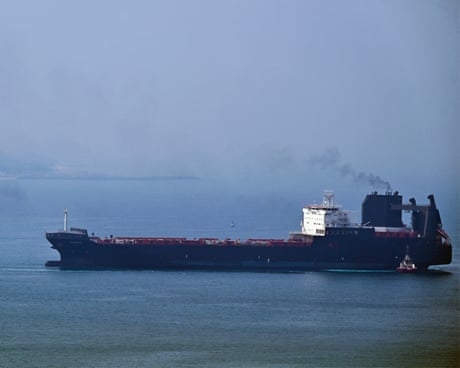
Yemen’s Houthi militia (Ansar Allah) claimed responsibility for attacking two Saudi Arabian oil tankers—the Encelia and Layla—in the Red Sea on Thursday, using ballistic and cruise missiles as well as drones, which they said left one vessel on fire. The Houthis accused the crews of violating a naval blockade imposed by the group. The attack pushed the international benchmark Brent crude oil price back above $100 per barrel for the first time in two months, amid escalating US-Iran tensions over oil flows through the Strait of Hormuz. The price had previously peaked at $126 in April after US and Israeli airstrikes on Iran halted Gulf fossil fuel exports, falling back below $100 after hopes of a ceasefire, but it resurged following the collapse of a US-Iran memorandum of understanding and renewed hostilities.
Key Actors
- ·Houthis (Ansar Allah)(Iranian-aligned Yemeni rebel group)Claimed to have attacked two Saudi oil tankers with missiles and drones, enforcing a naval blockade in the Red Sea.
- ·Saudi Arabia(Target of the Houthi attacks)Two of its oil tankers were reportedly struck, one set on fire, threatening its oil export routes.
- ·United States(Counterparty in US-Iran tensions)Its airstrikes on Iran alongside Israel in March and the breakdown of a bilateral memorandum of understanding have contributed to the instability.
- ·Iran(Regional power and backer of the Houthis)Its proxy network and direct tensions with the US over the Strait of Hormuz have intensified disruptions to global oil supplies.
Why It Matters
The spike in oil prices above $100 a barrel signals severe disruption to global energy markets, stemming from the intersection of Houthi attacks on Red Sea shipping and US-Iran brinkmanship over the Strait of Hormuz. It illustrates the economic leverage of Iran's regional proxies and the risk of a wider conflict that could further cripple critical maritime chokepoints, with knock-on effects for inflation and global economic stability.
Watch For
Monitor for verification of the tanker attacks and damage assessments; any military response by Saudi Arabia or the US; further Houthi threats or actions against Red Sea shipping; developments in US-Iran diplomatic backchannels or escalatory moves; and oil market reactions including potential strategic reserve releases.
Generated 33d ago · Based on full articleAuto-Compiled
This page aggregates and summarizes reporting from The Guardian Middle East. The Conflict Pulse does not author original reporting. Read the original source for full coverage.
CONFLICT OVERVIEW
Iran
Latest verified updates on Iran’s regional confrontation, U.S.–Israeli strikes, missile retaliation, proxy networks, sanctions, and Strait of Hormuz risks.
SOURCE PERSPECTIVES
How outlets across the bias spectrum are covering this conflict.
LATEST FROM IRAN

REPORTMiddle East Eye11d ago
Iran formalises Strait of Hormuz control as US struggles to sustain war it launched with Israel

REPORTAl Jazeera11d ago
US threatens ‘indefinite’ blockade against Iran: How long can it last?

REPORTMiddle East Eye12d ago
Morning update
REPORTMiddle East Eye12d ago
Vance says US will end up 'in a stronger position' than Iran

REPORTJerusalem Post — Iran News12d ago
US Treasury Secretary Bessent says US to apply measures 'never seen before' on Iran

REPORTAl Jazeera12d ago