
The Guardian Middle East
leftREPORTUS and Iran exchange strikes for second day, as ceasefire appears close to collapse
Full BriefGenerated 75d ago
What Happened
The United States launched a second consecutive day of airstrikes against Iranian targets, including locations in Tehran, Bandar Abbas, Qeshm island, and Sirik, following the downing of a US Apache helicopter over the Strait of Hormuz. US Central Command stated the strikes targeted Iranian air defenses, radar sites, and ground control stations. In response, Iran reportedly launched strikes targeting Bahrain, Kuwait, and Jordan, leading Kuwait to close its airspace and Bahrain to activate missile alert sirens. Iranian state media claimed that previous US strikes on Wednesday damaged two reservoirs, disrupting water access for 20,000 residents, while UK maritime security firm Ambrey reported a suspected US missile strike resulted in one injury and two missing crew members on a tanker.
Key Actors
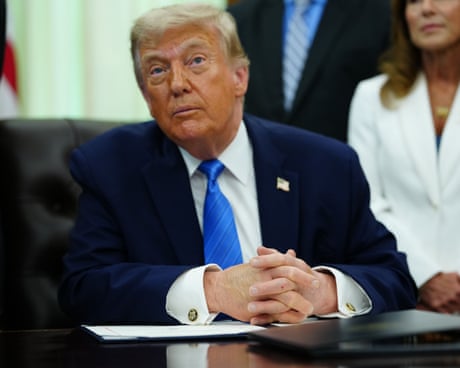
- ·Donald Trump(President of the United States)Authorized military strikes against Iran while threatening further action against infrastructure if negotiations for a peace deal do not progress.
- ·Esmail Baqaei(Iranian Foreign Ministry Spokesperson)Stated that US military actions have jeopardized ongoing ceasefire negotiations.
- ·US Central Command(United States military combatant command)Characterized the strikes as a proportional response to the downing of a US Apache helicopter.
Why It Matters
The exchange of fire marks a near-total collapse of a two-month-old ceasefire, significantly increasing the risk of a broader regional conflict. The escalation threatens the stability of the Strait of Hormuz, a critical global energy chokepoint, and complicates diplomatic efforts led by Qatar to secure a durable peace deal amidst conflicting demands regarding sanctions relief and nuclear non-proliferation.
Watch For
Monitor the status of the Qatari mediation delegation in Tehran and any further US military actions against Iranian power plants or bridges as threatened by the US administration. Additionally, observe the impact of the Strait of Hormuz blockade on global oil prices and the potential for further retaliatory strikes from Iranian-aligned networks in the region.
Generated 75d ago · Based on full articleAuto-Compiled
This page aggregates and summarizes reporting from The Guardian Middle East. The Conflict Pulse does not author original reporting. Read the original source for full coverage.
CONFLICT OVERVIEW
Iran
Latest verified updates on Iran’s regional confrontation, U.S.–Israeli strikes, missile retaliation, proxy networks, sanctions, and Strait of Hormuz risks.
SOURCE PERSPECTIVES
How outlets across the bias spectrum are covering this conflict.
LATEST FROM IRAN

REPORTMiddle East Eye12d ago
Iran formalises Strait of Hormuz control as US struggles to sustain war it launched with Israel

REPORTAl Jazeera12d ago
US threatens ‘indefinite’ blockade against Iran: How long can it last?

REPORTMiddle East Eye12d ago
Morning update
REPORTMiddle East Eye12d ago
Vance says US will end up 'in a stronger position' than Iran

REPORTJerusalem Post — Iran News12d ago
US Treasury Secretary Bessent says US to apply measures 'never seen before' on Iran

REPORTAl Jazeera12d ago