The Guardian Middle East
leftBREAKINGMiddle East crisis live: Trump says he is pausing operation that helps ships leave strait of Hormuz after just one day
Live BriefGenerated 19h ago
Story Developing — Brief Reflects Events Through 19h ago
What Happened
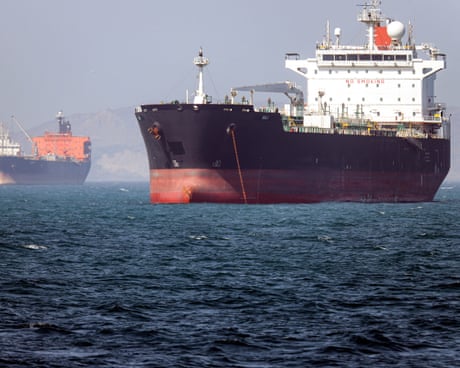
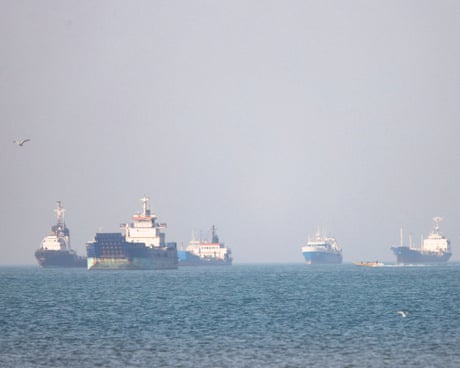
President Donald Trump announced he is pausing 'Project Freedom,' the US military operation launched to escort commercial ships through the Strait of Hormuz, after only one day of operations. The decision comes amid heightened tensions following recent US and Israeli strikes on Iran. Separately, Iranian Foreign Minister Abbas Araghchi is traveling to Beijing for talks with his Chinese counterpart on bilateral relations and regional developments, according to Iran's foreign ministry. Beijing had previously condemned the US and Israeli strikes on Iran, positioning China as a potential diplomatic intermediary in the escalating crisis.
Key Actors
- ·Donald Trump(President of the United States)Announced the pause of the US military escort operation through the Strait of Hormuz after one day, signaling a potential de-escalation or strategic recalibration.
- ·Abbas Araghchi(Iranian Foreign Minister)Traveling to Beijing to discuss bilateral relations and regional developments with Chinese officials, seeking diplomatic support following US-Israeli strikes.
- ·China(Regional diplomatic actor and Iranian partner)Condemned the US and Israeli strikes on Iran and is hosting Iranian diplomatic talks, positioning itself as a potential mediator or counterweight to US pressure.
Why It Matters
The abrupt pause of Project Freedom after one day suggests either immediate Iranian acquiescence to US pressure, logistical complications, or a shift in White House strategy regarding freedom of navigation enforcement in the Strait of Hormuz—a chokepoint through which roughly 21% of global petroleum passes. Araghchi's Beijing visit underscores Iran's effort to leverage its strategic partnership with China to counterbalance US and Israeli military pressure, particularly as Tehran seeks economic relief from sanctions and diplomatic cover at the UN Security Council. The timing of the pause and the diplomatic outreach indicates the US-Iran standoff remains volatile, with both sides testing the boundaries of escalation while seeking off-ramps.
Watch For
Monitor the outcome of Araghchi's talks in Beijing for any joint statements on Strait of Hormuz navigation, sanctions relief, or Chinese security guarantees to Iran. Watch for clarification from the White House or Pentagon on the conditions under which Project Freedom might resume, and whether Iran has made any private commitments regarding attacks on shipping. Track any Iranian Revolutionary Guard Corps (IRGC) naval activity in the Strait of Hormuz to assess whether Tehran interprets the pause as a concession or a temporary lull. Observe whether Israel or the US conduct follow-on strikes on Iranian targets, which would signal the pause is tactical rather than a broader de-escalation.
Generated 19h ago · Based on full articleAuto-Compiled
This page aggregates and summarizes reporting from The Guardian Middle East. The Conflict Pulse does not author original reporting. Read the original source for full coverage.
CONFLICT OVERVIEW
Iran
Internal political tensions, regional proxy conflicts, and international standoffs regarding Iran's nuclear program and geopolitical influence.
SOURCE PERSPECTIVES
How outlets across the bias spectrum are covering this conflict.
left
Middle East crisis live: Iran’s top negotiator says US aiming to force Tehran’s ‘surrender’
The Guardian Middle EastTrump tells Iran to accept deal or face new wave of US bombing
The Guardian AsiaLATEST FROM IRAN