
The Guardian Middle East
leftREPORT‘It’s truly hell here’: airstrikes, repression and water shortages become ‘new normal’ for Iranians
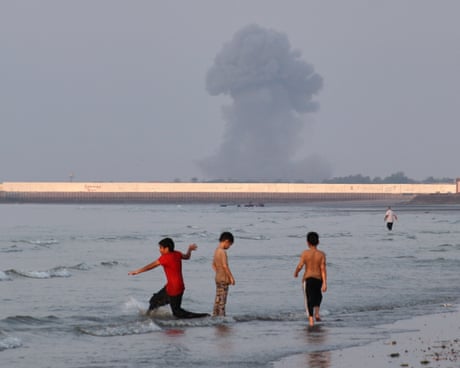
Iranians describe how daily life is becoming ever harder as conflict continues and human rights crisis worsensAs US airstrikes hit port and inland cities in Iran, and Tehran strikes at the US’s Middle East allies, the escalating conflict has left many Iranians fearing that, amid war and a worsening human rights crisis, they remain trapped in a cycle of violence and repression with no way out. Bandar Abbas, on the strait of Hormuz and the headquarters of the Iranian navy, has been hit by strikes
Full BriefGenerated 34d ago
What Happened
US airstrikes have hit the Iranian port cities of Bandar Abbas and Jask nightly for nearly two weeks, with state media claiming strikes on 100 civilian vessels and damage to the Bonji desalination plant, leaving 20 villages without drinking water. Residents reported prolonged power cuts, extended government-imposed internet shutdowns, and water rationing amid temperatures above 40°C, describing a 'new normal' of fear and hardship. Meanwhile, Iran's human rights crisis deepens: Iran Human Rights recorded at least 400 executions since the start of the year, including of teenagers and protesters, as civilians fear further regime retaliation.
Key Actors
- ·US military(Belligerent conducting airstrikes)Allegedly struck civilian vessels and the Bonji desalination plant, causing water and power disruptions, according to Iranian state media and resident accounts.
- ·Islamic Republic of Iran(State actor under attack and repressive government)Faces US strikes while continuing executions and internet shutdowns; state media claimed US strikes hit 100 civilian vessels and a desalination plant.
- ·Iranian civilians(Affected population)Report water shortages, power cuts, and internet disruptions; express fear of both external strikes and regime repression.
- ·Iran Human Rights(Human rights monitor)Reported over 400 executions in Iran since the start of the year, with hundreds more facing capital punishment.
Why It Matters
US strikes on dual-use and civilian infrastructure risk a humanitarian crisis in hot southern Iran, where water access is critical. Combined with Iran's internal repression, the conflict traps civilians between external bombardment and state violence, eroding basic services and fueling desperation without clear political resolution.
Watch For
Further US strikes on Iranian infrastructure and any Iranian retaliation against US allies; sustainability of water supply in affected villages as temperatures rise; new execution figures from human rights monitors; international diplomatic response to civilian harm claims.
Generated 34d ago · Based on full articleAuto-Compiled
This page aggregates and summarizes reporting from The Guardian Middle East. The Conflict Pulse does not author original reporting. Read the original source for full coverage.
CONFLICT OVERVIEW
Iran
Latest verified updates on Iran’s regional confrontation, U.S.–Israeli strikes, missile retaliation, proxy networks, sanctions, and Strait of Hormuz risks.
SOURCE PERSPECTIVES
How outlets across the bias spectrum are covering this conflict.
LATEST FROM IRAN

REPORTMiddle East Eye11d ago
Iran formalises Strait of Hormuz control as US struggles to sustain war it launched with Israel

REPORTAl Jazeera11d ago
US threatens ‘indefinite’ blockade against Iran: How long can it last?

REPORTMiddle East Eye11d ago
Morning update
REPORTMiddle East Eye11d ago
Vance says US will end up 'in a stronger position' than Iran

REPORTJerusalem Post — Iran News11d ago
US Treasury Secretary Bessent says US to apply measures 'never seen before' on Iran

REPORTAl Jazeera11d ago