
The Guardian Middle East
leftREPORTIraq’s impossible predicament: why the country is trapped between Iran and the US
With the outbreak of this year’s war, Iraq’s balancing act between the two antagonists has collapsed, exposing a perilously fragile state• The summer issue of the Long Read magazine is out now. Click here to orderOne week after the United States and Israel killed Ayatollah Ali Khamenei and ignited a regional war, drones started flying over Basra in southern Iraq.
Full BriefGenerated 33d ago
What Happened
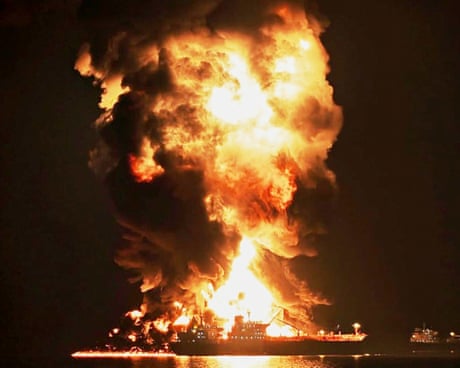
Following the death of Supreme Leader Ayatollah Ali Khamenei, the Islamic Resistance in Iraq (IRI)—an umbrella group of Iran-backed Shia militias—launched a series of drone and kinetic strikes against Iraqi energy infrastructure and foreign-operated oil facilities in Basra. Attacks between 6 March and 11 March targeted sites managed by BP, Halliburton, and KBR, resulting in significant fires and the death of at least one crew member on an oil tanker. While the central government in Baghdad has remained largely passive, officials report that these strikes aim to disrupt oil production, inflate global prices, and pressure the United States to cease military operations against Iran.
Key Actors
- ·Islamic Resistance in Iraq (IRI)(Umbrella group of Iran-backed Shia paramilitary organisations)Conducting strikes against Iraqi energy infrastructure and US-linked assets to support Tehran's regional objectives.
- ·Ali al-Zaidi(Prime Minister of Iraq)Issued a 30 September deadline for all militia groups to disarm and integrate into the state security apparatus.
- ·Popular Mobilisation Units (PMU)(State-affiliated but largely autonomous coalition of Shia militias)Contains factions that operate independently of the Baghdad government to advance ideological and economic interests.
Why It Matters
The escalation exposes the fragility of the Iraqi state, which is currently unable to prevent domestic paramilitary groups from weaponizing national infrastructure to serve Iranian strategic interests. The resulting collapse of oil exports—down by two-thirds in Basra—threatens Iraq's economic stability and forces the departure of foreign energy firms, further isolating the country as it becomes a primary theater for the broader US-Iran conflict.
Watch For
Monitor the 30 September deadline set by Prime Minister Ali al-Zaidi for militia disarmament, as the refusal of hardline factions to comply will likely trigger further domestic instability and potential direct confrontations between state-aligned forces and the IRI.
Generated 33d ago · Based on full articleAuto-Compiled
This page aggregates and summarizes reporting from The Guardian Middle East. The Conflict Pulse does not author original reporting. Read the original source for full coverage.
CONFLICT OVERVIEW
Iran
Latest verified updates on Iran’s regional confrontation, U.S.–Israeli strikes, missile retaliation, proxy networks, sanctions, and Strait of Hormuz risks.
SOURCE PERSPECTIVES
How outlets across the bias spectrum are covering this conflict.
LATEST FROM IRAN

REPORTMiddle East Eye10d ago
Iran formalises Strait of Hormuz control as US struggles to sustain war it launched with Israel

REPORTAl Jazeera10d ago
US threatens ‘indefinite’ blockade against Iran: How long can it last?

REPORTMiddle East Eye11d ago
Morning update
REPORTMiddle East Eye11d ago
Vance says US will end up 'in a stronger position' than Iran

REPORTJerusalem Post — Iran News11d ago
US Treasury Secretary Bessent says US to apply measures 'never seen before' on Iran

REPORTAl Jazeera11d ago