The Guardian Middle East
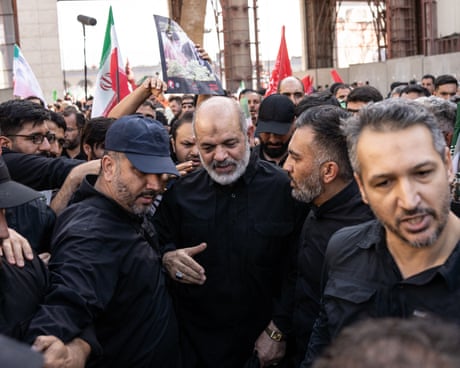
leftREPORTIran seeks to tighten control over strait of Hormuz alongside Khamenei funeral
Full BriefGenerated 22d ago
What Happened
In the past 48 hours, the Islamic Revolutionary Guard Corps (IRGC) intensified efforts to control the Strait of Hormuz after a US-backed southern route near Oman allowed ships to bypass Iranian-dominated waters. On Saturday, at least eight ships turned around following direct IRGC warnings, and traffic declined further on Sunday. The UK Maritime Trade Operations centre reported a vessel attacked by 'unknown armed assailants' off Hodeidah, Yemen. Marine Traffic data showed 38 confirmed strait crossings on 2 July, a 10% day-on-day drop, with Iranian-flagged activity rising from two to 11 crossings and nine crossings in contravention of sanctions. IRGC actions came as French President Emmanuel Macron announced UK-France plans for a mine-clearing naval force to secure the southern route, a move the Iranian foreign ministry rejected as 'unwarranted and unjustified interference.' A 17 June US-Iran memorandum of understanding required Iran to restore traffic and not impose tolls for 60 days, but it is only loosely observed.
Key Actors
- ·Islamic Revolutionary Guard Corps (IRGC)(Iranian military force controlling the strait)Tightened grip on shipping by warning vessels, causing at least eight ships to turn around and contributing to a 10% decline in daily crossings.
- ·Emmanuel Macron(President of France)Announced a UK-France plan to deploy a mine-clearing naval force to secure the southern route, escalating Western involvement.
- ·Iranian Foreign Ministry(Diplomatic arm of the Iranian state)Rejected the mine-clearing plan as interference, defending Iran’s control over the strait.
- ·Oman(Regional mediator and co-governance proposer)Held talks with Iran, France, and the UK on a plan to charge optional navigational fees in the strait, modeled on the Malacca Strait system.
Why It Matters
Control over the Strait of Hormuz, through which a significant share of global oil transits, directly impacts global energy prices and economic stability. Iran’s tightening grip, coinciding with Khamenei’s funeral and succession dynamics, tests the 17 June ceasefire memorandum and risks escalation at a chokepoint already strained by sanctions-evasion traffic and proxy attacks.
Watch For
The 60-day deadline from the 17 June memorandum expires around mid-August; mutual consent is required to renew, and both sides are building up forces. Monitor whether the UK-France mine-clearing operation materialises and how Iran responds. Also watch Marine Traffic data for further IRGC-influenced route shifts and any additional incidents near Hodeidah.
Generated 22d ago · Based on full articleAuto-Compiled
This page aggregates and summarizes reporting from The Guardian Middle East. The Conflict Pulse does not author original reporting. Read the original source for full coverage.
CONFLICT OVERVIEW
Iran
Latest verified updates on Iran’s regional confrontation, U.S.–Israeli strikes, missile retaliation, proxy networks, sanctions, and Strait of Hormuz risks.
SOURCE PERSPECTIVES
How outlets across the bias spectrum are covering this conflict.
left
Prisoners at Iran’s largest jail sew lips shut in hunger strike as executions soar
The Guardian Middle EastTrump administration revision of Iran war casualties huge disrespect , say veterans | US military
theguardian.comLATEST FROM IRAN