LIVE
Conflict Pulse
· · VERIFIED SOURCES
All RegionsIranIsrael–PalestineUkraine–RussiaSudan / DarfurUnited StatesMyanmarEthiopia / TigrayLebanonVenezuela
The Guardian Middle East
leftREPORT

Prisoners at Iran’s largest jail sew lips shut in hunger strike as executions soar
Prisoners at Iran’s largest jail sew lips shut in hunger strike as executions soar
NEWS SUMMARY
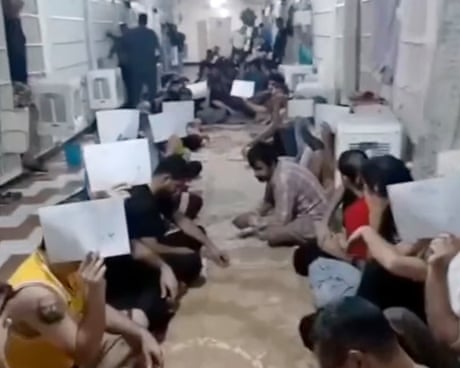
At least 1,500 death row prisoners at Ghezel Hesar prison near Tehran have sewn their lips shut and begun a mass hunger strike to protest a surge in executions, particularly for drug offenses. The protest, which began two weeks ago after prisoners were moved to solitary confinement, aims to draw international attention to the executions, which Iran Human Rights reports have reached at least 424 this year.
Full BriefGenerated 13d ago
What Happened
At least 1,500 death row prisoners at Ghezel Hesar prison near Tehran began a hunger strike two weeks ago after six men convicted on drug-related charges were transferred to solitary confinement before their possible execution, according to Iran Human Rights (IHRNGO). Prisoners sewed their lips shut and held placards reading 'No to Executions', releasing videos via exile rights groups. IHRNGO reports at least 424 executions in Iran this year, mostly for drug offences; 795 people were hanged on drug-related charges in the past year. Two men were executed on Tuesday for 'waging war on God' over the deaths of two police officers during January anti-government protests, bringing to 26 the number of protest-linked executions this year. Rights groups say trials in revolutionary courts are grossly unfair, often based on confessions extracted under torture, and that those executed are typically low-level couriers from marginalized backgrounds.
Key Actors
  • ·
    Death row prisoners at Ghezel Hesar prison(Prisoners on death row, many convicted on drug charges)Staging a mass hunger strike and sewing lips shut to protest executions and poor conditions.
  • ·
    Iran Human Rights (IHRNGO)(Oslo-based non-profit monitoring human rights in Iran)Documenting the surge in executions and amplifying prisoner voices; director Mahmood Amiry-Moghaddam calls drug-offence executions a human rights violation.
  • ·
    Iranian revolutionary courts and prison authorities(State bodies responsible for sentencing and executions)Conducting unfair trials, issuing death sentences, and carrying out executions without meaningful defense rights, according to rights groups.
Why It Matters
The protest inside Iran's largest prison draws international attention to a sharp rise in executions—424 this year—amid a wider human rights crisis and geopolitical tensions with the US. The use of the death penalty for low-level drug offences and protest-related charges, often after torture-based confessions, highlights systemic judicial abuses and may increase diplomatic pressure on the Pezeshkian government.
Watch For
Potential executions of hunger-striking prisoners, further prison protests, and international responses from human rights bodies and foreign governments. Also monitor whether the Iranian authorities engage in any negotiation or reform of death penalty practices for drug offences.
Generated 13d ago · Based on full article
Auto-Compiled
This page aggregates and summarizes reporting from The Guardian Middle East. The Conflict Pulse does not author original reporting. Read the original source for full coverage.
READ ORIGINAL

Iran

Latest verified updates on Iran’s regional confrontation, U.S.–Israeli strikes, missile retaliation, proxy networks, sanctions, and Strait of Hormuz risks.

How outlets across the bias spectrum are covering this conflict.

VIEW ALL IRAN COVERAGE →