
BBC US & Canada
centerREPORTUS-Iran talks begin in Switzerland as Tehran says it closed Strait of Hormuz
Full BriefGenerated 65d ago
What Happened
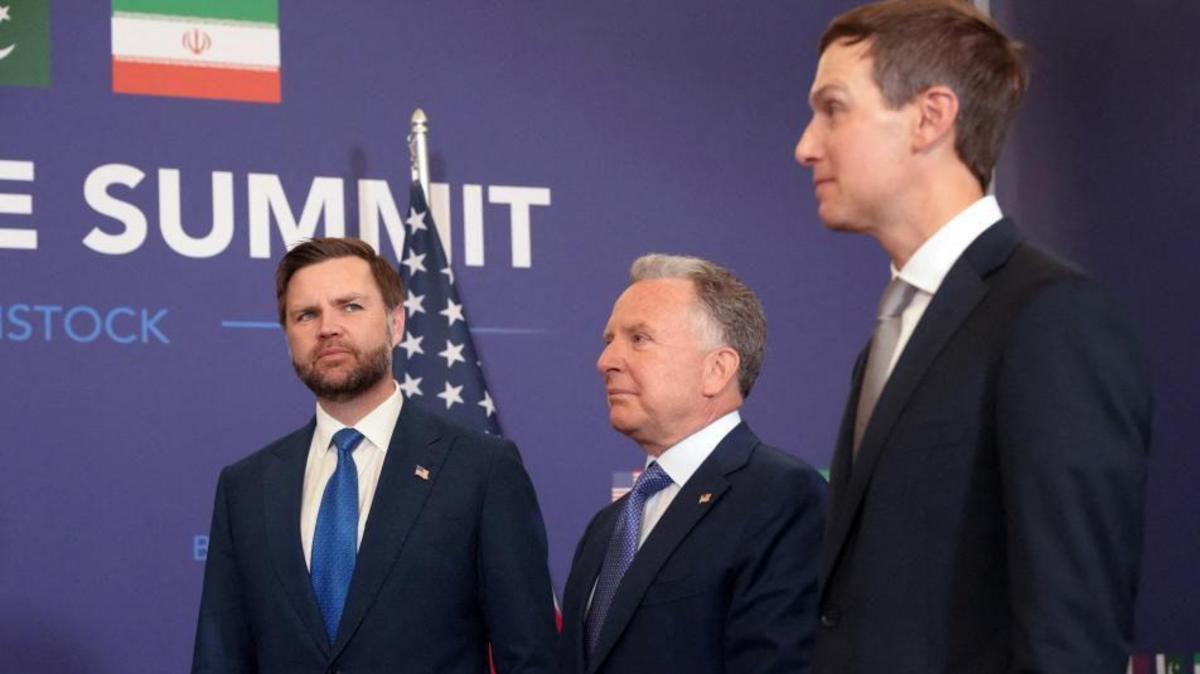
On Saturday, Iran announced via its military that it had closed the Strait of Hormuz in response to Israeli attacks on southern Lebanon, accusing the United States of violating a 14‑point bilateral memorandum of understanding—specifically the first clause requiring ‘the immediate and permanent termination of military operations on all fronts, including in Lebanon.’ The US Central Command (Centcom) spokesperson, Tim Hawkins, disputed the claim, stating that ‘traffic continues to flow’ and that US forces are ‘monitoring the situation to ensure this remains the case,’ while adding that ‘Iran does not control the Strait of Hormuz.’ BBC Verify tracking data indicated at least five tankers passed through the strait on Saturday, though several vessels appeared to have made U‑turns; Centcom reported that commercial ship traffic had increased, with 55 merchant ships transiting. The announcement came after Israeli airstrikes killed at least 20 people in southern Lebanon less than 24 hours after a fresh ceasefire between Israel and Hezbollah was declared, and as both sides accused each other of repeatedly violating that truce. Israel’s military said it struck ‘dozens’ of Hezbollah targets after the group fired more than 50 projectiles at Israeli forces, and an Israeli soldier was killed in battle. Lebanon’s health ministry said 4,057 people had been killed since the conflict restarted on 2 March. Simultaneously, US Vice‑President JD Vance departed Washington for direct US–Iran talks in Switzerland on Sunday, aiming to make progress on ‘the nuclear issue’ and a ‘Lebanon ceasefire issue.’
Key Actors
- ·Iranian military(State armed forces of Iran)Announced the closure of the Strait of Hormuz, accusing the US of violating the bilateral deal by not ending military operations in Lebanon.
- ·US Central Command (Centcom)(US military command responsible for the Middle East)Disputed Iran’s closure claim, asserting that commercial traffic continues and that US forces are monitoring the strait to ensure it remains open.
- ·Israel Defence Forces(Military of Israel)Conducted airstrikes on Hezbollah targets in southern Lebanon, saying they responded to projectile fire; reported one soldier killed in combat there.
- ·Hezbollah(Iran‑backed Lebanese armed group)Fired over 50 projectiles at Israeli forces; accused Israel of attempting to sabotage the broader US–Iran deal through its attacks in Lebanon.
Why It Matters
The Strait of Hormuz is a critical chokepoint for global energy, with about 20% of world oil and LNG transiting daily. Any prolonged disruption would send shockwaves through energy markets. Iran’s claim—and the US denial—highlights the fragility of the nascent US–Iran deal and the risk that Israeli–Hezbollah hostilities could unravel a broader diplomatic framework that also encompasses Iran’s nuclear programme. The parallel dispatch of Vice‑President Vance to Switzerland for direct talks underscores the high stakes and the Biden administration’s effort to de‑escalate on multiple fronts simultaneously.
Watch For
Monitor the US–Iran talks in Switzerland on Sunday for any concrete progress on the nuclear file or a Lebanon ceasefire. Track Centcom and commercial shipping data for further evidence of Strait of Hormuz traffic disruptions. Watch whether the US follows through on former President Trump’s threat to impose tolls on strait shipping. Observe the adherence to or further violations of the Israel–Hezbollah ceasefire, and any impact on the 60‑day window for finalising the broader US–Iran agreement.
Generated 65d ago · Based on full articleAuto-Compiled
This page aggregates and summarizes reporting from BBC US & Canada. The Conflict Pulse does not author original reporting. Read the original source for full coverage.
CONFLICT OVERVIEW
Iran
Latest verified updates on Iran’s regional confrontation, U.S.–Israeli strikes, missile retaliation, proxy networks, sanctions, and Strait of Hormuz risks.
SOURCE PERSPECTIVES
How outlets across the bias spectrum are covering this conflict.
LATEST FROM IRAN

REPORTMiddle East Eye11d ago
Iran formalises Strait of Hormuz control as US struggles to sustain war it launched with Israel

REPORTAl Jazeera11d ago
US threatens ‘indefinite’ blockade against Iran: How long can it last?

REPORTMiddle East Eye11d ago
Morning update
REPORTMiddle East Eye11d ago
Vance says US will end up 'in a stronger position' than Iran

REPORTJerusalem Post — Iran News11d ago
US Treasury Secretary Bessent says US to apply measures 'never seen before' on Iran

REPORTAl Jazeera11d ago