
The Guardian Middle East
leftREPORTIran rejects UN-backed plan to free ships trapped in strait of Hormuz
Full BriefGenerated 60d ago
What Happened
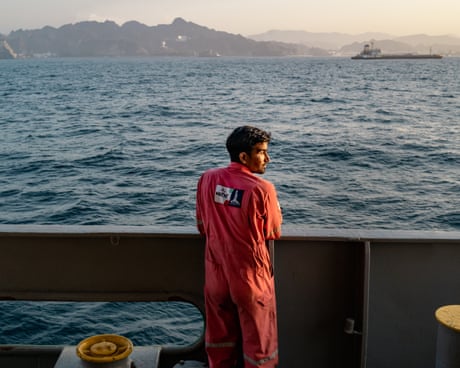
On Thursday, the Islamic Revolutionary Guard Corps (IRGC) rejected UN International Maritime Organization (IMO) and Omani-proposed temporary shipping evacuation lanes through the Strait of Hormuz, calling them 'unacceptable and completely dangerous' and insisting that any transit must be coordinated with the IRGC navy. This rejection came despite a recent US-Iran memorandum of understanding in which Tehran agreed to ensure full freedom of navigation and no tolls for 60 days. The IMO and Oman had announced coordinates for two lanes—one north in mined Iranian waters and one south in Omani waters—to evacuate hundreds of trapped ships, but the IRGC statement indicated Iran did not agree to the routes. Mohammad Ghalibaf, Iran's parliament speaker, asserted that 'the administration of the strait of Hormuz will never go back to the way it was before the war,' referring to the combined US-Israeli attack on Iran on 28 February. Concurrently, Iran demands Israeli withdrawal from southern Lebanon as part of broader US-Iran talks, while Israel maintains it will not withdraw until Hezbollah is disarmed; a ceasefire has largely held but Israeli drone strikes continue. Oman and Iran have agreed to form a working party on the future administration of the strait, amid Gulf and Western opposition to potential tolls.
Key Actors
- ·Iran(State actor with final authority over Strait of Hormuz, represented by IRGC and parliament speaker Mohammad Ghalibaf)Rejected IMO/Oman evacuation lanes; insists on mandatory IRGC navy coordination; tied strait normalization to broader sanctions and nuclear talks; demands Israeli withdrawal from Lebanon.
- ·Oman(Mediator and co-proposer of strait evacuation and long-term management plan)Proposed voluntary fee-based system modelled on Malacca Strait; coordinating with IMO and Iran; seeking alignment but facing IRGC rejection.
- ·United States(Negotiating party with Iran, with Secretary of State Marco Rubio commenting on Lebanon progress)Signed MoU for 60-day free navigation; involved in broader talks on sanctions; reported Israel-Lebanon talks 'very close' to commitment of intent.
- ·Israel(Military actor in Lebanon, complicating Iran talks)Denied withdrawal from South Lebanon, demanding Hezbollah disarmament; continued drone strikes despite ceasefire; its actions linked to Iran's threats to close strait.
Why It Matters
Iran's rejection of internationally backed navigation lanes reinforces the Strait of Hormuz as a critical bargaining chip in high-stakes negotiations over sanctions relief and its nuclear program, threatening global shipping and violating UNCLOS principles. It undermines Oman's mediation, Saudi-led regional normalization efforts, and the fragile US-Iran diplomatic track, while the parallel Lebanon standoff adds pressure and risk of escalation.
Watch For
The 60-day US-Iran MoU period and any further IRGC-imposed restrictions; the work of the Iran-Oman working party on strait administration; IMO and UN reactions to Iran's rejection; developments in Israeli-Lebanese talks and Israel's military presence in southern Lebanon; Gulf state and Saudi responses to toll proposals, particularly any shift towards conditional acceptance.
Generated 60d ago · Based on full articleAuto-Compiled
This page aggregates and summarizes reporting from The Guardian Middle East. The Conflict Pulse does not author original reporting. Read the original source for full coverage.
CONFLICT OVERVIEW
Iran
Latest verified updates on Iran’s regional confrontation, U.S.–Israeli strikes, missile retaliation, proxy networks, sanctions, and Strait of Hormuz risks.
SOURCE PERSPECTIVES
How outlets across the bias spectrum are covering this conflict.
LATEST FROM IRAN

REPORTMiddle East Eye10d ago
Iran formalises Strait of Hormuz control as US struggles to sustain war it launched with Israel

REPORTAl Jazeera10d ago
US threatens ‘indefinite’ blockade against Iran: How long can it last?

REPORTMiddle East Eye10d ago
Morning update
REPORTMiddle East Eye10d ago
Vance says US will end up 'in a stronger position' than Iran

REPORTJerusalem Post — Iran News10d ago
US Treasury Secretary Bessent says US to apply measures 'never seen before' on Iran

REPORTAl Jazeera10d ago