
Jerusalem Post — Iran News
rightREPORTIran rehabilitating damaged nuclear sites, satellite imagery shows - report
Full BriefGenerated 46d ago
What Happened
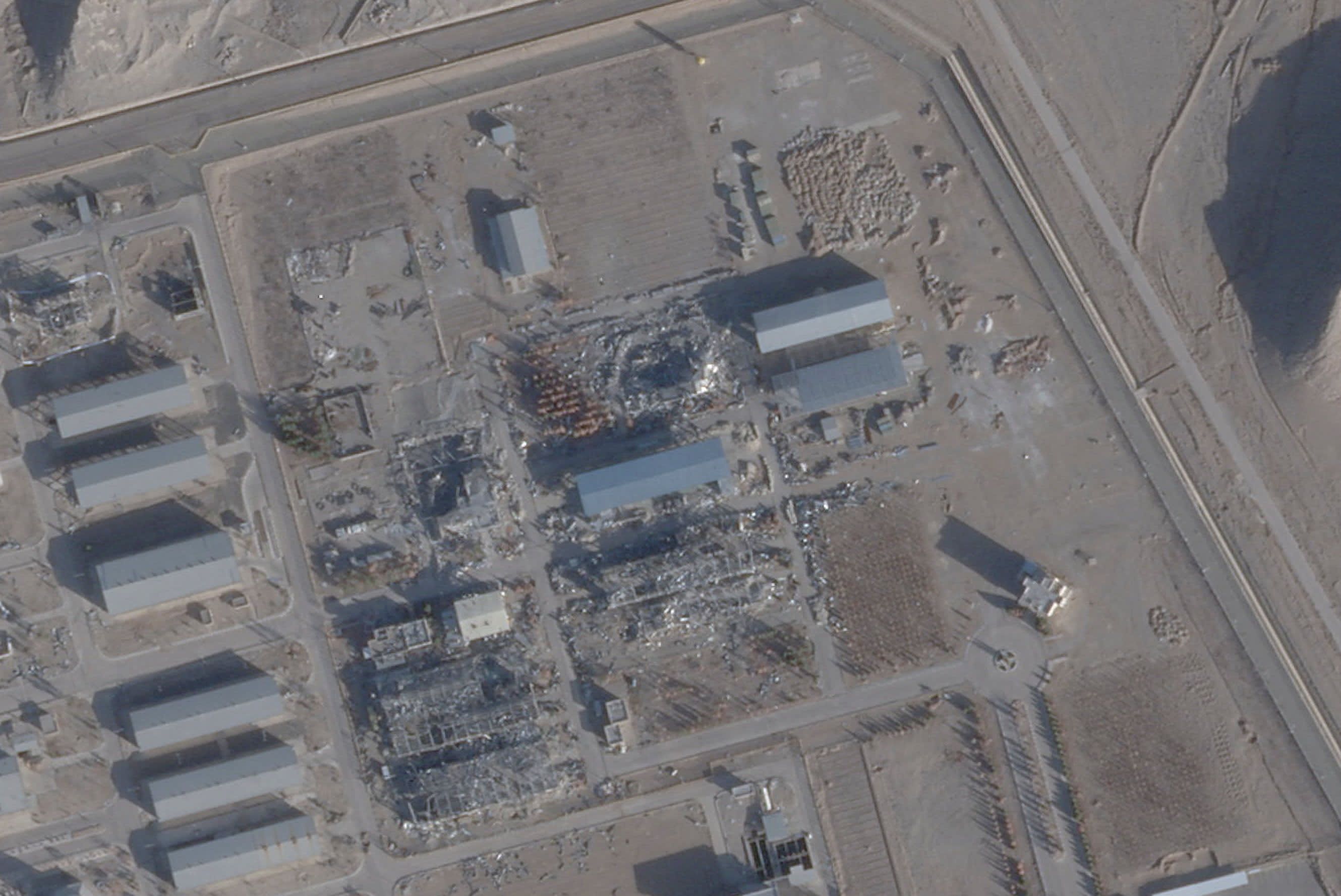
Satellite imagery captured in June and July and analyzed by CNN and the Institute for Science and Security shows Iran attempting to restore nuclear sites damaged by US and Israeli airstrikes during Operation Epic Fury and Operation Roaring Lion. At the Parchin military complex, temporary coverings were placed over impact holes, later replaced with mesh coverings, and concrete mixing trucks were visible, indicating preparations to seal the damage. At the Pickaxe Mountain underground facility, construction vehicles were observed moving in and out, suggesting ongoing restoration. These activities may violate a US-Iran Memorandum of Understanding (MoU) that required Iran to maintain the status quo at all nuclear sites, though US President Donald Trump declared the MoU 'over' during a press conference at the NATO summit in Ankara, Turkey. No repairs were observed at the Isfahan, Fordow, or Natanz nuclear sites. Imagery also showed repair attempts at the Tabriz airbase, where a runway crater is being filled with concrete.
Key Actors
- ·Iran(State actor)Attempting to restore damaged nuclear sites at Parchin and Pickaxe Mountain, potentially violating the US-Iran MoU, while no repairs observed at Isfahan, Fordow, or Natanz.
- ·United States(State actor)Conducted airstrikes under Operation Epic Fury that damaged the sites; President Trump declared the MoU over, potentially removing diplomatic constraints on further action.
- ·Israel(State actor)Participated in Operation Roaring Lion airstrikes that damaged Iranian nuclear sites; satellite imagery now reveals Iran's efforts to restore them.
Why It Matters
The repair efforts signal Iran's intent to rebuild nuclear infrastructure critical to potential weaponization, undermining the military impact of US-Israeli strikes. The apparent violation of the MoU—even if disavowed by Trump—could collapse remaining diplomatic frameworks and provoke further military action. The selective focus on Parchin and Pickaxe Mountain, both associated with past weaponization work, while ignoring enrichment sites like Natanz and Fordow, provides intelligence on Iranian priorities. The US government's decision to loosen restrictions on satellite imagery suggests a deliberate information strategy to expose non-compliance and shape international opinion ahead of possible future operations.
Watch For
IAEA inspection requests and reports on the repaired sites; any US or Israeli military response, including preemptive strikes or ultimatums; formal diplomatic reactions from the E3 (UK, France, Germany) regarding the MoU and potential snapback of UN sanctions; Russia and China's stance in the Security Council; and whether Iran accelerates repairs after Trump's declaration, potentially shortening timelines for a nuclear breakout.
Generated 46d ago · Based on full articleAuto-Compiled
This page aggregates and summarizes reporting from Jerusalem Post — Iran News. The Conflict Pulse does not author original reporting. Read the original source for full coverage.
CONFLICT OVERVIEW
Iran
Latest verified updates on Iran’s regional confrontation, U.S.–Israeli strikes, missile retaliation, proxy networks, sanctions, and Strait of Hormuz risks.
SOURCE PERSPECTIVES
How outlets across the bias spectrum are covering this conflict.
LATEST FROM IRAN

REPORTMiddle East Eye12d ago
Iran formalises Strait of Hormuz control as US struggles to sustain war it launched with Israel

REPORTAl Jazeera12d ago
US threatens ‘indefinite’ blockade against Iran: How long can it last?

REPORTMiddle East Eye12d ago
Morning update
REPORTMiddle East Eye12d ago
Vance says US will end up 'in a stronger position' than Iran

REPORTJerusalem Post — Iran News12d ago
US Treasury Secretary Bessent says US to apply measures 'never seen before' on Iran

REPORTAl Jazeera12d ago