The Guardian Middle East
leftREPORTGrowing risk that thousands buried in Gaza’s rubble may never be identified, says Red Cross
Full BriefGenerated 12d ago
What Happened
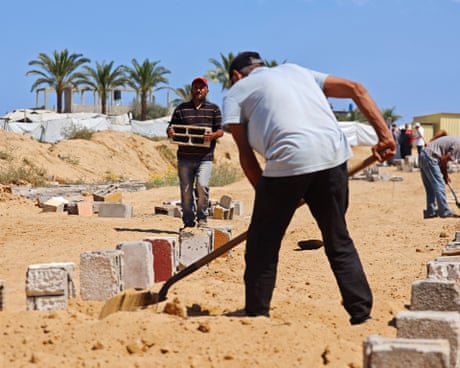
The International Committee of the Red Cross (ICRC) warned that thousands of Palestinians buried under Gaza’s rubble risk becoming permanently unidentifiable as recovery efforts remain slow and hampered by restrictions on heavy machinery and DNA testing equipment. Since a US-brokered ceasefire took effect in October, Palestinians have used only shovels, pickaxes, and bare hands to sift through an estimated 61 million tonnes of debris, beneath which at least 10,000—and possibly up to 14,000—bodies are thought to be buried, according to Gaza health officials. ICRC spokesperson Pat Griffiths stated that the longer remains stay buried, the more advanced the decomposition, with environmental factors and possible disturbance by military bulldozers further erasing vital circumstantial evidence. Dr. Ahmed Dahir, Gaza’s forensic medicine director, reported cases where missing persons were reduced to bones within two weeks. A cemetery in Deir al-Balah now holds over 650 unidentified bodies, while families endure what psychologists call ‘ambiguous loss’ from unconfirmed deaths.
Key Actors
- ·International Committee of the Red Cross (ICRC)(Humanitarian organization)Warned that delayed recovery, lack of heavy machinery, and DNA testing materials are causing thousands of buried bodies to become unidentifiable; called on Israel to allow entry of necessary equipment.
- ·Israeli authorities(Occupying power controlling Gaza’s borders)Have not responded to repeated requests to permit excavators and other heavy machinery into Gaza; also block DNA testing materials, and witnesses suggest IDF bulldozers may have moved bodies in areas under military control.
- ·Dr. Ahmed Dahir(Gaza’s forensic medicine director)Described rapid decomposition of remains, noting that in some cases bodies turned to bones within two weeks due to environmental factors and animal scavenging, a process normally taking 6–12 months.
Why It Matters
The inability to recover and identify the dead deepens Gaza’s humanitarian catastrophe, denying families the closure needed to grieve and fueling prolonged psychological trauma. Unidentified remains also undermine post-conflict accountability, as forensic evidence crucial for documenting potential war crimes is lost. The prolonged obstruction of recovery efforts, if sustained, could amount to a violation of the dead’s dignity under international humanitarian law.
Watch For
Monitor whether Israel eases restrictions on excavators, DNA testing kits, and forensic experts entering Gaza in response to ICRC appeals or international pressure. Track updates from the ICRC and Gaza health officials on the pace of recovery and identification, and watch for any UN Security Council or General Assembly actions addressing the issue. Pay attention to reports from families and psychologists on the ‘ambiguous loss’ crisis.
Generated 12d ago · Based on full articleAuto-Compiled
This page aggregates and summarizes reporting from The Guardian Middle East. The Conflict Pulse does not author original reporting. Read the original source for full coverage.
CONFLICT OVERVIEW
Israel–Palestine
Latest verified updates on Gaza, the West Bank, Israeli military operations, Palestinian politics, humanitarian conditions, and international diplomacy.
Active since May 1948
SOURCE PERSPECTIVES
How outlets across the bias spectrum are covering this conflict.
LATEST FROM ISRAEL–PALESTINE