
Middle East Eye
centerREPORTEight Muslim countries denounce Israeli incursions at Al-Aqsa
Full BriefGenerated 136d ago
What Happened
The foreign ministers of eight Muslim-majority states—Qatar, the UAE, Jordan, Turkey, Egypt, Indonesia, Pakistan, and Saudi Arabia—issued a joint condemnation of Israeli settler incursions at the Al-Aqsa Mosque compound in Jerusalem's Old City. The statement, released on 6 March 2026, also called for international recognition of Jordan's custodianship over the holy site. The article does not specify the timing, scale, or nature of the incursions that prompted the statement, nor does it detail whether the condemnation was issued through a formal multilateral body or as a coordinated diplomatic initiative.
Key Actors
- ·Eight-state coalition(Foreign ministers of Qatar, UAE, Jordan, Turkey, Egypt, Indonesia, Pakistan, and Saudi Arabia)Jointly condemned Israeli settler incursions at Al-Aqsa and called for recognition of Jordan's custodianship over the site
- ·Jordan(Hashemite Kingdom of Jordan, custodian of Islamic and Christian holy sites in Jerusalem under the 1994 Wadi Araba treaty)Custodianship over Al-Aqsa explicitly endorsed by the coalition statement
- ·Israeli settlers(Unspecified Israeli civilians entering the Al-Aqsa compound)Conducted incursions at the site, triggering the diplomatic condemnation
Why It Matters
Al-Aqsa Mosque is the third-holiest site in Islam and sits atop the Temple Mount, Judaism's holiest site, making it a perennial flashpoint in the Israeli-Palestinian conflict. Israeli settler incursions—often protected by Israeli security forces—are viewed by Palestinians and the broader Muslim world as violations of the status quo established after 1967, which restricts non-Muslim worship at the compound. Jordan's custodianship, formalized in the 1994 peace treaty with Israel, is a key element of Amman's regional legitimacy and its role as a mediator. The breadth of the coalition—spanning Gulf monarchies, NATO member Turkey, and South Asian powers—signals sustained diplomatic pressure on Israel over Jerusalem, particularly as the statement explicitly calls for international recognition of Jordan's role, potentially setting the stage for UN or Arab League resolutions.
Watch For
Monitor whether this statement precedes a formal resolution at the Arab League, the Organisation of Islamic Cooperation, or the UN General Assembly, particularly given the coalition's geographic and political diversity. Track any Israeli government response or changes to access policies at the Al-Aqsa compound, especially ahead of Ramadan (expected to begin in late March 2026), when tensions historically escalate. Watch for Jordanian diplomatic activity, including potential coordination with the Palestinian Authority or outreach to the US and EU to reinforce custodianship claims. Any further settler incursions or clashes at the site in the coming weeks could trigger broader regional responses or street protests across the Muslim world.
Generated 136d ago · Based on full articleAuto-Compiled

DAILY BRIEFING
Follow Israel–Palestine
Get a daily briefing with the most critical developments from every active conflict zone. Concise. Verified. Free.
No spam. Unsubscribe anytime. Verified sources only.
This page aggregates and summarizes reporting from Middle East Eye. The Conflict Pulse does not author original reporting. Read the original source for full coverage.
CONFLICT OVERVIEW
Israel–Palestine
Latest verified updates on Gaza, the West Bank, Israeli military operations, Palestinian politics, humanitarian conditions, and international diplomacy.
Active since May 1948
MORE REPORTING ON THIS REGION
Recent reporting from this region. These stories may cover different events.
LATEST FROM ISRAEL–PALESTINE

DEVELOPINGMiddle East Eye5h ago
Lebanon to join trilateral talks with Israel and US in Florida next week, Aoun says

DEVELOPINGBBC Middle East7h ago
European diplomats attacked by Israeli settlers in West Bank

DEVELOPINGAl Jazeera7h ago
Israeli drone attacks kill six Palestinians across Gaza despite ‘ceasefire’

DEVELOPINGMiddle East Eye8h ago
French mayor attacked by settlers in West Bank says Israel ‘tolerates’ settler violence
DEVELOPINGThe Guardian Middle East8h ago
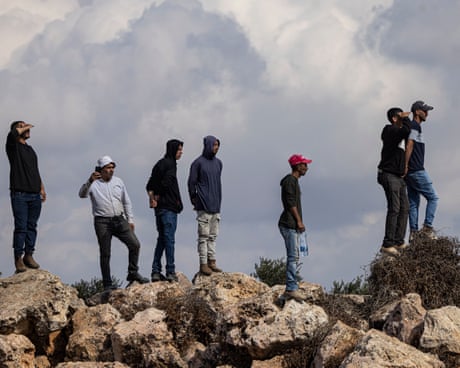
Masked settlers attack European diplomats in occupied West Bank

DEVELOPINGAl Jazeera8h ago