
The Guardian Middle East
leftREPORTDonald Trump’s Iran deal met with anger, relief and incredulity
Full BriefGenerated 66d ago
What Happened
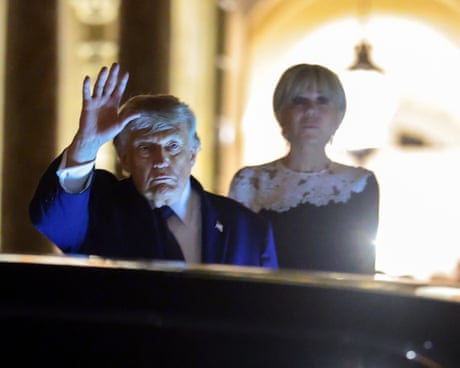
The United States and Iran signed a memorandum of understanding (MOU) that immediately reopens the Strait of Hormuz in exchange for US sanctions waivers on Iranian crude oil exports, petroleum products, and associated banking services. The MOU, mediated by Pakistani Prime Minister Shehbaz Sharif, initiates a 60-day negotiation period over Iran's nuclear program and its stockpile of highly enriched uranium. US President Donald Trump signed the agreement at the Palace of Versailles during a dinner with French President Emmanuel Macron, while Iranian President Masoud Pezeshkian signed in Tehran. Iran's chief negotiator, Mohammad Ghalibaf, called it 'a record of US failure.' The deal sparked divergent reactions: G7 leaders welcomed it, while Israeli officials, including former senior adviser Mark Regev and opposition leader Yair Lapid, condemned it as a capitulation that relieves economic pressure on Iran and funds the Revolutionary Guards. US Senator Lindsey Graham expressed cautious support after talks with envoy Steve Witkoff, but Senators Ted Cruz and Bill Cassidy criticized it, and Democrats Susan Rice and Adam Schiff called it a major blunder or capitulation.
Key Actors
- ·Donald Trump(President of the United States)Signed the MOU, calling it a 'major win' for the US, while facing domestic political blowback.
- ·Masoud Pezeshkian(President of Iran)Signed the MOU in Tehran; the Iranian negotiator framed the outcome as a US failure.
- ·Shehbaz Sharif(Prime Minister of Pakistan)Mediated the deal and hailed the 'peaceful resolution' of the US-Iran conflict.
- ·Yair Lapid(Leader of Israel's opposition)Condemned the deal, stating it gives money to the Revolutionary Guards and leaves Israel vulnerable, ahead of Israeli elections.
Why It Matters
The agreement temporarily eases a critical maritime chokepoint and oil supply disruption, but it effectively dismantles the 'maximum pressure' sanctions regime on Iran, potentially providing billions in revenue that could bolster the IRGC and regional proxies. It strains US-Israel relations, emboldens Israeli opponents of the deal ahead of elections, and raises doubt over whether a verifiable, long-term nuclear accord can be achieved in 60 days. The symbolism of signing at Versailles—site of the short-lived 1919 peace—underscores the fragility of the arrangement.
Watch For
The 60-day negotiation window for a comprehensive nuclear deal; whether IAEA inspectors gain full access to Iran's enriched uranium stockpile; Israeli election rhetoric before October, as opposition figures leverage the deal against Netanyahu; any violations of the Hormuz reopening or Iranian acceleration of nuclear activities; domestic US congressional challenges or sanctions votes; and responses from Iran's Axis of Resistance, particularly Hezbollah and the Houthis, to the perceived US retreat.
Generated 66d ago · Based on full articleAuto-Compiled
This page aggregates and summarizes reporting from The Guardian Middle East. The Conflict Pulse does not author original reporting. Read the original source for full coverage.
CONFLICT OVERVIEW
Iran
Latest verified updates on Iran’s regional confrontation, U.S.–Israeli strikes, missile retaliation, proxy networks, sanctions, and Strait of Hormuz risks.
SOURCE PERSPECTIVES
How outlets across the bias spectrum are covering this conflict.
LATEST FROM IRAN

REPORTMiddle East Eye9d ago
Iran formalises Strait of Hormuz control as US struggles to sustain war it launched with Israel

REPORTAl Jazeera9d ago
US threatens ‘indefinite’ blockade against Iran: How long can it last?

REPORTMiddle East Eye9d ago
Morning update
REPORTMiddle East Eye9d ago
Vance says US will end up 'in a stronger position' than Iran

REPORTJerusalem Post — Iran News9d ago
US Treasury Secretary Bessent says US to apply measures 'never seen before' on Iran

REPORTAl Jazeera9d ago