
The Guardian Europe
leftREPORTAll quiet on the eastern flank? Nato leaders fear they can no longer rely on US help if Russia attacks
Full BriefGenerated 59d ago
What Happened
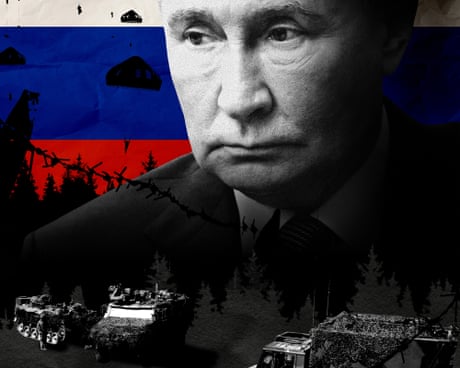
Eastern European NATO members are grappling with deepening doubts about whether the United States would honor its collective-defense commitment if Russia attacked, according to dozens of officials interviewed over the past 18 months. The anxiety crystallized in February 2025 when U.S. Defense Secretary Pete Hegseth told allies in Brussels that European security was no longer a priority and demanded that Europe pay for its own defense. At a subsequent lunch, German Defense Minister Boris Pistorius requested a timeline for a U.S. drawdown, alarming some allies who feared it would accelerate an American retreat. Days later, President Donald Trump humiliated Ukrainian President Volodymyr Zelenskyy during a televised White House meeting, and the administration briefly suspended intelligence-sharing with Ukraine, shattering assumptions about U.S. reliability. In May 2025, Undersecretary of State Thomas DiNanno, asked directly in Tallinn whether U.S. troops would fight for the Baltic states, avoided a clear 'yes,' reinforcing fears. The mood has shifted from cautious approval of U.S. spending demands to profound unease about a transatlantic security rupture.
Key Actors
- ·Pete Hegseth(U.S. Secretary of Defense)Declared that European security was no longer a U.S. priority and that allies must shoulder their own hard-power defense.
- ·Thomas DiNanno(U.S. Undersecretary of State)Gave a meandering answer when asked whether U.S. troops would fight if Russia invaded the Baltic states, failing to affirm the commitment.
- ·Dovilė Šakalienė(Former Lithuanian Defense Minister)Compared the U.S.-European relationship to 'a dysfunctional family where divorce is not an option,' reflecting regional unease.
- ·Boris Pistorius(German Defense Minister)Requested a U.S. drawdown timetable from Hegseth, upsetting some allies who feared it would accelerate American disengagement.
Why It Matters
The erosion of trust in U.S. security guarantees threatens the foundation of NATO's eastern flank, potentially emboldening Russia to test Article 5. A perceived American retreat forces European allies to accelerate independent defense capabilities, risking a fracturing of the alliance and a strategic vacuum that Moscow could exploit.
Watch For
Concrete U.S. policy shifts such as troop withdrawals from Europe, changes to NATO command structures, or formal limitations on Article 5 commitments; the next NATO summits and defense ministerial meetings where U.S. declaratory policy may be clarified; European announcements of increased defense spending and joint procurement; any Russian probing actions along the Baltic or Polish borders designed to gauge allied resolve.
Generated 59d ago · Based on full articleAuto-Compiled
This page aggregates and summarizes reporting from The Guardian Europe. The Conflict Pulse does not author original reporting. Read the original source for full coverage.
CONFLICT OVERVIEW
United States
Latest verified updates on U.S. military operations, foreign policy decisions, alliance pressure, sanctions, maritime security, and global power projection.
Active since May 2020
SOURCE PERSPECTIVES
How outlets across the bias spectrum are covering this conflict.
LATEST FROM UNITED STATES

REPORTBBC US & Canada11d ago
Who could replace White House Press Secretary Karoline Leavitt?
REPORTDW News12d ago
US: Karoline Leavitt to step down as Trump's spokesperson

REPORTBBC US & Canada12d ago
Trump says White House press secretary Karoline Leavitt to leave post

REPORTBBC US & Canada12d ago
Watch: Key moments from Karoline Leavitt's White House tenure

REPORTAl Jazeera12d ago
Karoline Leavitt to step down as White House press secretary, Trump says

REPORTAl Jazeera12d ago