
The Guardian Middle East
leftREPORTTo protect the Iran peace talks, will Trump finally restrain Netanyahu? | Mohamad Bazzi
Full BriefGenerated 61d ago
What Happened
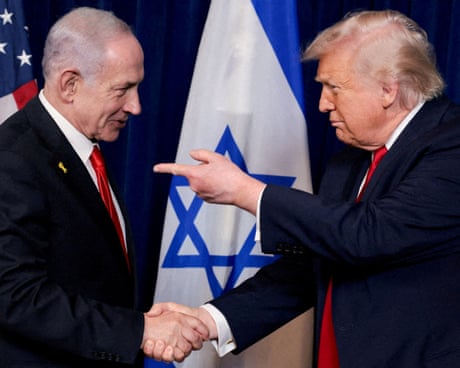
Vice President JD Vance publicly rebuked Israeli leaders on 18 June for attacking the Trump administration's interim Iran deal, emphasizing U.S. military support and warning against jeopardizing the ally. President Trump has escalated private and public criticism of Prime Minister Benjamin Netanyahu, reportedly calling him 'fucking crazy' and insisting 'I call all the shots.' The U.S. and Iran began negotiations last week aimed at a 60-day comprehensive nuclear agreement, contingent on a ceasefire across all fronts, including Lebanon, where Israel continues military operations. U.S. intelligence agencies warned Trump that Netanyahu is likely to sabotage a peace deal. Israel has occupied southern Lebanon and carried out mass-casualty strikes, such as the 8 April 'Eternal Darkness' operation that killed at least 350 people, despite multiple ceasefires. Iran has threatened to walk away and close the Strait of Hormuz unless Israel withdraws from Lebanon.
Key Actors
- ·Donald Trump(President of the United States)Seeks to finalize an Iran nuclear deal to claim victory after a costly joint U.S.-Israeli war; expresses frustration with Netanyahu's obstruction and is under pressure to restrain Israel to secure the agreement.
- ·JD Vance(Vice President of the United States)Publicly condemned Israeli cabinet members for criticizing the Iran deal, reminding them of U.S. military support and implying Netanyahu is sabotaging ceasefires to prolong wars.
- ·Benjamin Netanyahu(Prime Minister of Israel)Resists ceasefire demands, continues military operations in Lebanon and the wider Middle East, and is accused by U.S. officials of seeking to derail Iran peace talks.
- ·Iran(Negotiating party and regional power)Insists that any final ceasefire must apply to all fronts, including Lebanon; threatens to close the Strait of Hormuz if Israel does not withdraw, risking global energy supplies.
Why It Matters
The success of U.S.-Iran negotiations hinges on restraining Israel's military campaign in Lebanon. A collapse could reignite a direct U.S.-Iran conflict, disrupt a fifth of global oil transit, and undo the interim deal that reopened the Strait of Hormuz. Trump's willingness to impose limits on Netanyahu tests the durability of unconditional U.S. support for Israel and could reshape alliances in the Middle East.
Watch For
The 60-day deadline for the Iran nuclear deal; Israel's withdrawal from southern Lebanon and adherence to ceasefire terms; whether Trump leverages military aid as leverage; any Israeli escalations in Lebanon or beyond that could provoke an Iranian walkout.
Generated 61d ago · Based on full articleAuto-Compiled
This page aggregates and summarizes reporting from The Guardian Middle East. The Conflict Pulse does not author original reporting. Read the original source for full coverage.
CONFLICT OVERVIEW
United States
Latest verified updates on U.S. military operations, foreign policy decisions, alliance pressure, sanctions, maritime security, and global power projection.
Active since May 2020
SOURCE PERSPECTIVES
How outlets across the bias spectrum are covering this conflict.
LATEST FROM UNITED STATES
REPORTBBC US & Canada12d ago
Who could replace White House Press Secretary Karoline Leavitt?
REPORTDW News12d ago
US: Karoline Leavitt to step down as Trump's spokesperson
REPORTBBC US & Canada13d ago
Trump says White House press secretary Karoline Leavitt to leave post

REPORTBBC US & Canada13d ago
Watch: Key moments from Karoline Leavitt's White House tenure

REPORTAl Jazeera13d ago
Karoline Leavitt to step down as White House press secretary, Trump says

REPORTAl Jazeera13d ago