
The Guardian Middle East
leftREPORT‘We hear your voices’: inside the Church of England’s debate over Palestine
Full BriefGenerated 85d ago
What Happened
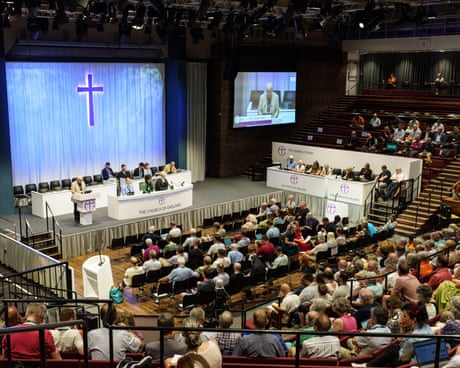
The General Synod of the Church of England voted overwhelmingly on 10 February 2025 to ‘hear’ the Kairos Palestine II report, a document co‑written by Father Fadi Diab that describes Israel as a ‘colonial enterprise’ and accuses it of waging a ‘genocidal war on Gaza’. The original motion had asked synod to formally ‘receive’ the report; during the debate an amendment changed the wording to ‘hear’, a distinction stressed by Archbishop of Canterbury Sarah Mullally, who said listening with compassion does not mean endorsing every aspect of the document. Mullally visited Palestinian Christian communities in the occupied West Bank weeks earlier and told synod she had witnessed settlement expansion ‘at unprecedented rates’. The vote passed in all three houses (bishops, clergy, laity) despite vigorous opposition from British Jewish leaders, including the Board of Deputies of British Jews, Chief Rabbi Sir Ephraim Mirvis, and the co‑chairs of Progressive Judaism, who argued the report’s language undermined the fight against antisemitism and risked harming decades of Christian‑Jewish dialogue.
Key Actors
- ·Church of England General Synod(Governing body of the Church of England)Voted to ‘hear’ the Kairos Palestine II report, declining to formally ‘receive’ it after an amendment; Archbishop of Canterbury Sarah Mullally said hearing Palestinian Christian voices does not imply endorsement of every claim.
- ·Father Fadi Diab(Palestinian Anglican priest from Ramallah and co‑author of Kairos Palestine II)Called the vote ‘surreal’ and emotional; said synod members wanted to tell Palestinian Christians, ‘We hear your voices, we feel your pain, and we want to stand with you.’
- ·British Jewish leaders(Board of Deputies of British Jews, Chief Rabbi Sir Ephraim Mirvis, Progressive Judaism co‑chairs Rabbi Charley Baginsky and others)Urged synod to reject the report, warning its language ‘directly undermines the struggle against antisemitism’ and risks harming Christian‑Jewish relations, though some welcomed continued engagement on the issue.
Why It Matters
The decision marks a significant shift in the Church of England’s engagement with the Israeli‑Palestinian conflict, amplifying Palestinian Christian narratives within a major Western denomination while testing the boundaries of interfaith dialogue. It comes as Jewish organizations have warned that terms such as ‘genocide’, ‘apartheid’ and ‘settler colonialism’ cross a line into antisemitic tropes, creating a delicate balancing act for the church between solidarity with Palestinian Christians and preserving relations with the UK Jewish community. The vote also reflects wider tensions within global Christianity over how to respond to the war in Gaza.
Watch For
Watch for formal responses from the Israeli government, the Palestinian Authority, and global Jewish and Christian bodies. Within the Church of England, monitor whether calls for a more holistic examination of the conflict lead to further synod motions or commissions, and how Archbishop Mullally’s leadership navigates the fallout. Any concrete impact on Christian‑Jewish dialogue groups such as the Council of Christians and Jews, or shifts in church policy on divestment or advocacy, would signal deepening institutional change.
Generated 85d ago · Based on full articleAuto-Compiled
DAILY BRIEFING
Follow Israel–Palestine
Get a daily briefing with the most critical developments from every active conflict zone. Concise. Verified. Free.
No spam. Unsubscribe anytime. Verified sources only.
This page aggregates and summarizes reporting from The Guardian Middle East. The Conflict Pulse does not author original reporting. Read the original source for full coverage.
CONFLICT OVERVIEW
Israel–Palestine
Latest verified updates on Gaza, the West Bank, Israeli military operations, Palestinian politics, humanitarian conditions, and international diplomacy.
Active since May 1948
MORE REPORTING ON THIS REGION
Recent reporting from this region. These stories may cover different events.
LATEST FROM ISRAEL–PALESTINE

REPORTAl Jazeera12h ago
Gaza: Still Reporting

REPORTMiddle East Eye13h ago
Gaza: ‘She survived the bombing, but not the blockade’

REPORTMiddle East Eye13h ago
Palestinian succumbs to wounds sustained in Israeli attack in northern Gaza

REPORTMiddle East Eye13h ago
Israeli elections: Grotesque court spectacle sets a chilling precedent

REPORTAl Jazeera15h ago
Maps show how Israel’s ‘Yellow Line’ keeps squeezing Palestinians in Gaza

REPORTAl Jazeera15h ago