
BBC Latin America
centerREPORTVenezuela government to launch formal talks with opposition members
The opposition says the aim of the talks is to strengthen the democratic institutions and the electoral system.
Full BriefGenerated 81d ago
What Happened
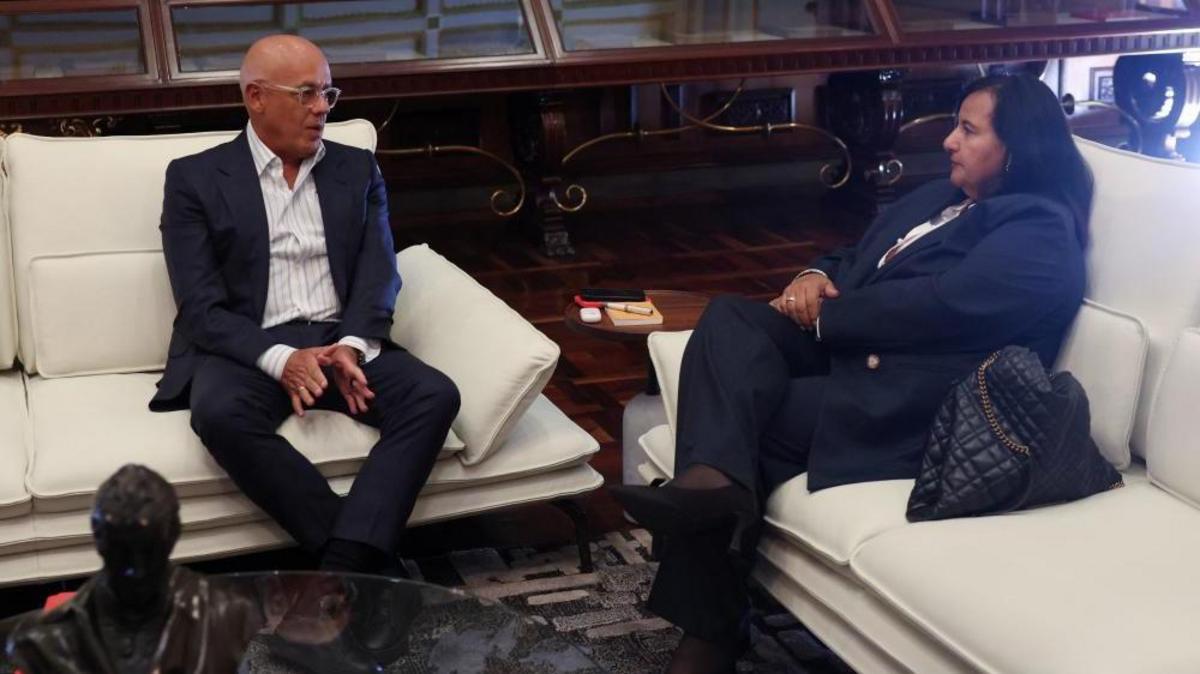
Venezuela's interim government, led by Delcy Rodríguez and backed by the Trump administration, announced it will begin formal talks with a faction of the opposition on 1 August. The announcement was made simultaneously by Jorge Rodríguez, head of the government-controlled National Assembly, and by a group of former lawmakers elected to the National Assembly in 2015. Jorge Rodríguez cited the devastation from twin earthquakes that struck northern Venezuela on 24 June, with a confirmed death toll of at least 4,734, as the impetus for dialogue: 'Only through unity can we move forward with reconstruction and maintain peace.' The opposition statement was more detailed, acknowledging US aid after the quakes and declaring the talks would lay down 'a route map towards democracy.' The opposition negotiating team is led by Dinorah Figuera, who returned from exile in June at the invitation of the US State Department. Priority issues include renewing the government-controlled National Electoral Council (CNE), strengthening democratic institutions, and guaranteeing political participation. The talks come six months after US forces seized Nicolás Maduro in a dawn raid on Caracas and rendered him to New York on drug-trafficking charges.
Key Actors
- ·Interim government (Delcy Rodríguez)(Interim President and Maduro loyalist, backed by the Trump administration)Announces formal talks with opposition, citing need for post-earthquake unity, after US forces removed Maduro.
- ·Opposition delegation (Dinorah Figuera)(Former lawmaker from the 2015 National Assembly, returned from exile)Leads opposition talks team; seeks CNE renewal, democratic institutional strengthening, and US support.
- ·María Corina Machado(Opposition leader and Nobel Peace Prize laureate, in exile)Excluded from talks; unable to return to Venezuela; calls coalition meeting to discuss announcement.
- ·United States(Foreign power that seized Maduro and backs interim government)Favors Figuera over Machado for democratic transition; State Department facilitated Figuera's return.
Why It Matters
The initiation of formal talks under US sponsorship signals a managed political transition following the military removal of Maduro. The sidelining of María Corina Machado in favor of Dinorah Figuera suggests a US preference for a more pliable opposition interlocutor. Combined with the leverage from post-earthquake reconstruction, the negotiations could reshape Venezuela's electoral institutions and determine the pace and nature of a return to internationally recognized democratic norms, impacting regional stability and migration flows.
Watch For
The talks are set to begin on 1 August. Monitor the outcome of Machado's Wednesday coalition meeting, her potential attempts to re-enter Venezuela, and any US reaction. Key indicators include progress on renewing the CNE, setting an electoral calendar, and conditions for political participation. Watch for releases of the 372 political prisoners still held according to Foro Penal, and whether the interim government eases repression. The reconstruction effort and disbursement of aid may be tied to political concessions, while US sanctions policy toward Venezuela may evolve in response to the talks.
Generated 81d ago · Based on full articleAuto-Compiled
DAILY BRIEFING
Follow Venezuela
Get a daily briefing with the most critical developments from every active conflict zone. Concise. Verified. Free.
No spam. Unsubscribe anytime. Verified sources only.
This page aggregates and summarizes reporting from BBC Latin America. The Conflict Pulse does not author original reporting. Read the original source for full coverage.
CONFLICT OVERVIEW
Venezuela
Latest verified updates on Venezuela’s political crisis, U.S. intervention, oil-sector recovery, migration, democratic transition demands, and regional fallout.
Active since February 2014
MORE REPORTING ON THIS REGION
Recent reporting from this region. These stories may cover different events.
LATEST FROM VENEZUELA

REPORTAl Jazeera6d ago
Venezuelans rally for opposition leader’s return and presidential elections

REPORTBBC Latin America7d ago
Venezuela releases dozens of political prisoners as election calls grow

REPORTAl Jazeera7d ago
Venezuela frees 39 political prisoners after post-Maduro talks

REPORTAl Jazeera8d ago
Venezuelan government, opposition agree to work towards reform of top court

REPORTBBC Latin America10d ago
Venezuela's interim president promises election after Maduro ousted

REPORTAl Jazeera10d ago