
naharnet.com
centerREPORTVance hopes US , Iran can turn new leaf with talks
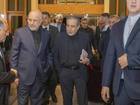
Vance hopes US , Iran can turn new leaf with talks
Full BriefGenerated 63d ago
What Happened
U.S. Vice President JD Vance and negotiators Jared Kushner and Steve Witkoff met Iranian representatives at the Burgenstock resort in Switzerland on Sunday, with Pakistani and Qatari mediators present. The 80-minute first round of talks focused on implementing a June memorandum of understanding and the situation in Lebanon, as confirmed by Iran's state broadcaster, which added that no nuclear program discussions took place. The Iranian delegation refused to start until journalists left the room. Vice President Vance described the meeting as 'historic' and expressed hope to 'turn over a new leaf,' while President Donald Trump separately threatened to strike Iran unless it ceased its proxies' activities in Lebanon. Israeli Prime Minister Benjamin Netanyahu reiterated that Israeli troops would remain in southern Lebanon 'as long as necessary,' and military chief Lieutenant General Eyal Zamir stated Hezbollah was in a 'very difficult position.' Iranian Foreign Ministry spokesman Esmaeil Baqaei said no final agreement could be reached without an end to the war in Lebanon, and President Masoud Pezeshkian declared Iran would not relinquish its right to enrich uranium despite denying any intent to build nuclear weapons. Mohsen Rezaei, military adviser to Supreme Leader Ayatollah Ali Khamenei, voiced skepticism, calling the U.S. 'a promise-breaker.' The talks come against the backdrop of renewed Iranian threats to close the Strait of Hormuz and a Lebanese death toll exceeding 4,100.
Key Actors
- ·U.S. Vice President JD Vance(Head of U.S. delegation at the Switzerland talks)Advocating for a 'new leaf' in U.S.-Iran relations, alongside negotiators Jared Kushner and Steve Witkoff.
- ·Iranian President Masoud Pezeshkian(Head of Iran's executive branch)Stated Iran will not forgo uranium enrichment rights but denies seeking nuclear weapons, linking a final deal to an end of the Lebanon war.
- ·Israeli Prime Minister Benjamin Netanyahu(Prime Minister of Israel)Insisting on a continued IDF presence in southern Lebanon and rejecting any Iranian acquisition of nuclear weapons, with military chief Zamir asserting Hezbollah is severely weakened.
- ·Hezbollah(Iranian-backed Lebanese militant group)Engaged in ongoing clashes with Israel, which prompted Iran's threats to close the Strait of Hormuz and the postponement of Friday's talks after Israeli strikes killed four Israeli soldiers.
Why It Matters
These talks represent a pivotal attempt to unwind the multi-front standoff between the U.S., Iran, and Israel, with potential to de-escalate the Lebanon war, stabilize the Strait of Hormuz, and address Iran's nuclear program. Success could reset Middle East security dynamics; failure risks intensified military exchanges, further closure of a critical oil chokepoint, and deepened Iranian-Israeli proxy conflict.
Watch For
The 60-day implementation timeline of the June memorandum of understanding, including provisions on ending Lebanon hostilities. Any IAEA reporting cycle that may capture Iran's nuclear posture. Statements from Supreme Leader Ali Khamenei's office, which holds final authority. The next round of U.S.-Iran talks and whether Pakistan and Qatar can broker concrete de-escalation steps. Israeli military actions in southern Lebanon and Hezbollah's responses. Reopening or further closure of the Strait of Hormuz.
Generated 63d ago · Based on full articleAuto-Compiled
This page aggregates and summarizes reporting from naharnet.com. The Conflict Pulse does not author original reporting. Read the original source for full coverage.
CONFLICT OVERVIEW
Iran
Latest verified updates on Iran’s regional confrontation, U.S.–Israeli strikes, missile retaliation, proxy networks, sanctions, and Strait of Hormuz risks.
SOURCE PERSPECTIVES
How outlets across the bias spectrum are covering this conflict.
LATEST FROM IRAN

REPORTMiddle East Eye9d ago
Iran formalises Strait of Hormuz control as US struggles to sustain war it launched with Israel

REPORTAl Jazeera9d ago
US threatens ‘indefinite’ blockade against Iran: How long can it last?

REPORTMiddle East Eye9d ago
Morning update
REPORTMiddle East Eye10d ago
Vance says US will end up 'in a stronger position' than Iran

REPORTJerusalem Post — Iran News10d ago
US Treasury Secretary Bessent says US to apply measures 'never seen before' on Iran

REPORTAl Jazeera10d ago