
The Guardian Middle East
leftREPORTUS opts not to back Saudi Arabia in Yemen after meeting Houthi leaders
Full BriefGenerated 3d ago
What Happened
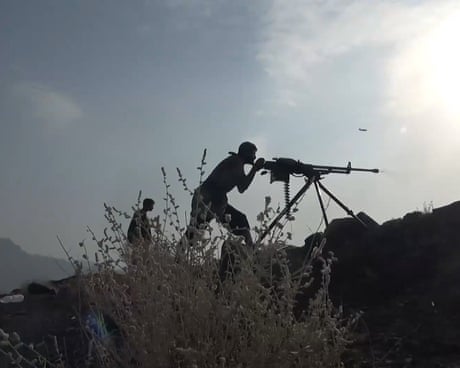
US officials met Houthi leaders at the US embassy in Muscat, Oman, over the weekend, in a confirmed meeting that led to a US decision not to intervene militarily to help Saudi Arabia repel a Houthi advance inside Yemen. The Iran-backed group reassured the US that the ceasefire agreement struck in 2025 still held and that it had no intention of attacking US shipping in the Red Sea, regarding only Saudi-linked shipping as a target because of Riyadh's blockade of Yemen. The meeting helps explain US President Donald Trump's decision to condemn the Houthi advance down Yemen's west coast as a threat to freedom of navigation through the Bab al-Mandab strait while rejecting any military response in support of Saudi Arabia. US Vice President JD Vance confirmed on Monday that the US was in direct contact with the Houthis. Last week, the Houthis seized large areas of western Yemen along the Red Sea coast. Saudi Arabia claimed the Houthis fired a drone at Mecca on Tuesday that was intercepted by Saudi defence forces at about 6.50pm local time near prohibited airspace close to the city's holiest shrines, a claim the Houthis dismissed as 'the lie of the century.' The Houthis counterclaimed they shot down a Saudi F-15 near Marib and attacked an Aramco plant in the Red Sea port of Yanbu, though they provided no supporting evidence.
Key Actors
- ·United States(State actor; Trump administration and US Central Command)Met Houthi leaders in Muscat, confirmed direct contact, and decided not to intervene militarily on Saudi Arabia's behalf, while continuing its conflict with Iran.
- ·Houthis (Ansar Allah)(Iran-backed Yemeni armed group)Promised not to target US shipping, claimed downing a Saudi F-15 near Marib and attacking an Aramco plant in Yanbu, and denied Saudi claims of a drone attack on Mecca.
- ·Saudi Arabia(State actor; coalition leader in Yemen)Claimed the Houthis launched a drone toward Mecca that was intercepted, and is under pressure to pursue either diplomacy or a regional alliance with Pakistan and Turkey to push back the Houthi advance.
- ·Iran(Regional state actor backing the Houthis)Foreign Minister Abbas Araghchi met Chinese counterpart Wang Yi in Beijing to seek support for Iran's plans for the future administration of the Strait of Hormuz, which remains closed due to separate Iranian and US blockades.
Why It Matters
The meeting signals a de facto US acceptance of a Houthi role in any Yemen settlement and a shift away from direct military backing for Saudi Arabia, potentially reshuffling Red Sea security and the balance of the Saudi-led intervention. It occurs as the US and Israel have been at war with Iran for more than six months, making Washington reluctant to open a second military front, while Saudi Arabia is left to seek either negotiated governance arrangements in Yemen or new security partners such as Pakistan and Turkey. The reported German meeting of US, Israeli, and Arab military chiefs, Israel's offer to intervene in Yemen, and Russia's shifting stance at the UN Security Council indicate broader realignments over Red Sea and Gulf security.
Watch For
Monitor whether Saudi Arabia moves toward direct diplomacy with the Houthis or assembles a coalition with Pakistan and Turkey; whether the Houthis provide evidence for their claimed downing of a Saudi F-15 and attack on Aramco's Yanbu plant; any further US-Houthi contacts or explicit US policy statements clarifying the 'tacit understanding'; UN Security Council follow-up, especially Russia's evolving position on the Aden government; and the outcome of Iran-China talks on the Strait of Hormuz and the June memorandum of understanding.
Generated 3d ago · Based on full articleAuto-Compiled
This page aggregates and summarizes reporting from The Guardian Middle East. The Conflict Pulse does not author original reporting. Read the original source for full coverage.
CONFLICT OVERVIEW
Iran
Latest verified updates on Iran’s regional confrontation, U.S.–Israeli strikes, missile retaliation, proxy networks, sanctions, and Strait of Hormuz risks.
SOURCE PERSPECTIVES
How outlets across the bias spectrum are covering this conflict.
LATEST FROM IRAN

DEVELOPINGMiddle East Eye7h ago
Iran says Hormuz will not reopen until US honours June agreement
DEVELOPINGMiddle East Eye9h ago
Morning recap
REPORTMiddle East Eye13h ago
Baghaei says attending UNGA meet Iran's right, not favour granted by US
REPORTMiddle East Eye14h ago
Iran's security chief says seven conditions announced for talks to begin
REPORTMiddle East Eye18h ago
Iran disputes US oil claim, approves new rule on Hormuz data cables

REPORTMiddle East Eye19h ago