Al Jazeera
centerREPORTIran says seven killed in latest US strikes, warns war ‘will spread’

Full BriefGenerated 9d ago
What Happened
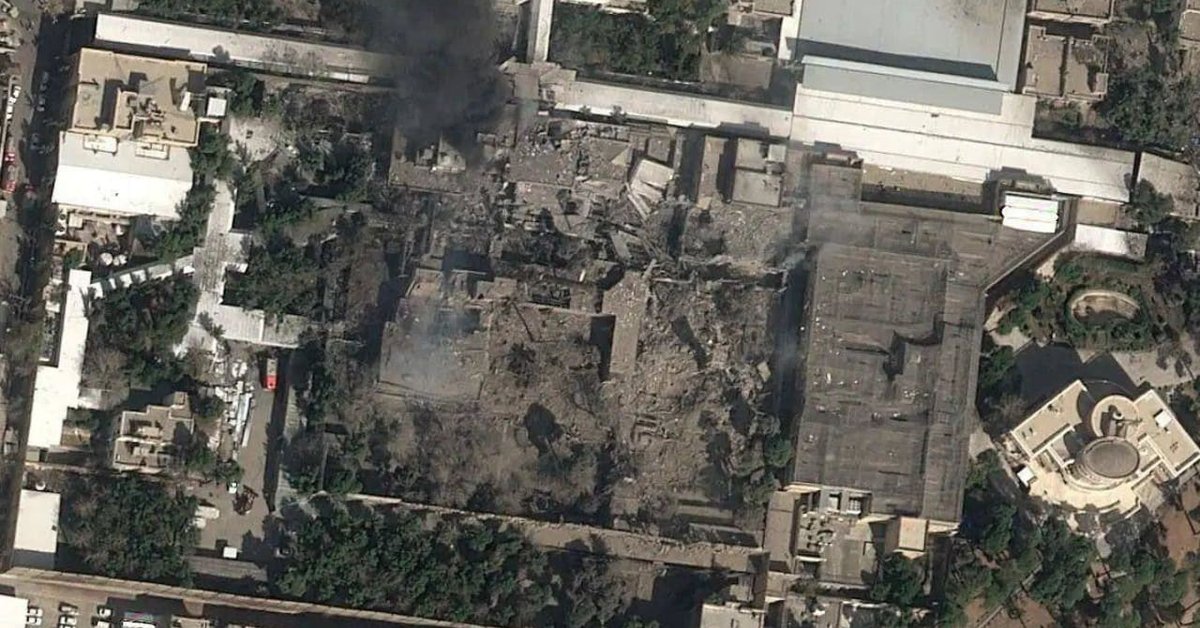
The United States conducted strikes on Iranian infrastructure for a sixth consecutive night, with local media reporting attacks on Qeshm Island, Bandar Abbas, Chabahar, Iranshahr, and Bandar-e Khamir. Tasnim news agency reported a US missile strike on an airport in Iranshahr and an 'enemy' attack on a communications tower in Bandar Abbas that caused a power outage. Fars news agency reported a suspected US attack on a bridge in Bandar-e Khamir. The US military said the latest round began at 18:00 GMT on Thursday. In response, Iran’s Islamic Revolutionary Guard Corps (IRGC) claimed an attack on a US airbase in Bahrain, as well as further attacks on Kuwait and Jordan. Kuwait’s army said the Iranian attack involved 32 drones and targeted vital facilities, causing material damage. Iranian army spokesman Mohammad Akraminia warned that Iran’s attacks would spread to new areas if US strikes continue. The exchanges follow US President Donald Trump’s threat to target Iranian power plants and bridges, and come amid mutual accusations of violating an interim US-Iran memorandum of understanding signed the previous month.
Key Actors
- ·United States(U.S. military and White House)Conducted a sixth night of airstrikes on Iranian infrastructure and threatened further strikes on power plants and bridges, while stating willingness for diplomacy.
- ·Islamic Revolutionary Guard Corps (IRGC)(Iranian military branch responsible for external operations)Claimed drone attacks on a US airbase in Bahrain and other targets in Kuwait and Jordan, citing retaliation for a US strike that forced evacuation of a children's hospital in Ahvaz.
- ·Iranian Army (Artesh)(Iran's regular military)Through spokesman Mohammad Akraminia, warned that Iranian attacks would spread to new areas if US strikes continued.
- ·Iran's Ministry of Foreign Affairs(Diplomatic arm of the Iranian state)Stated that Tehran has no plans to engage in talks with the US and is focused solely on defense.
Why It Matters
The escalation of direct US-Iran strikes threatens to unravel a nascent interim agreement and risks broadening into a regional conflict involving Gulf states. The targeting of infrastructure and IRGC claims of attacks on US bases in Bahrain mark a significant expansion of the theatre, while mutual threats and accusations undermine diplomatic channels. The situation tests the fragile balance of deterrence and could draw in regional players if vital facilities are hit or civilian casualties mount.
Watch For
Monitor further US nighttime strikes and Iranian retaliation, particularly any attacks on regional infrastructure inside Iraq, the Gulf, or beyond as warned by the Iranian army. Watch for diplomatic signals from the White House or Tehran regarding the MoU, and observe whether Gulf states, especially Kuwait and Bahrain, bolster air defenses or issue public warnings. Any formal suspension or collapse of the interim deal would be a critical inflection point.
Generated 9d ago · Based on full articleAuto-Compiled
This page aggregates and summarizes reporting from Al Jazeera. The Conflict Pulse does not author original reporting. Read the original source for full coverage.
CONFLICT OVERVIEW
Iran
Latest verified updates on Iran’s regional confrontation, U.S.–Israeli strikes, missile retaliation, proxy networks, sanctions, and Strait of Hormuz risks.
SOURCE PERSPECTIVES
How outlets across the bias spectrum are covering this conflict.
left
US expands Iran attacks as Trump warns Tehran and Houthis over Red Sea strikes
The Guardian Middle EastHow Chinese tech and Russian tactics are aiding Iran’s bombing of US bases
The Guardian AsiaLATEST FROM IRAN