The Guardian Middle East
leftREPORTUS launches seventh night of Iran strikes as Hormuz conflict escalates
Full BriefGenerated 8d ago
What Happened
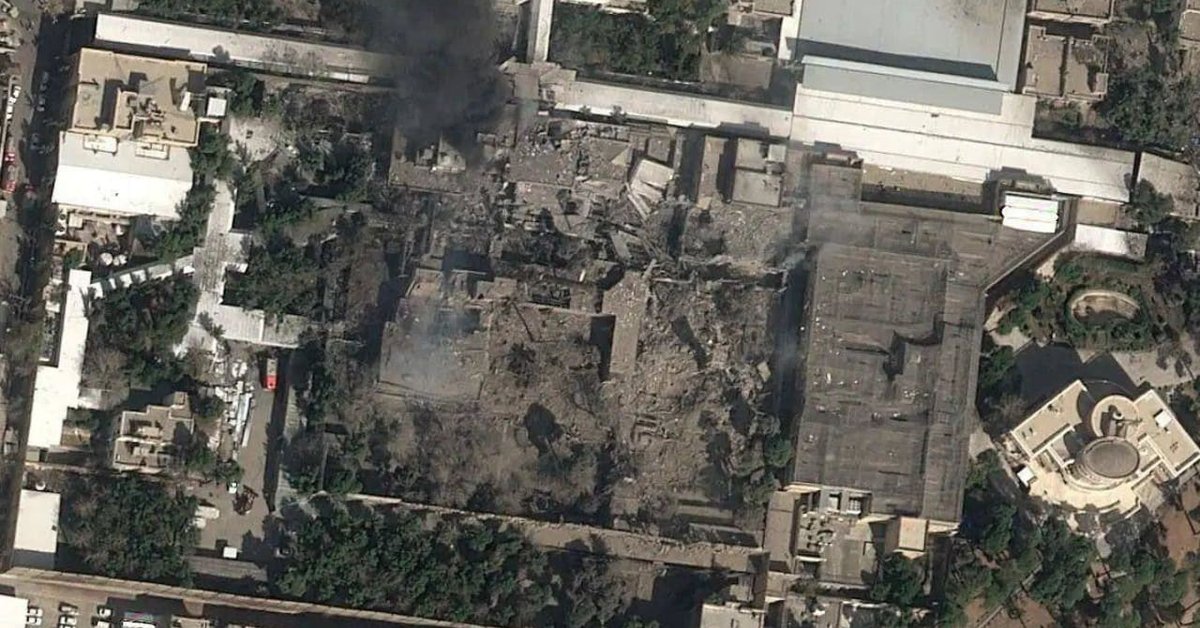
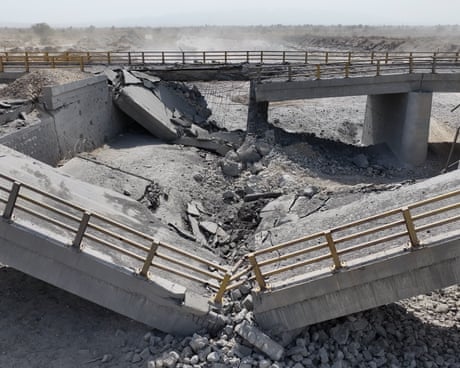
The United States military has conducted seven consecutive nights of airstrikes against Iranian infrastructure, including bridges in Hormozgan province, Iranshahr airport, and energy facilities, according to US Central Command. Iranian state media reported that these strikes have resulted in at least 38 deaths and over 400 injuries. The campaign, reportedly directed by US President Donald Trump, aims to force the reopening of the Strait of Hormuz, which Iran closed following the reimposition of a US naval blockade on Tuesday. In retaliation, the Islamic Revolutionary Guard Corps (IRGC) launched missile strikes against Bahrain, Kuwait, Jordan, Oman, and Qatar, damaging a desalination plant in Kuwait and wounding a child in Qatar. The IRGC has threatened a 'devastating price' for nations hosting US military bases if attacks on Iranian infrastructure persist.
Key Actors
- ·US Central Command(US military combatant command)Executing an aerial campaign to degrade Iranian military capabilities and enforce a blockade of Iranian ports.
- ·IRGC(Iranian paramilitary and military branch)Threatening retaliation against regional states hosting US bases and enforcing the closure of the Strait of Hormuz.
- ·Houthis(Yemeni militant group)Reportedly instructed by Iran to prepare for the closure of the Red Sea oil route if US strikes on Iranian energy infrastructure continue.
Why It Matters
The conflict has effectively paralyzed a critical global energy chokepoint, with the Strait of Hormuz handling approximately one-fifth of the world's oil and gas supply. The escalation from targeted strikes to the destruction of civilian electrical and water infrastructure, combined with the collapse of the US-Iran interim agreement, risks a broader regional war involving multiple Gulf states and the potential disruption of global energy markets via the Red Sea.
Watch For
Monitor for further Iranian retaliatory strikes against regional US-allied infrastructure and any potential Houthi actions in the Red Sea. Additionally, track the status of the US naval blockade and any remaining diplomatic efforts by third-party mediators, such as Pakistan, to re-establish a ceasefire.
Generated 8d ago · Based on full articleAuto-Compiled
This page aggregates and summarizes reporting from The Guardian Middle East. The Conflict Pulse does not author original reporting. Read the original source for full coverage.
CONFLICT OVERVIEW
Iran
Latest verified updates on Iran’s regional confrontation, U.S.–Israeli strikes, missile retaliation, proxy networks, sanctions, and Strait of Hormuz risks.
SOURCE PERSPECTIVES
How outlets across the bias spectrum are covering this conflict.
left
US expands Iran attacks as Trump warns Tehran and Houthis over Red Sea strikes
The Guardian Middle EastHow Chinese tech and Russian tactics are aiding Iran’s bombing of US bases
The Guardian AsiaLATEST FROM IRAN