
The Guardian Middle East
leftREPORTUS and Iran exchange more airstrikes, fuelling fears of wider return to hostilities
Full BriefGenerated 18d ago
What Happened
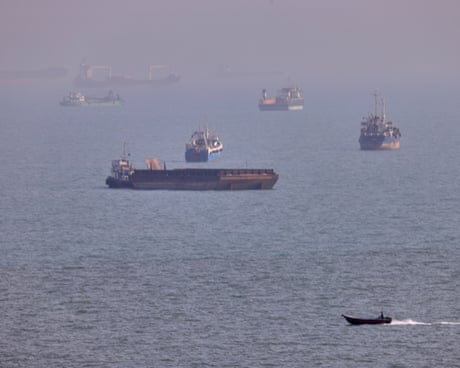
On Tuesday at 12 p.m. ET (1600 GMT), United States Central Command initiated airstrikes against Islamic Revolutionary Guard Corps (IRGC) targets within Iran, specifically impacting Qeshm Island, Bandar Abbas, and Chabahar, according to reports from Iranian state media and Nour News. These strikes follow a series of escalations, including US strikes on Larak Island on Sunday and subsequent Iranian missile attacks on two US airbases in Jordan. The current hostilities occur amid an ongoing blockade of the Strait of Hormuz, where Iran has reportedly targeted commercial shipping, prompting threats of further sanctions from US Treasury Secretary Scott Bessent and warnings of military retaliation from President Donald Trump.
Key Actors
- ·US Central Command(US military combatant command)Confirmed the initiation of strikes against IRGC targets in response to threats against commercial shipping and US service members.
- ·IRGC(Iranian military branch)Stated through a spokesperson that the US will regret the new attacks and threatened to prevent oil exports from the Persian Gulf.
- ·Masoud Pezeshkian(President of Iran)Conditioned Iranian reciprocation on the US returning to commitments under a June memorandum of understanding.
- ·Donald Trump(President of the United States)Threatened that any further Iranian retaliation would result in a significantly harder military response.
Why It Matters
The collapse of the June memorandum of understanding and the subsequent return to direct military exchanges between the US and Iran threaten the stability of global oil supplies, given Iran's effective closure of the Strait of Hormuz. The escalation marks a transition from an economic standoff back to active kinetic conflict, increasing the risk of a wider regional war involving critical infrastructure and military assets.
Watch For
Monitor for potential Iranian retaliation against US assets in the region, further announcements regarding US sanctions from the Treasury Department, and any developments regarding the status of oil shipping through the Strait of Hormuz.
Generated 18d ago · Based on full articleAuto-Compiled
This page aggregates and summarizes reporting from The Guardian Middle East. The Conflict Pulse does not author original reporting. Read the original source for full coverage.
CONFLICT OVERVIEW
Iran
Latest verified updates on Iran’s regional confrontation, U.S.–Israeli strikes, missile retaliation, proxy networks, sanctions, and Strait of Hormuz risks.
SOURCE PERSPECTIVES
How outlets across the bias spectrum are covering this conflict.
LATEST FROM IRAN

DEVELOPINGMiddle East Eye5h ago
Trump tells Tehran to 'behave' and lays out three options on ending war on Iran

DEVELOPINGAl Jazeera7h ago
What’s behind Iranian authorities’ push for a mass mobilisation campaign?

DEVELOPINGAl Jazeera8h ago
Postponing the future: War and inflation redraw marriage terms in Iran

DEVELOPINGAl Jazeera9h ago
What are Iran’s latest conditions to end its war with the US?
REPORTMiddle East Eye12h ago
Ghalibaf: Iran must ‘fight and negotiate’ as war with US drags on
REPORTMiddle East Eye12h ago