BBC US & Canada
centerDEVELOPINGUS launches fresh strikes on Iran, as Trump warns of retaliation for deaths of soldiers
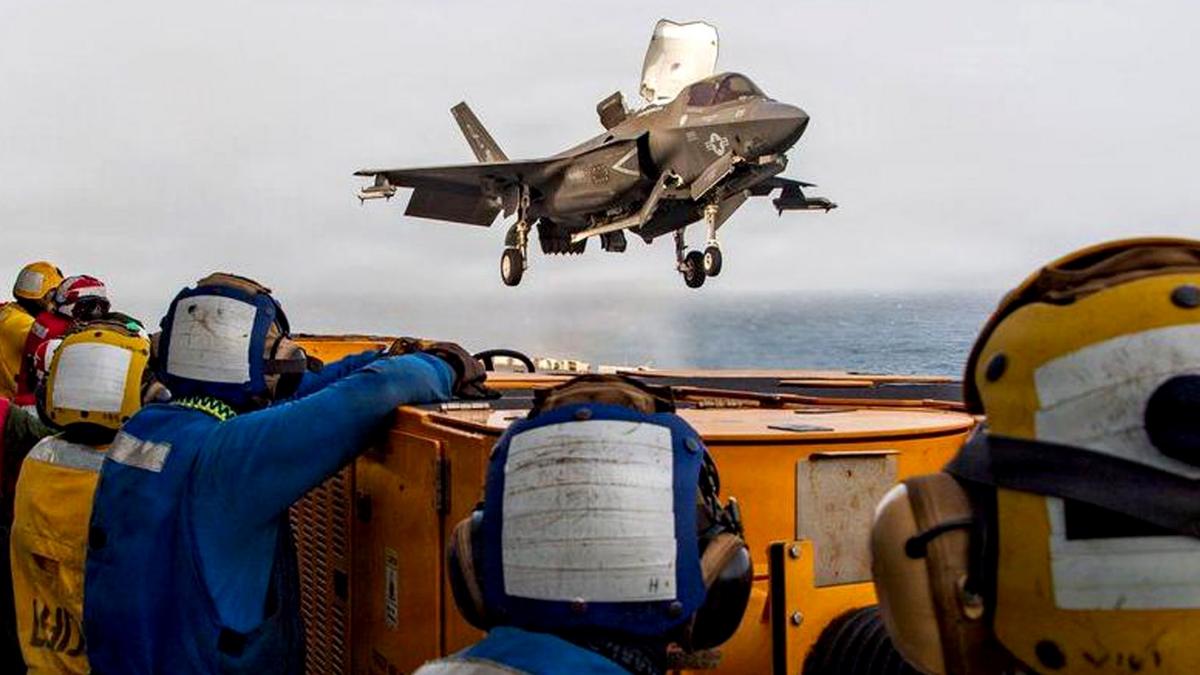
Iran says it has hit two ships in the Strait of Hormuz as well as targets in Bahrain and Jordan.
Full BriefGenerated 14h ago
What Happened
On the tenth consecutive night of US strikes against Iran, the US military said it was targeting sites to 'further degrade' Iran's ability to attack ships in the Strait of Hormuz. President Donald Trump vowed retaliation for the deaths of US soldiers — two in Jordan and one in Iraq — stating Iran would pay 'many times over' and had been hit 'very hard' the previous night. Iran's President Masoud Pezeshkian claimed Iran was now fighting a 'full-scale war' with the US and said Iranian forces had struck sites in Bahrain, Jordan, and Syria. Pezeshkian also noted that diplomatic messages were still being exchanged through intermediaries, even after a ceasefire collapse. Iran's semi-official Tasnim news agency reported overnight strikes on Tabriz, Chabahar, Konarak, Bandar Mahshahr, and Bandar Imam Khomeini. The Islamic Revolutionary Guard Corps (IRGC) claimed two oil tankers exploded while using an 'unsafe and hazardous southern route' of the strait, bringing them to a halt; US Central Command (Centcom) disputed those claims. Separately, Jordan's military shot down three Iranian missiles, Kuwait's armed forces intercepted Iranian drones, and Bahrain reported drones targeted its air navigation systems without disrupting traffic.
Key Actors
- ·US Central Command (Centcom)(US military command responsible for operations in the Middle East)Conducted the tenth night of strikes against Iran to degrade maritime attack capabilities and disputed IRGC claims about tanker explosions.
- ·President Masoud Pezeshkian(President of Iran)Stated Iran is in a 'full-scale war' with the US, claimed strikes on Bahrain, Jordan, and Syria, and confirmed diplomatic messages are still being exchanged via intermediaries.
- ·Islamic Revolutionary Guard Corps (IRGC)(Elite branch of the Iranian armed forces responsible for external operations)Claimed two oil tankers exploded after transiting a hazardous route in the Strait of Hormuz, an assertion disputed by Centcom.
- ·Jordanian Armed Forces(Military forces of the Hashemite Kingdom of Jordan)Shot down three Iranian missiles as sirens warned of incoming fire across the country.
Why It Matters
The sustained US bombing campaign, now in its tenth day, signals a shift from limited strikes to an extended punitive operation aimed at degrading Iran's maritime threat in the Strait of Hormuz — a vital chokepoint for global energy flows. Iran's claimed counter-strikes against US allies Jordan and Bahrain, along with its president's declaration of 'full-scale war', risk drawing neighboring states directly into the conflict. Despite the escalation, diplomatic backchannels remain active, pointing to potential off-ramps, but the IRGC's disputed claims about tanker explosions introduce a maritime dimension that could trigger further naval escalation or economic disruption.
Watch For
Monitor Centcom's after-action reports for verified damage assessments and any expansion of target sets. Watch for IAEA or UN Security Council statements, particularly if nuclear facilities are near strike zones. Track shipping traffic and insurance rates in the Strait of Hormuz for signs of commercial disruption. Observe whether Iran's diplomatic intermediaries (likely Oman or Qatar) issue new ceasefire proposals. Expect possible retaliation from Iran-linked militias in Iraq and Syria against US positions, especially in response to the deaths of US soldiers cited by Trump.
Generated 14h ago · Based on full articleAuto-Compiled
This page aggregates and summarizes reporting from BBC US & Canada. The Conflict Pulse does not author original reporting. Read the original source for full coverage.
CONFLICT OVERVIEW
Iran
Latest verified updates on Iran’s regional confrontation, U.S.–Israeli strikes, missile retaliation, proxy networks, sanctions, and Strait of Hormuz risks.
SOURCE PERSPECTIVES
How outlets across the bias spectrum are covering this conflict.
LATEST FROM IRAN