DW News
centerREPORTUS-Iran talks: Hope and skepticism in the Swiss alps
Full BriefGenerated 6d ago
What Happened
On 18 June 2026, the US and Iran are set to hold initial negotiations in Bürgenstock, Switzerland, mediated by Pakistan and Qatar, following a week of diplomacy that ended active hostilities. US President Donald Trump announced via social media on 15 June that the sides had reached a ‘peace agreement’, and Iranian regime-aligned media leaked elements of a memorandum of understanding (MoU). Both sides electronically signed the MoU; Trump signed the official text on 17 June during a dinner at Versailles hosted by French President Emmanuel Macron, and Iranian President Masoud Pezeshkian signed in Tehran. The MoU establishes a ceasefire, commits Iran to reopen the Strait of Hormuz, and initiates 60 days of negotiations focused on Iran’s nuclear programme. The deal follows a US and Israeli attack on Iran in February 2026, months of missile and drone exchanges across the Middle East, the killing of thousands (mostly Iranian) and 13 US servicemembers, and Iran’s closure of the Strait and attacks on Gulf fossil-fuel infrastructure.
Trump claimed the framework prevents Iran from obtaining a nuclear weapon, calling it ‘a wall for a nuclear weapon’, in contrast to the JCPOA. G7 leaders backed the deal, with Macron calling it ‘wise’ and offering a Franco-British mission to the Strait—an offer Trump dismissed. Analysts expressed scepticism: Alan Eyre, a former US JCPOA negotiator, stressed that verification levels are what matters, while Omid Nouripour, vice president of Germany’s Bundestag, called the text ‘an admission of failure by the American side’. The MoU addresses war-caused problems but does not settle the pre-war nuclear standoff, and US officials face a ‘political clock’ with looming midterm elections.
Key Actors
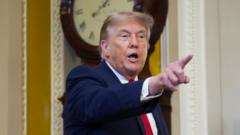
- ·Donald Trump(US President)Announced and signed the MoU; claims it prevents an Iranian nuclear weapon, threatens bombing if no broader deal, and pushes for reopening the Strait of Hormuz.
- ·Masoud Pezeshkian(President of Iran)Signed the MoU in Tehran, agreeing to a ceasefire, Strait reopening, and 60-day nuclear negotiations.
- ·Emmanuel Macron(French President)Hosted the signing at Versailles, endorsed the deal as ‘wise’, and offered a Franco-British mission to assist Strait implementation.
Why It Matters
The MoU halts direct US-Iran military escalation that had killed thousands and disrupted global energy markets by closing the Strait of Hormuz. It opens a 60-day window for nuclear negotiations, but the text only freezes the current conflict rather than resolving Iran’s nuclear ambitions or the sanctions regime. Trump’s threats to ‘bomb the hell’ out of Iran if talks fail underscore the fragility, while US midterm elections pressure timely progress. The deal’s success hinges on verification mechanisms yet to be negotiated, and the involvement of Pakistan and Qatar as mediators signals a regional diplomatic shift.
Watch For
Implementation of the ceasefire and Strait of Hormuz reopening in the coming days; the 60-day negotiation deadline for a nuclear framework; whether IAEA inspectors gain the access needed to verify Iranian commitments; potential hardline backlash in Tehran or Washington; and the influence of US midterm elections on Trump’s negotiating stance.
Generated 6d ago · Based on full articleAuto-Compiled
This page aggregates and summarizes reporting from DW News. The Conflict Pulse does not author original reporting. Read the original source for full coverage.
CONFLICT OVERVIEW
Iran
Latest verified updates on Iran’s regional confrontation, U.S.–Israeli strikes, missile retaliation, proxy networks, sanctions, and Strait of Hormuz risks.
SOURCE PERSPECTIVES
How outlets across the bias spectrum are covering this conflict.
LATEST FROM IRAN