
The Guardian Middle East
leftREPORTUS and Israel are warned against launching fresh strikes on Iran
Full BriefGenerated 25d ago
What Happened
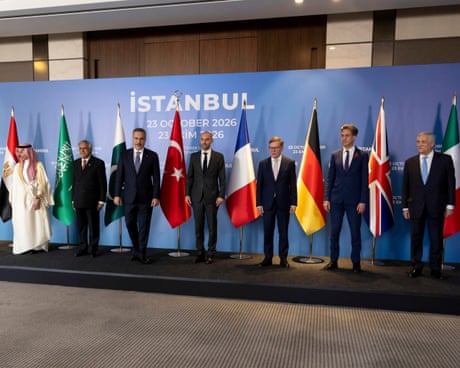
Foreign ministers from eight European and Middle Eastern countries met in Istanbul and urged the United States and Israel not to launch fresh strikes on Iran. Turkish Foreign Minister Hakan Fidan, co-convener of the summit, said military intervention in Iran is not any solution and that a new military attack would spread war and conflict in the region. French Foreign Minister Jean-Noël Barrot warned that another war between Iran and the US would be bad for both sides and worsen oil prices, which the article says have hit their highest level since May. UK Foreign Secretary Ed Miliband urged both sides to embrace diplomacy.
The ministers also demanded an end to Houthi assaults on Saudi Arabia and called for an immediate opening of the Strait of Hormuz, which they said is currently blockaded by Iranian ships and drones. Germany's Johann Wadephul accused the Houthis and Iran of blackmailing world trade and strangling global supplies of energy and fertiliser. Italy's Antonio Tajani said the aim was de-escalation to guarantee freedom of navigation, adding that the problem cannot be solved from a purely military standpoint.
Key Actors
- ·Turkey(Co-convener of the Istanbul summit; represented by Foreign Minister Hakan Fidan)Warned against military intervention in Iran and said a new military attack would spread war and conflict in the region.
- ·France(European participant; represented by Foreign Minister Jean-Noël Barrot)Warned that another war between Iran and the US would be bad for both sides and worsen rising oil prices.
- ·Saudi Arabia(Regional participant; represented by Foreign Minister Faisal bin Farhan)Joined calls to end Houthi assaults on Saudi Arabia and to open the Strait of Hormuz.
- ·Germany(European participant; represented by Johann Wadephul)Accused the Houthis and Iran of blackmailing world trade and strangling global supplies of energy and fertiliser.
Why It Matters
The Istanbul meeting, described as an unprecedented gathering of regional and European leaders initiated by Turkey and Germany, signals a multinational effort to constrain US and Israeli military options against Iran at a moment when nuclear talks remain deadlocked. It also reflects European and Middle Eastern concern about economic fallout from rising oil prices and disrupted shipping through the Strait of Hormuz, a chokepoint vital for energy and fertiliser, and about further escalation involving Iran-backed Houthi attacks on Saudi Arabia.
Watch For
Monitor whether the United States or Israel respond to the warnings or proceed with strikes on Iran, any movement in the Vienna or Oman-mediated nuclear backchannel, Houthi attacks on Saudi Arabia, and whether the Strait of Hormuz reopens. Also watch for follow-up within the Mecca defensive security pact involving Pakistan, Turkey, Saudi Arabia, and possible Egyptian membership, as well as any further Istanbul-format meetings.
Generated 25d ago · Based on full articleAuto-Compiled
This page aggregates and summarizes reporting from The Guardian Middle East. The Conflict Pulse does not author original reporting. Read the original source for full coverage.
CONFLICT OVERVIEW
Iran
Latest verified updates on Iran’s regional confrontation, U.S.–Israeli strikes, missile retaliation, proxy networks, sanctions, and Strait of Hormuz risks.
MORE REPORTING ON THIS REGION
Recent reporting from this region. These stories may cover different events.
LATEST FROM IRAN

DEVELOPINGMiddle East Eye5h ago
Morning update
DEVELOPINGMiddle East Eye6h ago
Iran's foreign minister vows 'unforgettable response' if US-Israeli attacks target civilian infrastructure
DEVELOPINGMiddle East Eye9h ago
Iran's army launches drone attack at Kuwait base used by US military
DEVELOPINGMiddle East Eye9h ago
Rubio says 'no imminent threat' to US from Iran

REPORTMiddle East Eye16h ago
Iraq resumes shipping oil for export to Turkey via pipeline

REPORTAl Jazeera16h ago