
bbc.com
centerREPORTTrump says new talks with Iran to begin on Monday
Full BriefGenerated 21d ago
What Happened
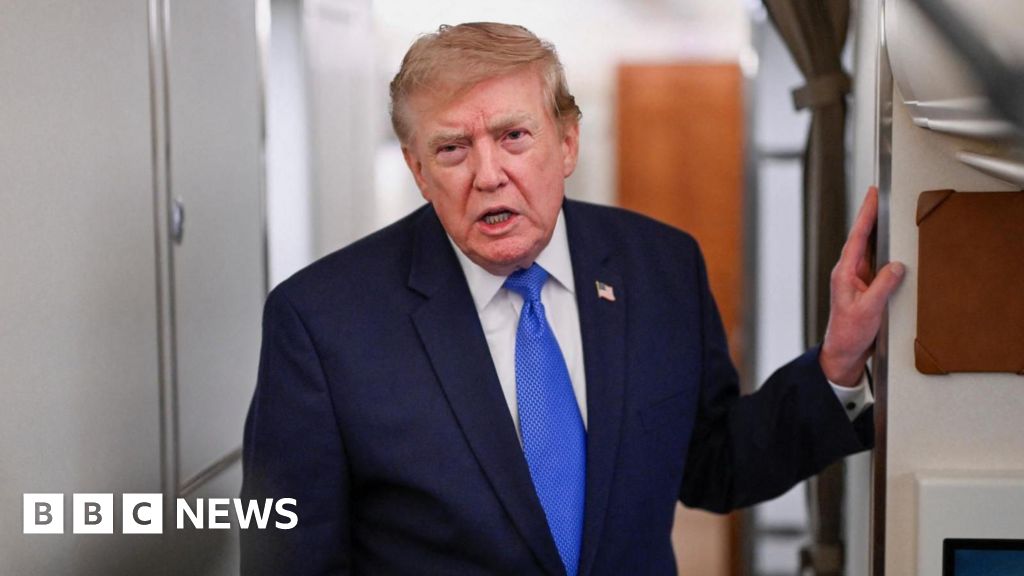
US President Donald Trump announced that new negotiations with Iran would begin on Monday, after he called off what he described as 'massive' strikes that were 'the biggest attack since World War II'. Speaking to reporters on Air Force One, Trump said talks start 'tomorrow afternoon' and that he had been asked by Iran and US allies in the Middle East to 'hold off' on an attack because 'the perimeters' of a deal had been agreed. Trump stated that Saudi Crown Prince Mohammed bin Salman, the UAE, and Qatar had urged him not to conduct strikes over the weekend, saying they believed a deal was possible. Iran's semi-official Mehr news agency denied that Tehran had asked the US to refrain from military action, calling Trump's claim 'nothing but a new lie'. Iranian Foreign Minister Abbas Araghchi separately said negotiations with Oman on a Strait of Hormuz deal are 'on track for finalisation'. The conflict, which began on 28 February, has disrupted shipping through the Strait of Hormuz and caused oil price volatility; Brent crude fell 4.5% after Trump's announcement. Trump declined to specify a deadline, a venue, or attendees for the talks, and did not confirm whether planned strikes would have targeted Iranian energy infrastructure.
Key Actors
- ·Donald Trump(President of the United States)Announced that US–Iran negotiations will begin on Monday, claimed to have called off massive strikes, and asserted that Iran and regional allies had requested a halt to military action.
- ·Iran(State actor (via Mehr news agency and Foreign Minister Abbas Araghchi))Denied asking the US to hold off on strikes; said Oman-mediated talks on the Strait of Hormuz are nearing finalisation.
- ·Saudi Arabia, UAE, Qatar(US allies in the Middle East)Urged President Trump not to conduct strikes against Iran, according to Trump, because they believed a deal was within reach.
Why It Matters
The announcement signals a potential diplomatic off-ramp in a months-long US–Iran conflict that has destabilised global energy markets through disruptions in the Strait of Hormuz, through which roughly 20% of the world's crude oil and LNG transit. If talks proceed and yield a deal covering both the strait and Iran's nuclear programme, the immediate threat of a major US military strike — which Trump described as the largest since World War II — could recede. However, Iran's denial of Trump's claims and the absence of confirmed logistical details inject uncertainty, while the involvement of Gulf states underscores regional fears of a wider conflagration and their role as mediators.
Watch For
Official confirmation from Iran on the Monday talks, including any designated negotiators or venue. Monitoring of Strait of Hormuz shipping activity and military postures for signs of de‑escalation or renewed friction. Any follow‑up statements from the IAEA if nuclear issues appear on the agenda. Potential resumption of tit‑for‑tat strikes or further ultimatums from either side. Oil market movements in response to concrete talks developments or setbacks.
Generated 21d ago · Based on full articleAuto-Compiled
This page aggregates and summarizes reporting from bbc.com. The Conflict Pulse does not author original reporting. Read the original source for full coverage.
CONFLICT OVERVIEW
Iran
Latest verified updates on Iran’s regional confrontation, U.S.–Israeli strikes, missile retaliation, proxy networks, sanctions, and Strait of Hormuz risks.
SOURCE PERSPECTIVES
How outlets across the bias spectrum are covering this conflict.
LATEST FROM IRAN

REPORTMiddle East Eye9d ago
Iran formalises Strait of Hormuz control as US struggles to sustain war it launched with Israel

REPORTAl Jazeera9d ago
US threatens ‘indefinite’ blockade against Iran: How long can it last?

REPORTMiddle East Eye9d ago
Morning update
REPORTMiddle East Eye10d ago
Vance says US will end up 'in a stronger position' than Iran

REPORTJerusalem Post — Iran News10d ago
US Treasury Secretary Bessent says US to apply measures 'never seen before' on Iran

REPORTAl Jazeera10d ago