
The Guardian Middle East
leftREPORTTrump demands Iran pay compensation for decades of US soldier deaths
Full BriefGenerated 59d ago
What Happened
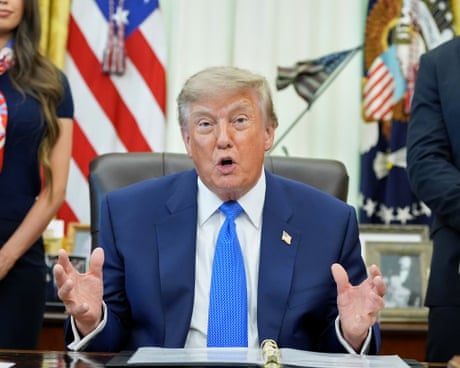
On Truth Social, US President Donald Trump demanded Iran pay compensation for the deaths of thousands of US soldiers and Iranian civilians over recent decades, citing roadside bombs, the USS Cole attack, and 'Quds Force' activities associated with General Soleimani. He also demanded compensation for 'hundreds of thousands of innocent protesters that Iran has killed over the last 50 years' and for victims in Lebanon, Syria, Yemen, and Gaza. Trump characterised the demands as a response to Iranian negotiators seeking damages for the five-month war that, per the article, killed thousands and devastated Iran’s military and economy. The exchange signals an impasse in negotiations aimed at ending the conflict and reopening the Strait of Hormuz, through which 20% of global oil trade flowed before US-Israeli strikes on Iran in late February. Separately, Israeli Prime Minister Benjamin Netanyahu publicly rejected the Trump-backed 'Board of Peace' 15-point roadmap to end the Gaza war, insisting on full Hamas disarmament before any Israeli withdrawal, a stance that marks a public break with the US.
Key Actors
- ·Donald Trump(President of the United States)Demanded Iran pay reparations for historical and recent casualties, leveraging the demand in stalled Strait of Hormuz negotiations.
- ·Iranian negotiators(Representatives of the Iranian state)Reportedly sought compensation for the five-month war that devastated Iran's military and economy, prompting Trump's reciprocal demand.
- ·Benjamin Netanyahu(Prime Minister of Israel)Rejected the US-backed 15-point Gaza peace plan, conditioning withdrawal on full Hamas disarmament, thus defying Trump's roadmap.
- ·Board of Peace(Trump-backed entity proposing a Gaza ceasefire plan)Proposed a 15-point phased withdrawal plan that Netanyahu rejected in favour of prior Hamas disarmament.
Why It Matters
The exchange underscores a deepening impasse in US-Iran negotiations over the Strait of Hormuz, a critical chokepoint for global energy markets, and complicates Trump's broader Middle East diplomatic push ahead of November midterm elections. Netanyahu's open rejection of the US-backed Gaza plan signals a rare public rift between the US and Israel, potentially emboldening other actors and weakening Washington's leverage across multiple regional conflicts. The escalating rhetoric on reparations introduces a maximalist demand likely to derail talks, while ongoing military and economic damage heightens instability.
Watch For
Monitor whether Iran formally responds or withdraws from Strait of Hormuz negotiations; any further Truth Social posts or White House briefings clarifying Trump's demands. Watch for additional Israeli statements or diplomatic fallout from Netanyahu's rejection, and whether the Board of Peace adjusts its plan. The approach of US midterm elections in November may drive urgency or further brinksmanship. Oil price fluctuations and shipping security in the Strait will serve as real-time indicators of negotiation progress.
Generated 59d ago · Based on full articleAuto-Compiled
DAILY BRIEFING
Follow Iran
Get a daily briefing with the most critical developments from every active conflict zone. Concise. Verified. Free.
No spam. Unsubscribe anytime. Verified sources only.
This page aggregates and summarizes reporting from The Guardian Middle East. The Conflict Pulse does not author original reporting. Read the original source for full coverage.
CONFLICT OVERVIEW
Iran
Latest verified updates on Iran’s regional confrontation, U.S.–Israeli strikes, missile retaliation, proxy networks, sanctions, and Strait of Hormuz risks.
MORE REPORTING ON THIS REGION
Recent reporting from this region. These stories may cover different events.
LATEST FROM IRAN

DEVELOPINGBBC Middle East9h ago
Three Saudi nationals killed in Houthi attacks on Riyadh airport

REPORTMiddle East Eye12h ago
Morning update

REPORTAl Jazeera13h ago
Trump says US will not strike Iran before midterm elections
REPORTMiddle East Eye13h ago
Iranian lawmaker says Tehran not seeking production of nuclear weapons
REPORTMiddle East Eye15h ago
IRGC Navy official says violating vessels in Hormuz Strait 'punished every night'

REPORTMiddle East Eye15h ago