
The Intercept
leftDEVELOPINGThe U.S. Military Struggles to Protect Its Bases Amid Failing Iran War
Full BriefGenerated 1h ago
What Happened
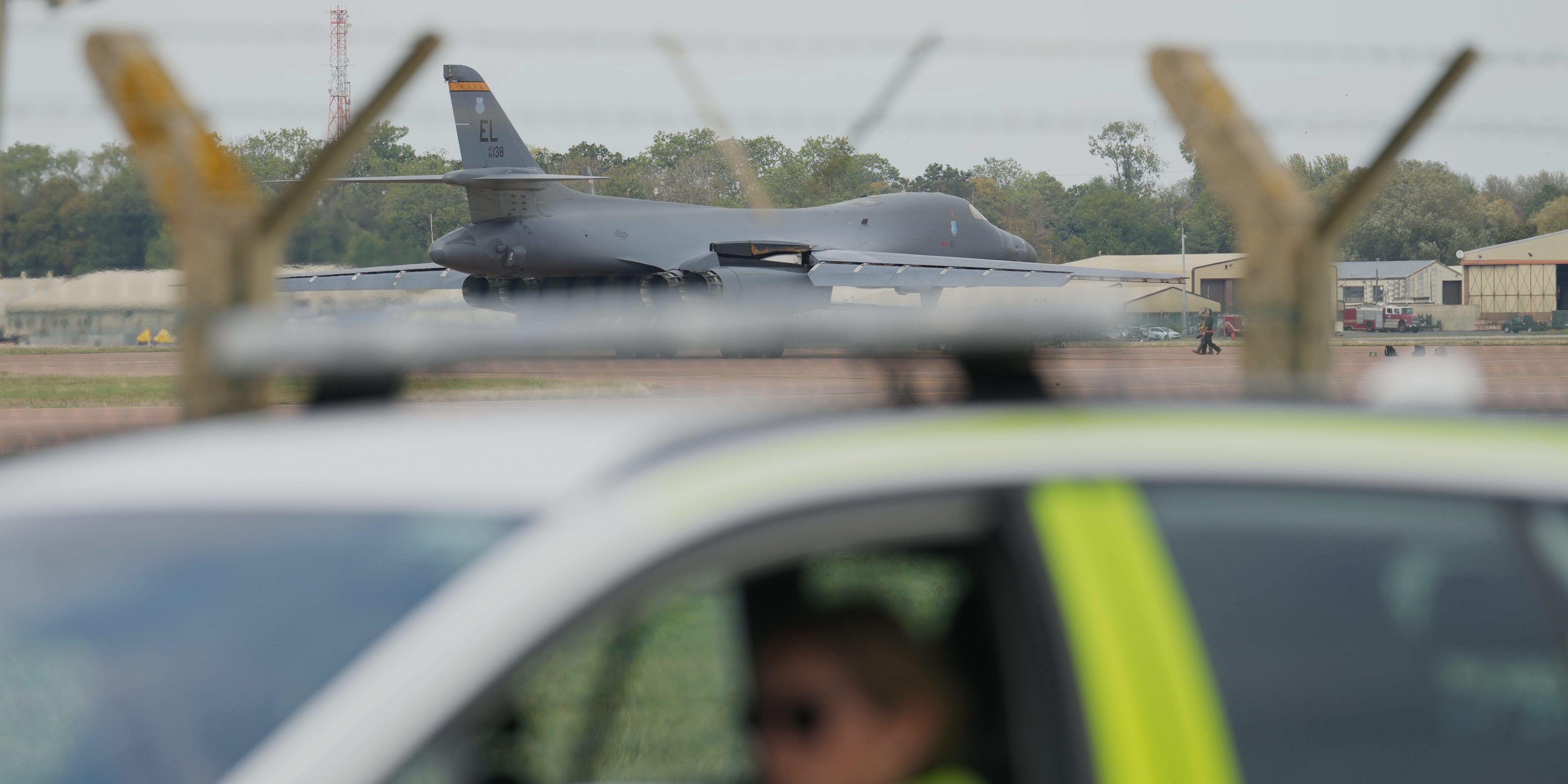
U.S. long-range bombers stationed at Royal Air Force Fairford in the United Kingdom were withdrawn to their U.S. home bases on Sunday, after U.S. officials described an Iranian plot involving "multiple drones" against the base. A U.S. official said the Islamic Revolutionary Guard Corps may have recruited UK nationals for the plan, and a second official called it a "complex plan" and part of a "hybrid strategy" of asymmetric warfare. President Donald Trump said on Monday that "there were some threats" and that leaving the aircraft would tempt an attack. The withdrawal came days after British police arrested six suspects in connection with a suspected attack on Fairford; UK Prime Minister Andy Burnham said there were "strong indications" that Iran played a role, and the suspects were later released on bail.
The article states that Iranian drone and ballistic missile strikes have hit more than 15 U.S. bases across the Middle East, causing an official toll of 19 dead and close to 900 wounded, with most deaths occurring since July after the Trump administration claimed the war had ended. A Pentagon inspector general report found strikes damaged or destroyed hundreds of buildings at bases in Kuwait, Bahrain, Qatar, UAE, Saudi Arabia, Iraq, Oman, and Jordan. Specific attacks include a March 1 drone attack on the Port of Shuaiba in Kuwait that killed six U.S. troops, a July attack on Muwaffaq Salti Air Base in Jordan that killed three soldiers and damaged an A-10 Thunderbolt and eight F-15 fighters, and strikes on RAF Akrotiri in Cyprus and Diego Garcia.
Key Actors
- ·IRGC(Islamic Revolutionary Guard Corps, Iran's external operations and security force)Accused by U.S. officials of orchestrating drone plots against U.S. bases in the UK and conducting missile and drone strikes across the Middle East.
- ·U.S. Defense Department(Pentagon, responsible for U.S. military operations and force protection)Withdrew 12 B-1 bombers from RAF Fairford and described Iranian threats as sophisticated and complex; maintains casualty and damage figures.
- ·Donald Trump(President of the United States)Publicly acknowledged threats to the bombers and framed Iran as his "No. 1 target", while previously claiming the war had ended.
- ·Andy Burnham(Prime Minister of the United Kingdom)Said there were "strong indications" Iran played a role in the Fairford plot; UK police arrested and later bailed six suspects.
Why It Matters
The reported withdrawal of B-1 bombers from a major NATO host base and the spread of attacks to Europe, Cyprus, and Diego Garcia indicates that Iran or its affiliates can threaten U.S. force projection beyond the Middle East. The article frames the conflict as a "festering wound" for the U.S. military, with disrupted base posture and a naval blockade and escort program in the Strait of Hormuz, while Iran pursues a "go for broke" strategy of absorbing economic pressure. This challenges Washington's ability to sustain operations and protect personnel, and raises questions about the reliability of official casualty figures, which one defense official called a "cover-up".
Watch For
Monitor whether additional threats against Ramstein Air Base in Germany materialize and whether any further arrests or charges occur in the UK. Watch for new Pentagon inspector general reports or Congressional testimony on base damage and casualty accounting, and for any Iranian response to the bomber withdrawal, including statements from IRGC or Iranian Army commander Maj. Gen. Amir Hatami about "creative acts" to disrupt enemy calculations. Also observe the U.S. naval blockade and escort operations in the Strait of Hormuz and any changes in fuel prices or Gulf oil flows that affect U.S. war sustainment.
Generated 1h ago · Based on full articleAuto-Compiled
DAILY BRIEFING
Follow Iran
Get a daily briefing with the most critical developments from every active conflict zone. Concise. Verified. Free.
No spam. Unsubscribe anytime. Verified sources only.
This page aggregates and summarizes reporting from The Intercept. The Conflict Pulse does not author original reporting. Read the original source for full coverage.
CONFLICT OVERVIEW
Iran
Latest verified updates on Iran’s regional confrontation, U.S.–Israeli strikes, missile retaliation, proxy networks, sanctions, and Strait of Hormuz risks.
MORE REPORTING ON THIS REGION
Recent reporting from this region. These stories may cover different events.
left
‘A return to prison is always looming’: Iran’s Nobel laureate recounts torture in jail and hopes for the future
The Guardian Middle EastSaudi-backed forces recapture key areas around strait from Houthis in Yemen
The Guardian Middle EastLATEST FROM IRAN

DEVELOPINGAl Jazeera5h ago
What new measures is Iran taking to counter US economic pressure?

DEVELOPINGMiddle East Eye6h ago
California leaders condemn Trump’s remarks about possible attacks on US cities

DEVELOPINGAl Jazeera6h ago
Hormuz ship attacks surge: Are increased oil exports sustainable?

REPORTMiddle East Eye13h ago
US and several allies say Iran committed 'terrorist actions'

REPORTAl Jazeera13h ago
Southeast Asia’s energy chiefs meet against backdrop of Iran war
REPORTMiddle East Eye13h ago