
Al Jazeera
centerREPORTSatellite images show damage inside Iran’s Bushehr nuclear power plant

Full BriefGenerated 8d ago
What Happened
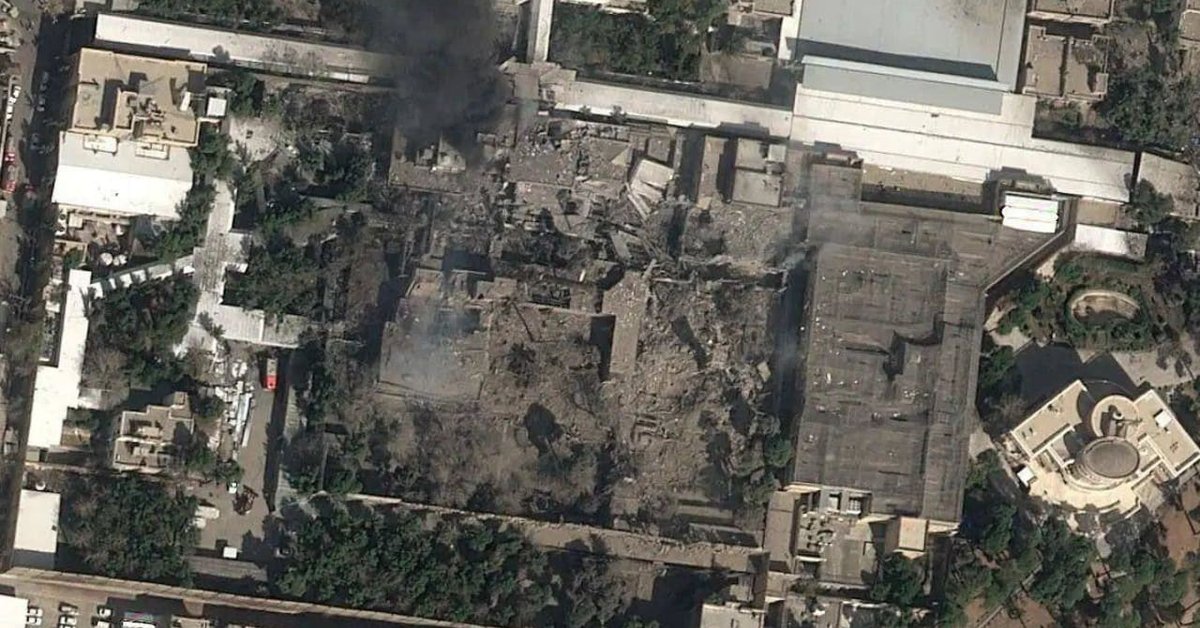
On July 7–8, US Central Command (CENTCOM) struck approximately 90 military targets across Iran, including air defence systems, missile and drone storage sites, and naval infrastructure along the southern coast. The US did not name the Bushehr nuclear power plant among those targets. However, a comparison of European Sentinel-2 satellite images from July 7 and July 12 by Al Jazeera's open-source unit reveals newly formed impact scars inside the Bushehr complex and an apparent strike site at nearby support facilities. Ehsan Jahanian, deputy governor of Bushehr province, initially said on July 9 that several locations in the province were hit, including areas around the plant, but later denied the reactor itself had been struck, asserting it continued operating normally. The IAEA had previously recorded projectile impacts inside the plant’s premises on March 17, March 24, and March 27, 2026, and near the reactor unit’s fence on April 4, 2026, with Iranian authorities each time reporting no damage to the reactor.
Key Actors
- ·US Central Command (CENTCOM)(Combatant command of the US military)Conducted strikes on ~90 military targets in Iran on July 7–8, but did not publicly identify Bushehr among those targets.
- ·Ehsan Jahanian(Deputy Governor of Bushehr Province, Iran)Acknowledged strikes around the Bushehr plant and other sites, then denied the reactor itself was hit, claiming it operates normally.
- ·Al Jazeera open-source unit(Media investigation team)Compiled satellite imagery and CENTCOM data to map strikes, revealing damage inside the Bushehr complex on July 12.
- ·International Atomic Energy Agency (IAEA)(UN nuclear watchdog)Recorded prior projectile impacts at Bushehr in March–April 2026 and warned that nuclear facilities must never become armed targets.
Why It Matters
The damage at Iran’s only operating nuclear power plant raises acute nuclear-safety fears, as the Bushehr-1 reactor contains radioactive fuel and materials whose release could have severe radiological consequences. The incident marks a sharp escalation in direct US-Iran military exchanges and compounds a pattern of repeated projectile impacts near the plant, documented in IAEA reports from March and April 2026. The IAEA’s warning underscores the risk of an accident with cross-border environmental and health effects, and the strike tests international norms against targeting nuclear facilities even if the reactor itself was reportedly spared.
Watch For
Further high-resolution satellite imagery to verify the extent of damage and whether the reactor or its cooling/power systems were compromised. Official IAEA statements or event reports following the July incidents. Any public acknowledgment or denial from CENTCOM regarding strikes near Bushehr. Iranian technical assessments of reactor safety and operational status. Diplomatic reactions at the IAEA Board of Governors or UN Security Council, and whether the US-Iran escalation prompts renewed mediation efforts.
Generated 8d ago · Based on full articleAuto-Compiled
This page aggregates and summarizes reporting from Al Jazeera. The Conflict Pulse does not author original reporting. Read the original source for full coverage.
CONFLICT OVERVIEW
Iran
Latest verified updates on Iran’s regional confrontation, U.S.–Israeli strikes, missile retaliation, proxy networks, sanctions, and Strait of Hormuz risks.
SOURCE PERSPECTIVES
How outlets across the bias spectrum are covering this conflict.
left
US expands Iran attacks as Trump warns Tehran and Houthis over Red Sea strikes
The Guardian Middle EastHow Chinese tech and Russian tactics are aiding Iran’s bombing of US bases
The Guardian AsiaLATEST FROM IRAN

REPORTFrance 24 Middle East1d ago
Arrests, denials and missing images: Gulf states’ response to Iranian strikes

REPORTFrance 24 Middle East1d ago
Iran warns countries aiding US attack
REPORTDW News1d ago
Why Iran's Pickaxe Mountain is a tough target for the US
REPORTIran International1d ago
Ali Khamenei was killed at meeting on protest crackdown - security-linked outlet
REPORTIran International1d ago
Germany limits Tehran embassy services as it urges citizens to leave Iran
REPORTIran International1d ago